Engineering Courses
Engineering courses can help you learn design principles, project management, systems analysis, and problem-solving techniques. You can build skills in technical drawing, materials selection, and prototyping, along with understanding regulatory standards and sustainability practices. Many courses introduce tools such as CAD software for design, simulation programs for testing, and project management platforms to streamline workflows.
Popular Engineering Courses and Certifications

Rice University
Skills you'll gain: Cost Estimation, Project Scoping, Communication Planning, Cost Management, Scope Management, Project Estimation, Project Schedules, Earned Value Management, Scheduling, Team Management, Quality Assurance, Stakeholder Management, Work Breakdown Structure, Risk Management, Organizational Structure, Procurement, Project Risk Management, Project Documentation, Project Management, Planning
Khalifa University
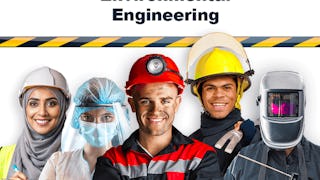
Skills you'll gain: Environmental Management Systems, Environment Health And Safety, Environmental Monitoring, Accident Reporting, Fire And Life Safety, Accident Prevention, Environmental Regulations, Health And Safety Standards, Hazard Analysis, Safety Standards, Environmental Engineering, Environmental Laws, Environmental Resource Management, Risk Management, Risk Management Framework, Environmental Engineering and Restoration, Risk Analysis, Environment and Resource Management, Engineering Management, Engineering
University of Colorado Boulder
Skills you'll gain: Model Based Systems Engineering, Failure Analysis, Systems Engineering, Requirements Management, Scope Management, Design Reviews, Engineering Management, Change Control, Program Management, Cost Management, Requirements Analysis, Contract Management, Root Cause Analysis, Test Engineering, Risk Mitigation, Systems Thinking, Organizational Leadership, Risk Management, Test Planning, Systems Analysis

Dartmouth College
Skills you'll gain: Structural Analysis, Structural Engineering, Building Design, Engineering, Engineering Calculations, Construction, SketchUp (3D Modeling Software), Architectural Design, Failure Analysis, Design
Birla Institute of Technology & Science, Pilani
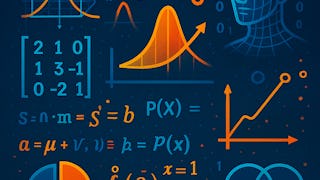
Skills you'll gain: Data Analysis, Computational Logic, Engineering Calculations, Integral Calculus, Trigonometry, Linear Algebra, Engineering Analysis, Logical Reasoning, Deductive Reasoning, Probability & Statistics, Statistical Analysis, Calculus, Statistics, Statistical Methods, Bayesian Statistics, Statistical Inference, Theoretical Computer Science, Numerical Analysis, Descriptive Analytics, Applied Mathematics
What brings you to Coursera today?

ISAE-SUPAERO
Skills you'll gain: Mechanics, Hazard Analysis, Risk Control, Simulations, Simulation and Simulation Software, Systems Of Measurement, Engineering Calculations, Physics, Engineering, Scientific, and Technical Instruments, Mathematical Modeling

Columbia University
Skills you'll gain: Portfolio Management, Derivatives, Financial Market, Investment Management, Portfolio Risk, Asset Management, Risk Modeling, Estimation, Financial Modeling, Regression Analysis, Market Liquidity, Risk Management, Finance, Financial Trading, Model Optimization, Risk Analysis, Probability, Market Data, Numerical Analysis, Microsoft Excel

Northwestern University
Skills you'll gain: Robotics, Control Systems, Mathematical Modeling, Mathematical Software, Mechanics, Simulations, Simulation and Simulation Software, Torque (Physics), Graph Theory, Matlab, Numerical Analysis, Algorithms, Estimation

L&T EduTech
Skills you'll gain: Oil and Gas, Petroleum Industry, Hazard Analysis, Environmental Resource Management, Energy and Utilities, Environment and Resource Management, Environmental Regulations, Environment Health And Safety, Big Data, Process Engineering, Chemical Engineering, Risk Analysis, Failure Mode And Effects Analysis, Data Management, Data Processing, Electric Power Systems, Applied Machine Learning, Production Process, Environmental Issue, Artificial Intelligence and Machine Learning (AI/ML)

Skills you'll gain: Electrical Power, Electric Power Systems, Electrical Systems, Control Systems, Electrical Substation, Electrical Equipment, Automation Engineering, Electrical Safety, Mathematical Modeling, Matlab, High Voltage, Electrical Engineering, electromagnetics, Simulation and Simulation Software, Engineering Calculations, Artificial Neural Networks, Design, Coordination

University of Michigan
Skills you'll gain: Machine Learning Methods, Artificial Intelligence and Machine Learning (AI/ML), AI powered creativity, Precision Medicine, Generative AI, Machine Learning, AI literacy, Artificial Intelligence, Machine Learning Algorithms, Transfer Learning, Control Systems, Image Analysis, Robotics, Deep Learning, Medical Imaging, Reinforcement Learning, Bioinformatics, Drug Development, Applied Machine Learning, Predictive Modeling


The Hong Kong University of Science and Technology
Skills you'll gain: Differential Equations, Linear Algebra, Matlab, Numerical Analysis, Integral Calculus, Calculus, electromagnetics, Algebra, Applied Mathematics, Geometry, Mechanics, Scripting, Simulations, Physics, Plot (Graphics), Derivatives
Best Engineering courses from L&T EduTech
Top-rated Engineering courses offered by L&T EduTech on Coursera.
- Petroleum Engineering with AI ApplicationsL&T EduTechAdvanced3 - 6 MonthsL&T EduTech
- Power System: Generation, Transmission and ProtectionL&T EduTechIntermediate3 - 6 MonthsL&T EduTech
Best Engineering certificate programs
Earn a certificate in Engineering from top universities and companies.
- Engineering Project ManagementRice UniversityBeginner3 - 6 MonthsSpecialization
- Health, Safety, and Environmental (HSE) EngineeringKhalifa UniversityBeginner1 - 3 MonthsSpecialization
- Introduction to Systems EngineeringUniversity of Colorado BoulderBeginner3 - 6 MonthsSpecialization
Best Engineering courses for beginners
Top-rated beginner-friendly Engineering courses with no prerequisites.
- The Engineering of Structures Around UsDartmouth CollegeBeginner3 - 6 MonthsNo prerequisites
- Mathematics for EngineeringBirla Institute of Technology & Science, PilaniBeginner3 - 6 MonthsNo prerequisites
- Fundamentals of Flight mechanicsISAE-SUPAEROBeginner3 - 6 MonthsNo prerequisites










