Career Graph offers a unified, data-backed learning system
Coursera’s proprietary Career Graph, Achievement Architecture, and Skills Verification create a unified learning system to power targeted upskilling, measurable mastery, and trusted credentialing—helping your organization build a future-ready, agile workforce that drives business results.
- Customized, data-driven skill pathways for teams
- Visible milestones to skill mastery
- Verified credentials trusted by employers
Strategic skills mapping for workforce training
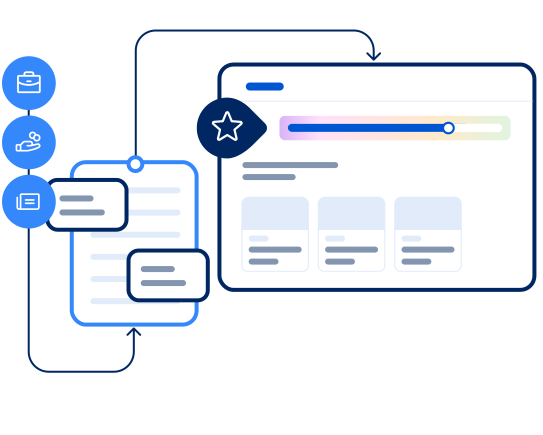
Our Career Graph powers your talent strategy by connecting workforce roles, skills, and relevant content using real-time labor market data. It allows automated mapping of your organization’s job families to in-demand skills and learning content, including our robust content catalog of 10,600+ courses, 2,000+ projects, and 1,400+ Specializations. This enables employee development with a structured system that clarifies skill needs, reduces administrative burden, and aligns learning investments directly to business goals.
Prove skill expertise at scale
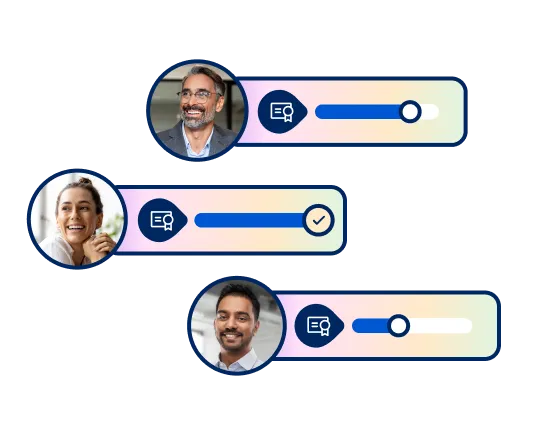
Our Achievement Architecture motivates employees by providing clear, visible skill milestones through stackable badges and certificates. Skills Verification rigorously validates mastered skills with trusted assessments, ensuring workforce capabilities meet industry standards.
Together, these systems increase learner engagement, build organizational credibility, and enable you to confidently demonstrate upskilling ROI and workforce readiness to stakeholders.
Explore Skill Tracks
Choose the right Skills Track for your team’s needs
Each Skills Track offers a focused, measurable journey powered by a leading online learning platform for business. Keep teams ahead with up-to-date content that drives agility, security, service excellence, and competitive advantage in a fast-changing economy.
Uncover insights
Data Skills Track
Strengthen data-driven decision-making with a leading online learning platform for business. Access learning paths in analytics, data management, and automation to help teams enhance forecasting and predictive capabilities for smarter, faster decisions.