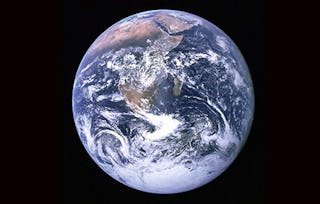
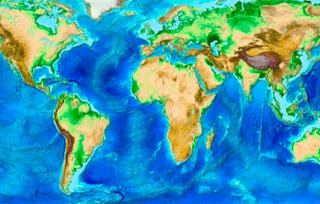
Our Earth’s Future is about the science of climate change and how to talk about it. You will learn from scientists in the fields of climatology, oceanography, Earth science, and anthropology who study how climate change is affecting people, populations, and ways of life. Explore the multiple lines of evidence for the human-induced climate change that is happening today, and consider what that means for the future of our planet. At the end of this course you will be able to understand key scientific principles, identify and address misconceptions, and contribute confidently to conversations about climate change.

Our Earth's Future

Our Earth's Future

Instructor: Debra Tillinger, Ph.D.
40,588 already enrolled
Included with Learn more
Gain insight into a topic and learn the fundamentals.
818 reviews
8 hours to complete
Flexible schedule
Learn at your own pace
Skills you'll gain
- Economics, Policy, and Social Studies
- Climate Change Mitigation
- Scientific Methods
- Mathematical Modeling
- Social Sciences
- Simulation and Simulation Software
- Model Evaluation
- Climate Change Adaptation
- Mitigation
- Environmental Science
- Social Impact
- Physical Science
- Media and Communications
- General Science and Research
- Socioeconomics
- Environmental Issue
- Hydrology
Details to know

Shareable certificate
Add to your LinkedIn profile
Assessments
5 assignments
Taught in English
97%
Most learners liked this course
See how employees at top companies are mastering in-demand skills

There are 5 modules in this course
Instructor
Instructor ratings
(204 ratings)Offered by

Explore more from Environmental Science and Sustainability
University of Manchester
University of California San Diego
University of Illinois Urbana-Champaign
University of Colorado Boulder
Why people choose Coursera for their career

Felipe M.
Learner since 2018
"To be able to take courses at my own pace and rhythm has been an amazing experience. I can learn whenever it fits my schedule and mood."

Jennifer J.
Learner since 2020
"I directly applied the concepts and skills I learned from my courses to an exciting new project at work."

Larry W.
Learner since 2021
"When I need courses on topics that my university doesn't offer, Coursera is one of the best places to go."

Chaitanya A.
"Learning isn't just about being better at your job: it's so much more than that. Coursera allows me to learn without limits."
Learner reviews
- 5 stars
75.42%
- 4 stars
20.04%
- 3 stars
3.05%
- 2 stars
0.97%
- 1 star
0.48%
Showing 3 of 818
FA
5.0
Reviewed on Aug 29, 2020
Really enjoyed this and learned new terminology, plus difficulties of prediction, use of risk assessments for varying aspects of climate change. Interesting papers to read and additional resources.
MG
4.0
Reviewed on Jun 2, 2017
I did enjoy the concepts..but it seemed like the information might have been dated. But it gave me lots to think about and contemplate and be able to share with others.
RM
5.0
Reviewed on Sep 11, 2020
Thank you so much for sharring this valuable subject. I will be able to talk and eduacte studients that I get to teach in my clases and in my natural tours in Costa Rica
Advance your career with an online degree
Earn a degree from world-class universities - 100% online



