When you enroll in this course, you'll also be asked to select a specific program.
Learn new concepts from industry experts
Gain a foundational understanding of a subject or tool
Develop job-relevant skills with hands-on projects
Earn a shareable career certificate
There are 4 modules in this course
Climate change impacts everyone — from record-breaking heat waves, to physical and mental health impacts, to food shortages. Understanding the science behind climate change provides you with the foundational knowledge necessary for taking action in your community and enhancing your career. No matter your age, job, goals, or interests, this course will enable you to meaningfully engage with one of the defining challenges facing humanity today.
What is the evidence for climate change? What key concepts describe the physical science of climate change? And are there ways to predict how the climate could change in the future? This short course provides everyone an entry-level overview of climate change science, with no science background needed!
By the end of the course, you should be able to explain the causes of climate change and its impacts. Along the way, you’ll be given opportunities to consider how to apply this knowledge in your own life or career. Learning about climate science is the first step in your journey to becoming a more engaged global citizen as you help determine our planet’s future.
Welcome to Climate Science for Everyone! We’ll begin this week by introducing the course and explaining why understanding climate change science is important to you. Then, we’ll quickly discuss a short history of climate change science. Finally, you will learn about the increase in global average surface temperature since the pre-industrial era in the context of international agreements to limit warming. This will provide foundational knowledge for the rest of the course material.
Welcome to Climate Science for Everyone!•9 minutes
Climate Science: A Brief History•4 minutes
Contemporary Global Warming •13 minutes
12 readings•Total 74 minutes
General Course Information•7 minutes
Becoming Fluent in Climate and Sustainability•5 minutes
Course Entry Survey•10 minutes
Our Commitment to Supportive Learning•5 minutes
Discussion Guidelines•5 minutes
Report a problem with the course•5 minutes
Course Glossary•10 minutes
Week 1 Data Sources•2 minutes
Landmarks in Climate Science Research •10 minutes
What is the evidence for climate change?•5 minutes
Where is climate change most apparent?•5 minutes
How is the current warming any different? •5 minutes
1 assignment•Total 15 minutes
Evidence of a Warming Planet Quiz•15 minutes
2 discussion prompts•Total 20 minutes
Introduce Yourself!•10 minutes
Surface Warming Since the Pre-Industrial Period•10 minutes
The Climate System
Module 2•1 hour to complete
Module details
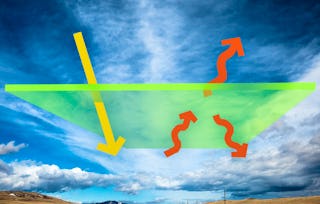
This week, you will learn about the energy balance of the earth system and how the increase in global average temperature since the pre-industrial era can be explained in terms of changes in this energy balance.
What's included
3 videos4 readings1 assignment1 discussion prompt
Show info about module content
3 videos•Total 28 minutes
Inside the Global Energy Budget•14 minutes
Climate Models Explained•7 minutes
Contemporary Climate Change•7 minutes
4 readings•Total 17 minutes
Week 2 Data Sources•2 minutes
What does the Earth’s energy budget tell us about climate change?•5 minutes
Are climate models improving?•5 minutes
How do we know humans are responsible for climate change?•5 minutes
1 assignment•Total 15 minutes
Week 2 Quiz•15 minutes
1 discussion prompt•Total 20 minutes
Global Temperature Increase since 1850 •20 minutes
Drivers of Climate Change: Carbon Dioxide, Methane, and Aerosols
Module 3•1 hour to complete
Module details
This week, you will learn about how human activities have changed the atmospheric concentrations of the two main greenhouse gasses, carbon dioxide and methane. We will also touch on how the atmospheric concentration of anthropogenic sulfate aerosols, which have offset some of the warming from greenhouse gasses, is changing because of pollution control measures.
What's included
4 videos5 readings1 assignment1 discussion prompt
Show info about module content
4 videos•Total 33 minutes
Measures of Atmospheric Concentration and Emission•4 minutes
The Human Impact on Atmospheric Carbon Dioxide Levels•12 minutes
The Global Carbon Cycle•9 minutes
Recent Trends in Methane Concentrations and Regional Sulfur Dioxide Emissions•7 minutes
5 readings•Total 18 minutes
Week 3 Data Sources•2 minutes
How Scientists Measure Carbon Dioxide in the Air•2 minutes
Charles Keeling and NOAA’s Mauna Loa Observatory•4 minutes
Is the natural removal of carbon from the atmosphere weakening?•5 minutes
How do Short-Lived Climate Forcers affect the climate?•5 minutes
1 assignment•Total 15 minutes
Week 3 Quiz•15 minutes
1 discussion prompt•Total 10 minutes
Anthropogenic Carbon Dioxide Emissions•10 minutes
Future Climate Change Scenarios
Module 4•2 hours to complete
Module details
This week, you will learn how global average surface temperature will evolve over the course of this century under various greenhouse gas emission scenarios. Additionally, we will give you a chance to reflect on what you’ve learned in the course and how you can take action to help with climate change both personally and professionally.
Duke University has about 13,000 undergraduate and graduate students and a world-class faculty helping to expand the frontiers of knowledge. The university has a strong commitment to applying knowledge in service to society, both near its North Carolina campus and around the world.
OK
Explore more from Environmental Science and Sustainability
"To be able to take courses at my own pace and rhythm has been an amazing experience. I can learn whenever it fits my schedule and mood."
Jennifer J.
Learner since 2020
"I directly applied the concepts and skills I learned from my courses to an exciting new project at work."
Larry W.
Learner since 2021
"When I need courses on topics that my university doesn't offer, Coursera is one of the best places to go."
Chaitanya A.
"Learning isn't just about being better at your job: it's so much more than that. Coursera allows me to learn without limits."
Learner reviews
4.9
22 reviews
5 stars
95.45%
4 stars
0%
3 stars
4.54%
2 stars
0%
1 star
0%
Showing 3 of 22
Y
YZ
5·
Reviewed on Oct 5, 2025
Excellent course with great instructor and student peers. Very well designed course structure, materials, readings, quiz, as well as guest speaker sessions.
J
JF
5·
Reviewed on Dec 25, 2025
It is a very interesting and high-quality product!
C
CD
5·
Reviewed on Jul 25, 2025
Every politician, every leader should takes this course. It should be mandatory. Thank you so much!
When will I have access to the lectures and assignments?
To access the course materials, assignments and to earn a Certificate, you will need to purchase the Certificate experience when you enroll in a course. You can try a Free Trial instead, or apply for Financial Aid. The course may offer 'Full Course, No Certificate' instead. This option lets you see all course materials, submit required assessments, and get a final grade. This also means that you will not be able to purchase a Certificate experience.
What will I get if I subscribe to this Specialization?
When you enroll in the course, you get access to all of the courses in the Specialization, and you earn a certificate when you complete the work. Your electronic Certificate will be added to your Accomplishments page - from there, you can print your Certificate or add it to your LinkedIn profile.
Is financial aid available?
Yes. In select learning programs, you can apply for financial aid or a scholarship if you can’t afford the enrollment fee. If fin aid or scholarship is available for your learning program selection, you’ll find a link to apply on the description page.