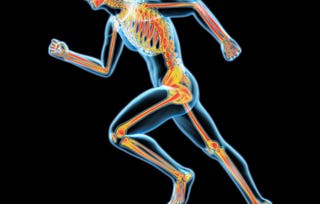
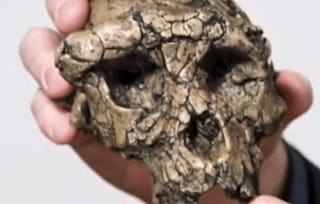
This course will help you learn how fossils give us an insight into how the early members of our lineage walked bipedally. The four million years old bone of Australopithecus anamensis is the oldest undisputed evidence for bipedalism in our lineage. Similarly, Lucy’s, who was Australopithecus afarensis, fossil also helped scientists discover a lot about how bipedalism evolved over time. You will also explore bipedal variations in humans. From its earliest version to its modern form—how humans learned to walk, is an interesting story. Similarly how a human being learns to walk, from a toddler’s first footstep to an adult human being’s walk and its variations would also be discussed in this course. You will also understand that while bipedalism has its advantages, it has its adverse effects on humans too from a musculoskeletal point of view.

Experiments and Variations in Bipedalism

Experiments and Variations in Bipedalism
This course is part of Bipedalism: The Science of Upright Walking Specialization

Instructor: Jeremy DeSilva
Access provided by Bertelsmann
Gain insight into a topic and learn the fundamentals.
2 weeks to complete
at 10 hours a week
Flexible schedule
Learn at your own pace
Details to know

Shareable certificate
Add to your LinkedIn profile
Assessments
7 assignments
Taught in English
See how employees at top companies are mastering in-demand skills

Build your subject-matter expertise
This course is part of the Bipedalism: The Science of Upright Walking Specialization
When you enroll in this course, you'll also be enrolled in this Specialization.
- Learn new concepts from industry experts
- Gain a foundational understanding of a subject or tool
- Develop job-relevant skills with hands-on projects
- Earn a shareable career certificate

There are 4 modules in this course
Earn a career certificate
Add this credential to your LinkedIn profile, resume, or CV. Share it on social media and in your performance review.
Instructor
Offered by


Why people choose Coursera for their career

Felipe M.
Learner since 2018
"To be able to take courses at my own pace and rhythm has been an amazing experience. I can learn whenever it fits my schedule and mood."

Jennifer J.
Learner since 2020
"I directly applied the concepts and skills I learned from my courses to an exciting new project at work."

Larry W.
Learner since 2021
"When I need courses on topics that my university doesn't offer, Coursera is one of the best places to go."

Chaitanya A.
"Learning isn't just about being better at your job: it's so much more than that. Coursera allows me to learn without limits."
Explore more from Health
Dartmouth College
Dartmouth College

Dartmouth College
University of Alberta