When you enroll in this course, you'll also be enrolled in this Specialization.
Learn new concepts from industry experts
Gain a foundational understanding of a subject or tool
Develop job-relevant skills with hands-on projects
Earn a shareable career certificate
There are 4 modules in this course
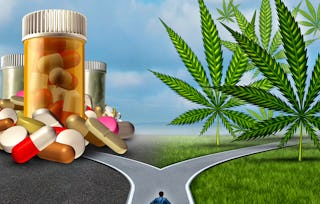
This Cannabis, Mental Health, and Brain Disorders course is designed to have you think critically about the health effects of cannabis (i.e., marijuana) in the context of several mental health and neurocognitive disorders. You'll be able to identify key features of several anxiety disorders (e.g., panic disorder, generalized anxiety disorder, social anxiety disorder, PTSD), major depression, schizophrenia, multiple sclerosis, epilepsy, traumatic brain injury, and Alzheimer's and Parkinson's Disease. You'll understand the etiology and risk factors for these disorders, recognize conventional treatments, and understand the influence of different cannabinoids such as THC and CBD on these disorders. Obtaining this knowledge will be helpful in terms of informing public policy, public health, and personal decisions regarding the use of cannabis products.
In this module, we will learn about the key features of anxiety disorders and PTSD. We will discuss the epidemiology and etiology of these disorders, as well as the current treatments used to treat these disorders. Lastly, we will evaluate the literature on cannabis for treating anxiety and PTSD.
What's included
8 videos12 readings1 assignment
Show info about module content
8 videos•Total 93 minutes
Introduction to Module•2 minutes
Lecture - Anxiety and PTSD•13 minutes
Lecture - Epidemiology of Anxiety and PTSD•8 minutes
Lecture - Etiology of Anxiety and PTSD•15 minutes
Lecture - Treatments for Anxiety•8 minutes
Lecture - Cannabis, Anxiety, and PTSD•14 minutes
Lecture - Special Considerations for PTSD•7 minutes
Interview with Christine Rabinak•27 minutes
12 readings•Total 111 minutes
Course Updates and Accessibility Support•1 minute
Lecture PDF•10 minutes
NAS Report•10 minutes
PTSD•10 minutes
Panic Disorder when Fear Overwhelms•10 minutes
Social Anxiety Disorder•10 minutes
Generalized Anxiety Disorder•10 minutes
Lecture PDF•10 minutes
1 assignment•Total 10 minutes
Quiz #8•10 minutes
Mood Disorders, Psychosis, and Cannabis
Module 2•3 hours to complete
Module details
In this module, we will learn about the key features of depression and schizophrenia. We will discuss the etiology and risk factors for these disorders, as well as the common treatments used to treat them. Lastly, we will evaluate the research on the effects of cannabis on these disorders.
What's included
8 videos11 readings1 assignment
Show info about module content
8 videos•Total 76 minutes
Introduction to Module•2 minutes
Lecture - Overview of Psychosis and Mood Disorders•10 minutes
Interview with Sachin Patel•23 minutes
Lecture - Epidemiology of Mood Disorders and Psychosis•4 minutes
Lecture - Etiology of Mood Disorders and Psychosis•8 minutes
Lecture - Treatment of Mood Disorders and Psychosis•8 minutes
Lecture - Cannabis and Mood Disorders and Psychosis - Chicken or the Egg Conundrum•12 minutes
Lecture - Deep Dive on Cannabis and Psychosis•9 minutes
11 readings•Total 110 minutes
Lecture PDF•10 minutes
NAS Report•10 minutes
Depression•10 minutes
Bipolar Disorder•10 minutes
Schizophrenia•10 minutes
Depression: What You Need To Know•10 minutes
Lecture PDF•10 minutes
1 assignment•Total 10 minutes
Quiz #9•10 minutes
Neurocognitive/Brain Disorders Part I
Module 3•4 hours to complete
Module details
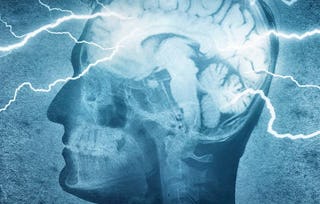
In this module, we will learn about the key features of multiple sclerosis, epilepsy, and traumatic brain injury. We will discuss the epidemiology and etiology of these conditions, as well as the current treatments used to treat them. Lastly, we will evaluate the research on the effects of cannabis on these disorders.
What's included
7 videos12 readings1 assignment1 peer review
Show info about module content
7 videos•Total 72 minutes
Introduction to Module•2 minutes
Lecture - Multiple Sclerosis, Epilepsy, and Traumatic Brain Injury•13 minutes
Lecture - Epidemiology of MS, Epilepsy, and Traumatic Brain Injury•9 minutes
Lecture - Etiology of MS, Epilepsy, and Traumatic Brain Injury•12 minutes
Lecture - Treatments for MS, Epilepsy, and Traumatic Brain Injury•13 minutes
Lecture - Cannabis, MS, and Epilepsy•13 minutes
Lecture - Cannabis and Traumatic Brain Injury•11 minutes
12 readings•Total 120 minutes
Lecture PDF•10 minutes
Watch these videos•10 minutes
Lecture PDF•10 minutes
NAS Report•10 minutes
Traumatic Brain Injury Information Page: What research is being done?•10 minutes
Multiple Sclerosis Information Page: What research is being done?•10 minutes
Epilepsy Information Page: What research is being done?•10 minutes
Lecture PDF•10 minutes
Cannabis Therapeutics and the Future of Neurology, Russo•10 minutes
Lecture PDF•10 minutes
1 assignment•Total 10 minutes
Quiz #10•10 minutes
1 peer review•Total 60 minutes
Infographic Assignment #3•60 minutes
Neurocognitive/Brain Disorders Part II
Module 4•3 hours to complete
Module details
In this module, we will learn about the key features of Parkinson's and Alzheimer's Disease. We will discuss the etiology and risk factors for these diseases, as well as the common treatments used. Lastly, we will cover how cannabis may influence these diseases.
What's included
8 videos8 readings1 assignment1 discussion prompt
Show info about module content
8 videos•Total 86 minutes
Introduction to Module•3 minutes
Lecture - Parkinson's Disease and Alzheimer's Disease•13 minutes
Lecture - Epidemiology of Parkinson's Disease and Alzheimer's Disease•10 minutes
Lecture - Etiology of Parkinson's Disease and Alzheimer's Disease•11 minutes
Lecture - Current Treatments for Parkinson's Disease and Alzheimer's Disease•8 minutes
Lecture - Cannabis and the Treatment of Parkinson's Disease and Alzheimer's Disease•6 minutes
Lecture - Recent Research on Cannabinoids, Parkinson's Disease, and Alzheimer's Disease•14 minutes
Interview with Dr. Maureen Leehey•21 minutes
8 readings•Total 80 minutes
Lecture PDF•10 minutes
Alzheimer's Disease•10 minutes
Parkinson's Disease•10 minutes
Lecture PDF•10 minutes
1 assignment•Total 10 minutes
Quiz #11•10 minutes
1 discussion prompt•Total 30 minutes
Exercise #3•30 minutes
Earn a career certificate
Add this credential to your LinkedIn profile, resume, or CV. Share it on social media and in your performance review.
Instructor
Instructor ratings
Instructor ratings
We asked all learners to give feedback on our instructors based on the quality of their teaching style.
CU Boulder is a dynamic community of scholars and learners on one of the most spectacular college campuses in the country. As one of 34 U.S. public institutions in the prestigious Association of American Universities (AAU), we have a proud tradition of academic excellence, with five Nobel laureates and more than 50 members of prestigious academic academies.
When will I have access to the lectures and assignments?
To access the course materials, assignments and to earn a Certificate, you will need to purchase the Certificate experience when you enroll in a course. You can try a Free Trial instead, or apply for Financial Aid. The course may offer 'Full Course, No Certificate' instead. This option lets you see all course materials, submit required assessments, and get a final grade. This also means that you will not be able to purchase a Certificate experience.
What will I get if I subscribe to this Specialization?
When you enroll in the course, you get access to all of the courses in the Specialization, and you earn a certificate when you complete the work. Your electronic Certificate will be added to your Accomplishments page - from there, you can print your Certificate or add it to your LinkedIn profile.
Is financial aid available?
Yes. In select learning programs, you can apply for financial aid or a scholarship if you can’t afford the enrollment fee. If fin aid or scholarship is available for your learning program selection, you’ll find a link to apply on the description page.