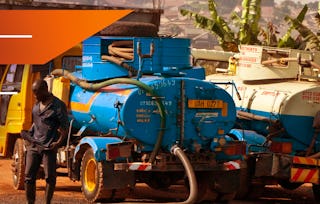
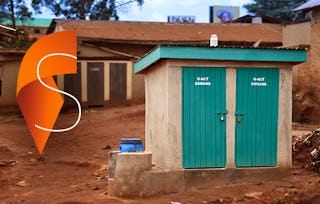
The water cycle is strictly related to the fair and sustainable development of any society. Appropriate technologies and practices are needed for providing clean water and adequate sanitation to citizens worldwide, while facing environmental and societal challenges, such as climate change and increasing urbanization. Wastewater treatment facilities are nowadays shifting from infrastructures providing effective clean water, sanitation and environmental protection towards advanced biorefineries that can recover valuable resources (as reusable water, biopolymers and nutrients) from wastewater, while aiming at more stringent effluent quality targets, at energy neutrality, and at lowering the overall environmental impact. This MOOC is aimed at providing key elements in relation to the management of the urban water cycle, including both conventional goals and the challenges of the smart cities of the future. This MOOC presents a full picture, although very concise, of present and emerging technologies for wastewater treatment, presented by professors teaching at Politecnico di Milano.
What's included
5 videos1 assignment
Show info about module content
5 videos•Total 40 minutes
The water service: from water sources to final fate of the wastewater•7 minutes
How the wastewater is treated today: a concise review•7 minutes
Challenges and opportunities in modern plants•6 minutes
Rethinking cities for climate resilience: the importance of water sensitive approaches•10 minutes
Nature based solutions (NBS) to control pollution•10 minutes
1 assignment•Total 30 minutes
Quiz•30 minutes
Energy saving and energy recovery
Module 2•1 hour to complete
Module details
What's included
2 videos1 assignment
Show info about module content
2 videos•Total 15 minutes
Energy consumption, energy neutrality/positivity in WWTPs•5 minutes
How to produce energy and biofuels in WWTPs•10 minutes
1 assignment•Total 30 minutes
Quiz•30 minutes
Alternative sources of water supply for multiple uses: recovery of water for agricultural and industrial uses
Module 3•1 hour to complete
Module details
What's included
4 videos1 assignment
Show info about module content
4 videos•Total 34 minutes
How to make wastewater fit for reuse? Challenges and opportunities•9 minutes
Disinfection as barrier towards pathogens spread- Pt. 1•9 minutes
Disinfection as barrier towards pathogens spread- Pt. 2•7 minutes
Contaminants of emerging concern and their removal for minimizing environmental and human health risk•10 minutes
1 assignment•Total 30 minutes
Quiz•30 minutes
Material recovery: options and sustainability
Module 4•1 hour to complete
Module details
What's included
4 videos1 assignment
Show info about module content
4 videos•Total 30 minutes
How to recover materials from sludge through thermochemical processes•9 minutes
The role of microalgae: microalgae/bacteria interactions•8 minutes
Plastics and polymers from wastewater•7 minutes
Case study: Nosedo wastewater treatment plant•7 minutes
1 assignment•Total 30 minutes
Quiz•30 minutes
Instructor
Instructor ratings
Instructor ratings
We asked all learners to give feedback on our instructors based on the quality of their teaching style.
Politecnico di Milano is a scientific-technological University, which trains engineers, architects and industrial designers.
From 2014 Politecnico di Milano started the release of several MOOCs, developed by the service for digital learning METID (Methods and Innovative Technologies for Learning), giving everybody the chance to enhance personal skills.
OK
Explore more from Environmental Science and Sustainability
"To be able to take courses at my own pace and rhythm has been an amazing experience. I can learn whenever it fits my schedule and mood."
Jennifer J.
Learner since 2020
"I directly applied the concepts and skills I learned from my courses to an exciting new project at work."
Larry W.
Learner since 2021
"When I need courses on topics that my university doesn't offer, Coursera is one of the best places to go."
Chaitanya A.
"Learning isn't just about being better at your job: it's so much more than that. Coursera allows me to learn without limits."
Learner reviews
4.7
54 reviews
5 stars
79.62%
4 stars
12.96%
3 stars
5.55%
2 stars
1.85%
1 star
0%
Showing 3 of 54
M
MA
5·
Reviewed on Apr 25, 2024
Very insightful. I wish there were a study guide or some searchable toolkit for being able to easily retrieve some of the nuggets this course presents. Awesome course.
M
MP
5·
Reviewed on Aug 21, 2023
Hello, thank you for your efforts in the course. It was very useful and beautiful. I hope you will always be healthy and happy. Mohammad Pakzad from Iran.
M
MZ
5·
Reviewed on Nov 11, 2023
It was a great course designed for students with various backgrounds.
When will I have access to the lectures and assignments?
To access the course materials, assignments and to earn a Certificate, you will need to purchase the Certificate experience when you enroll in a course. You can try a Free Trial instead, or apply for Financial Aid. The course may offer 'Full Course, No Certificate' instead. This option lets you see all course materials, submit required assessments, and get a final grade. This also means that you will not be able to purchase a Certificate experience.
What will I get if I purchase the Certificate?
When you purchase a Certificate you get access to all course materials, including graded assignments. Upon completing the course, your electronic Certificate will be added to your Accomplishments page - from there, you can print your Certificate or add it to your LinkedIn profile.
Is financial aid available?
Yes. In select learning programs, you can apply for financial aid or a scholarship if you can’t afford the enrollment fee. If fin aid or scholarship is available for your learning program selection, you’ll find a link to apply on the description page.