This course gives an introduction to the biology and biochemistry necessary to understand genetic circuits. It starts by providing an engineering viewpoint on genetic circuit design and a review of cells and their structure. The second module introduces genetic parts and the importance of standards followed by a discussion of genetic devices used within circuit design. The last two modules cover experimental techniques and construction methods and principles applied during the design process.

Engineering Genetic Circuits: Design

Engineering Genetic Circuits: Design
Dieser Kurs ist Teil von Spezialisierung „Engineering Genetic Circuits“


Dozenten: Chris Myers
5.658 bereits angemeldet
Bei Mehr erfahren enthalten
Verschaffen Sie sich einen Einblick in ein Thema und lernen Sie die Grundlagen.
38 Bewertungen
Stufe Anfänger
Empfohlene Erfahrung
Flexibler Zeitplan
2 Wochen bei 10 Stunden eine Woche
In Ihrem eigenen Lerntempo lernen
Was Sie lernen werden
Identify the different types of cells, their components, and structure.
Discover the underlying structure of devices and their connection to genetic parts.
Contrast different experimental techniques used in genetic construction.
Evaluate the different principles used in genetic circuit design.
Kompetenzen, die Sie erwerben
- Kategorie: Biochemistry
- Kategorie: Laboratory Experience
- Kategorie: Biotechnology
- Kategorie: Technical Standard
- Kategorie: Research Design
- Kategorie: Diagram Design
- Kategorie: Biology
- Kategorie: Laboratory Research
- Kategorie: Computational Logic
- Kategorie: Molecular, Cellular, and Microbiology
- Kategorie: Life Sciences
- Kategorie: Design Specifications
- Kategorie: Systems Design
- Kategorie: Biological Engineering
- Kategorie: Process Engineering
- Kategorie: Molecular Biology
- Kategorie: Cell Biology
- Kategorie: Technical Design
- Kategorie: Engineering Design Process
Wichtige Details

Zertifikat zur Vorlage
Zu Ihrem LinkedIn-Profil hinzufügen
Bewertungen
10 Aufgaben
Unterrichtet in Englisch
Auf einen Abschluss hinarbeiten
Erfahren Sie, wie Mitarbeiter führender Unternehmen gefragte Kompetenzen erwerben.

Erweitern Sie Ihre Fachkenntnisse
Dieser Kurs ist Teil der Spezialisierung Spezialisierung „Engineering Genetic Circuits“
Wenn Sie sich für diesen Kurs anmelden, werden Sie auch für diese Spezialisierung angemeldet.
- Lernen Sie neue Konzepte von Branchenexperten
- Gewinnen Sie ein Grundverständnis bestimmter Themen oder Tools
- Erwerben Sie berufsrelevante Kompetenzen durch praktische Projekte
- Erwerben Sie ein Berufszertifikat zur Vorlage

In diesem Kurs gibt es 5 Module
Erwerben Sie ein Karrierezertifikat.
Fügen Sie dieses Zeugnis Ihrem LinkedIn-Profil, Lebenslauf oder CV hinzu. Teilen Sie sie in Social Media und in Ihrer Leistungsbeurteilung.
Auf einen Abschluss hinarbeiten
Dieses Kurs ist Teil des/der folgenden Studiengangs/Studiengänge, die von University of Colorado Boulderangeboten werden. Wenn Sie zugelassen werden und sich immatrikulieren, können Ihre abgeschlossenen Kurse auf Ihren Studienabschluss angerechnet werden und Ihre Fortschritte können mit Ihnen übertragen werden.¹
Dozenten
Lehrkraftbewertungen
(9 Bewertungen)
Mehr von Electrical Engineering entdecken
University of Colorado Boulder
University of Colorado Boulder
University of Colorado Boulder
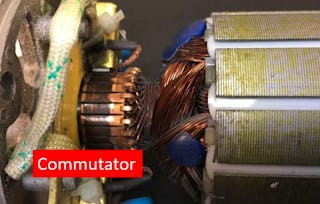
University of Colorado Boulder
Warum entscheiden sich Menschen für Coursera für ihre Karriere?

Felipe M.
Lernender seit 2018
„Es ist eine großartige Erfahrung, in meinem eigenen Tempo zu lernen. Ich kann lernen, wenn ich Zeit und Nerven dazu habe.“

Jennifer J.
Lernender seit 2020
„Bei einem spannenden neuen Projekt konnte ich die neuen Kenntnisse und Kompetenzen aus den Kursen direkt bei der Arbeit anwenden.“

Larry W.
Lernender seit 2021
„Wenn mir Kurse zu Themen fehlen, die meine Universität nicht anbietet, ist Coursera mit die beste Alternative.“

Chaitanya A.
„Man lernt nicht nur, um bei der Arbeit besser zu werden. Es geht noch um viel mehr. Bei Coursera kann ich ohne Grenzen lernen.“
Bewertungen von Lernenden
- 5 Sterne
68,42 %
- 4 Sterne
18,42 %
- 3 Sterne
7,89 %
- 2 Sterne
0 %
- 1 Stern
5,26 %
Zeigt 3 von 38 an
MA
4.0
Geprüft am 11. Sep. 2024
Good but the peer review process is so slow. The instructors need to fix this. There has been a backlog of assignments since last year.
Bringen Sie Ihre Karriere mit einem Online-Abschluss voran.
Erwerben Sie einen Abschluss von erstklassigen Universitäten – 100 % online




Häufig gestellte Fragen
Weitere Fragen
Finanzielle Unterstützung verfügbar,