The course “Introduction to Economics” aims to prepare you for a comprehensive understanding of the key concepts in economics, making it a perfect starting point for students and professionals who are new to the subject. In this course, you’ll be introduced to the core principles of microeconomics and macroeconomics, and you will explore how individuals, firms, and governments make economic decisions. You’ll learn about consumer behaviour, firm behaviour, market structures, monetary and fiscal policies, international trade, and much more.

Introduction to Economics
Zum Labor Day gibt es bei Coursera Plus Rabatte von über 70 $. Sparen Sie 3 Monate lang 40 %.
kurs ist nicht verfügbar in Deutsch (Deutschland)
Wir übersetzen es in weitere Sprachen.

Verschaffen Sie sich einen Einblick in ein Thema und lernen Sie die Grundlagen.
Stufe Mittel
Empfohlene Erfahrung
2 months to complete
unter 10 Stunden pro Woche
Flexibler Zeitplan
In Ihrem eigenen Lerntempo lernen
Verschaffen Sie sich einen Einblick in ein Thema und lernen Sie die Grundlagen.
Stufe Mittel
Empfohlene Erfahrung
2 months to complete
unter 10 Stunden pro Woche
Flexibler Zeitplan
In Ihrem eigenen Lerntempo lernen
Was Sie lernen werden
Master core economic principles, including scarcity, opportunity cost, and market interactions, to analyse consumer, firm, and government decisions.
Evaluate government policies like monetary and fiscal measures and their effects on inflation, unemployment, and economic growth.
Interpret the impact of international trade, exchange rates, and globalisation on both domestic and global economies.
Kompetenzen, die Sie erwerben
- Kategorie: Market DynamicsMarket Dynamics
- Kategorie: Market AnalysisMarket Analysis
- Kategorie: Decision MakingDecision Making
- Kategorie: Economic DevelopmentEconomic Development
- Kategorie: Fiscal ManagementFiscal Management
- Kategorie: Social SciencesSocial Sciences
- Kategorie: Business EconomicsBusiness Economics
- Kategorie: SocioeconomicsSocioeconomics
- Kategorie: Financial SystemsFinancial Systems
- Kategorie: Supply And DemandSupply And Demand
- Kategorie: General FinanceGeneral Finance
- Kategorie: Market DataMarket Data
- Kategorie: Consumer BehaviourConsumer Behaviour
- Kategorie: Financial MarketFinancial Market
- Kategorie: Labor LawLabor Law
- Kategorie: Financial PolicyFinancial Policy
- Kategorie: Capital MarketsCapital Markets
- Kategorie: Resource AllocationResource Allocation
- Kategorie: Public PoliciesPublic Policies
- Kategorie: EconomicsEconomics
Wichtige Details

Zertifikat zur Vorlage
Zu Ihrem LinkedIn-Profil hinzufügen
Kürzlich aktualisiert!
April 2026
Bewertungen
44 Aufgaben
Unterrichtet in Englisch
Auf einen Abschluss hinarbeiten
Erfahren Sie, wie Mitarbeiter führender Unternehmen gefragte Kompetenzen erwerben.

In diesem Kurs gibt es 10 Module
This foundational module introduces learners to the core concepts of economics. It covers key economic principles, including scarcity, opportunity cost, economic systems, and the circular flow of income. Learners will explore how societies make decisions about resource allocation, production, and distribution, laying the groundwork for understanding both microeconomic and macroeconomic concepts that will be discussed in later modules. The lessons will emphasise how economics affects daily life and decision-making at individual, firm, and government levels. By the end of this module, learners will have a clear understanding of how economies function and how various economic systems address the fundamental problems of scarcity and choice.
Das ist alles enthalten
14 Videos6 Lektüren3 Aufgaben
14 Videos•Insgesamt 87 Minuten
- Meet Your Instructor - Prof. Vamsidhar Ambatipudi•3 Minuten
- Meet Your Instructor - Prof. Gaurav Nagpal •2 Minuten
- Course Introduction•4 Minuten
- What is Economics?•8 Minuten
- Economics and Decision-Making•5 Minuten
- The Concept of Scarcity and Choice•4 Minuten
- Opportunity Cost and Trade-offs•7 Minuten
- Economic Thinking in Everyday Life•6 Minuten
- Introduction to Economic Systems•8 Minuten
- Command Economy and Mixed Economy•7 Minuten
- What is the Production Possibility Frontier (PPF)?•13 Minuten
- PPF: Understanding Trade-Offs and Opportunity Cost•7 Minuten
- Shifts in the PPF•7 Minuten
- Applications of the PPF in Decision-Making•6 Minuten
6 Lektüren•Insgesamt 190 Minuten
- Course Overview•10 Minuten
- Recommended Reading: Introduction to Economics and Core Concepts•30 Minuten
- Recommended Reading: Economic Systems•60 Minuten
- Recommended Reading: Production Possibility Frontier•60 Minuten
- Unit 1: Notes, PPT, and Case Study•20 Minuten
- Unit 2: Notes, PPT, and Case Study•10 Minuten
3 Aufgaben•Insgesamt 45 Minuten
- Introduction to Economics and Core Concepts•15 Minuten
- Economic Systems•15 Minuten
- Production Possibility Frontier (PPF)•15 Minuten
In this module, learners will delve into the foundational concepts of demand and supply, which are the key forces driving market economies. They will explore how individual consumers and producers make decisions, how these decisions affect market prices, and how prices adjust to bring about market equilibrium. This module introduces the laws of demand and supply, the factors that cause shifts in demand and supply curves, and the concept of elasticity, which measures the responsiveness of demand and supply to changes in price, income, and other factors. These concepts are crucial for understanding how prices are determined in competitive markets and how markets allocate resources efficiently. By the end of the module, learners will be able to analyze real-world markets using these tools, making connections between theoretical models and actual market behaviours.
Das ist alles enthalten
16 Videos5 Lektüren5 Aufgaben
16 Videos•Insgesamt 121 Minuten
- What is Demand?•6 Minuten
- The Law of Demand•8 Minuten
- Factors Affecting the Demand•12 Minuten
- Graphing the Demand Curve•5 Minuten
- What is Supply?•12 Minuten
- The Law of Supply•6 Minuten
- Factors Affecting Supply•6 Minuten
- Graphing the Supply Curve•5 Minuten
- What is Market Equilibrium?•4 Minuten
- Shifts in Demand and Supply: Effects on Equilibrium•8 Minuten
- Graphing Market Equilibrium•7 Minuten
- Real-World Applications of Market Equilibrium•6 Minuten
- Introduction to Elasticity•13 Minuten
- Price Elasticity of Demand (PED)•10 Minuten
- Income Elasticity of Demand•6 Minuten
- Price Elasticity of Supply•8 Minuten
5 Lektüren•Insgesamt 160 Minuten
- Recommended Reading: Demand and the Law of De•40 Minuten
- Recommended Reading: Supply and the Law of Supply•40 Minuten
- Recommended Reading: Market Equilibrium and Price Determination •30 Minuten
- Recommended Reading: Elasticity•40 Minuten
- Unit 3 Notes•10 Minuten
5 Aufgaben•Insgesamt 120 Minuten
- Graded Quiz for Week 1 and 2•60 Minuten
- Demand and the Law of Demand•15 Minuten
- Supply and the Law of Supply•15 Minuten
- Market Equilibrium and Price Determination•15 Minuten
- Elasticity•15 Minuten
In this module, learners will explore how consumers and firms make economic decisions. The module introduces the concepts of utility, preferences, and budget constraints, which shape consumer behaviour, and covers the theory of consumer choice to explain how individuals make choices to maximize satisfaction. Additionally, it will delve into firm behaviour, focusing on the cost structures of firms, how firms maximize profits, and the different market structures (perfect competition, monopoly, monopolistic competition, and oligopoly) in which firms operate. By the end of this module, learners will have a deeper understanding of how consumers and firms interact within markets, setting the foundation for analyzing real-world economic scenarios.
Das ist alles enthalten
16 Videos5 Lektüren4 Aufgaben
16 Videos•Insgesamt 147 Minuten
- Introduction to Consumer Behaviour•15 Minuten
- Utility and Marginal Utility•9 Minuten
- Indifference Curves and Budget Constraints•12 Minuten
- Consumer Equilibrium•5 Minuten
- Introduction to Consumer Choice Theory •5 Minuten
- Income and Substitution Effects•12 Minuten
- Real-life Examples of Theory of Consumer Choice•5 Minuten
- Utility Maximisation and Demand Curve•5 Minuten
- Introduction to Firm Behaviour•13 Minuten
- Costs of Production•11 Minuten
- Marginal Cost and Average Cost•8 Minuten
- Profit Maximisation•6 Minuten
- Introduction to Market Structures•14 Minuten
- Perfect Competition•5 Minuten
- Monopoly and Monopolistic Competition•10 Minuten
- Oligopoly•11 Minuten
5 Lektüren•Insgesamt 200 Minuten
- Recommended Reading: Consumer Behaviour and Utility•60 Minuten
- Recommended Reading: Consumer Choice Theory•60 Minuten
- Recommended Reading: Firm Behaviour and Cost Structures •30 Minuten
- Recommended Reading: Market Structures•40 Minuten
- Unit 4 Notes•10 Minuten
4 Aufgaben•Insgesamt 60 Minuten
- Consumer Behaviour and Utility•15 Minuten
- Consumer Choice Theory•15 Minuten
- Firm Behaviour and Cost Structures•15 Minuten
- Market Structures•15 Minuten
This module explores the concept of market efficiency and examines situations in which markets fail to allocate resources efficiently. Learners will study the concepts of consumer surplus, producer surplus, and deadweight loss to understand how economic welfare is maximised in efficient markets. The module also dives into market failures, where free markets do not lead to optimal outcomes, covering causes such as externalities, public goods, and information asymmetry. By understanding the limitations of markets, learners will gain insight into why government interventions may be necessary and how policy measures can address these failures. This module provides a critical perspective on the ideal vs. real-world functioning of markets, helping learners to critically assess market outcomes and potential corrective measures.
Das ist alles enthalten
17 Videos5 Lektüren5 Aufgaben
17 Videos•Insgesamt 133 Minuten
- What is Market Efficiency?•9 Minuten
- Consumer Surplus and Producer Surplus•17 Minuten
- Economic Welfare•7 Minuten
- Deadweight Loss and its Computation - 1•13 Minuten
- Deadweight Loss and its Computation - 2•10 Minuten
- What are Externalities?•5 Minuten
- Effect of Positive Externalities•5 Minuten
- Negative Externalities•5 Minuten
- Implications for Policymakers•9 Minuten
- Understanding Public Goods•5 Minuten
- Free Rider Problem and Its Consequences•4 Minuten
- Common Resources and the Tragedy of the Commons•6 Minuten
- Government Intervention for Public Goods and Common Resources•12 Minuten
- Introduction to Asymmetric Information•8 Minuten
- Adverse Selection•7 Minuten
- Moral Hazard•7 Minuten
- Addressing Asymmetric Information: Scaling and Screening•6 Minuten
5 Lektüren•Insgesamt 210 Minuten
- Recommended Reading: Market Efficiency•60 Minuten
- Recommended Reading: Externalities•60 Minuten
- Recommended Reading: Public Goods and Common Resources•40 Minuten
- Recommended Reading: Asymmetric Information and Market Failure•40 Minuten
- Unit 5 Notes•10 Minuten
5 Aufgaben•Insgesamt 120 Minuten
- Graded Quiz for Week 3 and 4•60 Minuten
- Market Efficiency•15 Minuten
- Externalities•15 Minuten
- Public Goods and Common Resources•15 Minuten
- Asymmetric Information and Market Failure•15 Minuten
This module explores the dynamics of labour markets and the issue of unemployment, both of which are essential for understanding how economies function and how governments design policies to support employment and income. Learners will examine how labour supply and demand are determined, how wages are set, and the various factors that influence labour market outcomes. The module will also cover different types of unemployment, such as frictional, structural, and cyclical unemployment, and discuss the natural rate of unemployment. By understanding these concepts, learners will be better equipped to analyse job market trends, evaluate the impact of economic policies on employment, and consider the role of government in addressing unemployment.
Das ist alles enthalten
17 Videos5 Lektüren4 Aufgaben
17 Videos•Insgesamt 147 Minuten
- Introduction to Labour Market•9 Minuten
- Labour Demand and Influencing Factors•6 Minuten
- Labour Supply and Influencing Factors•9 Minuten
- Equilibrium in the Labour Market•10 Minuten
- How are Wages Determined?•10 Minuten
- Minimum Wage Laws and Their Effects•10 Minuten
- Income Inequality in the Labour Market and Their Causes•9 Minuten
- Effects of Income Inequality•7 Minuten
- Government Policies to Address Income Inequality•10 Minuten
- Understanding Unemployment•7 Minuten
- Frictional and Structural Unemployment•9 Minuten
- Cyclical Unemployment and Economic Fluctuations•5 Minuten
- Natural Rate of Unemployment•3 Minuten
- Government’s Role in the Labour Market•13 Minuten
- Job Creation Programs and Public Works•11 Minuten
- Unemployment Benefits and Their Impact•10 Minuten
- Education, Training, and Labour Market Policies•9 Minuten
5 Lektüren•Insgesamt 250 Minuten
- Recommended Reading: Introduction to Economics and Core Concepts•60 Minuten
- Recommended Reading: Wage Determination and Income Inequality•60 Minuten
- Recommended Reading: Types of Unemployment•60 Minuten
- Recommended Reading: Government Policies and Labour Market Interventions•60 Minuten
- Unit 6 Notes•10 Minuten
4 Aufgaben•Insgesamt 60 Minuten
- Introduction to Economics and Core Concepts•15 Minuten
- Wage Determination and Income Inequality•15 Minuten
- Types of Unemployment•15 Minuten
- Government Policies and Labour Market Interventions•15 Minuten
In this module, learners will explore the structure and functioning of capital markets and the role of financial institutions in facilitating economic growth. Capital markets, which include the stock and bond markets, are essential for channelling savings into productive investments. Learners will study how capital markets operate, the different types of financial instruments available, and the role of stock exchanges. Additionally, the module will introduce the key financial institutions that participate in capital markets, such as commercial banks, investment banks, and non-banking financial institutions (NBFIs). Finally, the module will cover the importance of regulatory frameworks and the role of central banks in maintaining stability in financial markets. This module provides a strong foundation for understanding the broader financial system and how it supports both individual and corporate investment activities.
Das ist alles enthalten
17 Videos17 Lektüren5 Aufgaben
17 Videos•Insgesamt 180 Minuten
- What are Capital Markets?•12 Minuten
- Primary and Secondary Markets•11 Minuten
- Types of Financial Instruments in Capital Markets•11 Minuten
- Capital Markets and Economic Growth•10 Minuten
- Introduction to Stock Exchanges•11 Minuten
- How Trading Works on a Stock Exchange•11 Minuten
- Market Indices and Their Importance•11 Minuten
- Market Volatility and Risks in Stock Trading•11 Minuten
- Types of Financial Institutions•14 Minuten
- Role of Commercial Banks•9 Minuten
- Investment Banks and Capital Raising•9 Minuten
- Non-Banking Financial Institutions: An Overview•9 Minuten
- Introduction to Financial Regulation•10 Minuten
- Role of Central Banks in Financial Markets•10 Minuten
- Regulatory Bodies and Compliance•10 Minuten
- The Impact of Financial Crises on Regulation•11 Minuten
- Module Wrap Up Video•8 Minuten
17 Lektüren•Insgesamt 490 Minuten
- Recommended Reading: An Overview of Capital Markets•30 Minuten
- Recommended Reading: Primary vs. Secondary Markets•30 Minuten
- Recommended Reading: Understanding Stocks, Bonds, and Derivatives•30 Minuten
- Recommended Reading: Capital Markets and Economic Growth•30 Minuten
- Recommended Reading: The Role of Stock Exchanges•30 Minuten
- Recommended Reading: Trading Mechanisms in Stock Markets•30 Minuten
- Recommended Reading: Market Indices and Their Importance•30 Minuten
- Recommended Reading: Market Volatility and Risks in Stock Trading•30 Minuten
- Recommended Reading: Types of Financial Institutions•30 Minuten
- Recommended Reading: Role of Commercial Banks•30 Minuten
- Recommended Reading: Investment Banks and Capital Raising•30 Minuten
- Recommended Reading: Non-Banking Financial Institutions: An Overview•30 Minuten
- Recommended Reading: Introduction to Financial Regulation•30 Minuten
- Recommended Reading: Role of Central Banks in Financial Markets•30 Minuten
- Recommended Reading: Regulatory Bodies and Compliance•30 Minuten
- Recommended Reading: The Impact of Financial Crises on Regulation•30 Minuten
- Unit 7 Notes•10 Minuten
5 Aufgaben•Insgesamt 135 Minuten
- Graded Quiz - Modules 5 and 6•60 Minuten
- Introduction to Capital Markets•18 Minuten
- Stock Exchanges and Trading Mechanisms•21 Minuten
- Financial Institutions in Capital Markets•18 Minuten
- Financial Regulation and the Role of Central Banks•18 Minuten
This module introduces learners to the core concepts and indicators used to understand the performance and health of an economy at a macro level. Learners will explore how economic activity is measured through national income accounting and GDP, examine key macroeconomic challenges such as unemployment and inflation, and understand the drivers of long-term economic growth. Through real-world applications, readings, and practice quizzes, the module builds a foundation for interpreting macroeconomic data, evaluating economic conditions, and connecting economic theory to policy decisions and everyday economic outcomes.
Das ist alles enthalten
17 Videos17 Lektüren4 Aufgaben
17 Videos•Insgesamt 142 Minuten
- What is Macroeconomics?•9 Minuten
- The Circular Flow Model of the Economy•9 Minuten
- National Income Accounting: An Overview•10 Minuten
- Real vs. Nominal GDP•9 Minuten
- What is GDP?•10 Minuten
- The Components of GDP•9 Minuten
- Limitations of GDP as a Measure•10 Minuten
- Real-World Applications of GDP Data•7 Minuten
- What is Unemployment?•8 Minuten
- What is Inflation?•8 Minuten
- Causes of Inflation and Costs•9 Minuten
- The Relationship Between Unemployment and Inflation•9 Minuten
- What Drives Economic Growth?•8 Minuten
- Role of Productivity and Technology•8 Minuten
- Savings, Investment, and Growth•7 Minuten
- Policies to Promote Growth•8 Minuten
- Module Wrap Up Video•4 Minuten
17 Lektüren•Insgesamt 370 Minuten
- Recommended Reading: What is Macroeconomics?•30 Minuten
- Recommended Reading: The Circular Flow Model of the Economy•30 Minuten
- Recommended Reading: National Income Accounting: An Overview•30 Minuten
- Recommended Reading: Real vs. Nominal GDP•30 Minuten
- Recommended Reading: What is GDP?•30 Minuten
- Recommended Reading: The Components of GDP•30 Minuten
- Recommended Reading: Limitations of GDP as a Measure•10 Minuten
- Recommended Reading: Real-World Applications of GDP Data•10 Minuten
- Recommended Reading: What is Unemployment?•20 Minuten
- Recommended Reading: What is Inflation?•20 Minuten
- Recommended Reading: Causes of Inflation and Costs•20 Minuten
- Recommended Reading: The Relationship Between Unemployment and Inflation•20 Minuten
- Recommended Reading: What Drives Economic Growth?•20 Minuten
- Recommended Reading: Role of Productivity and Technology•20 Minuten
- Recommended Reading: Savings, Investment, and Growth•20 Minuten
- Recommended Reading: Policies to Promote Growth•20 Minuten
- Unit 8 Notes•10 Minuten
4 Aufgaben•Insgesamt 72 Minuten
- Introduction to Macroeconomics•18 Minuten
- Components of GDP•18 Minuten
- Unemployment and Inflation•18 Minuten
- Economic Growth•18 Minuten
This module introduces the Aggregate Demand–Aggregate Supply (AD–AS) framework as a core tool for analysing macroeconomic fluctuations, policy interventions, and economic growth. Learners will examine the components and determinants of aggregate demand and aggregate supply, understand how shifts in these curves affect output and price levels, and explore equilibrium outcomes in the short run and long run. Through real-world examples and case studies—including post-COVID-19 economic recovery—the module connects theory to practice, enabling learners to interpret business cycles and evaluate the role of monetary and fiscal policy in stabilising the economy.
Das ist alles enthalten
16 Videos16 Lektüren5 Aufgaben
16 Videos•Insgesamt 149 Minuten
- What is Aggregate Demand?•11 Minuten
- Determinants of Aggregate Demand•12 Minuten
- Shifts in the AD Curve•10 Minuten
- Real-World Examples of AD Shifts•10 Minuten
- What is Aggregate Supply?•11 Minuten
- Determinants of Short-Run Aggregate Supply (SRAS)•10 Minuten
- Determinants of Long-Run Aggregate Supply (LRAS)•10 Minuten
- Shifts in the AS Curve•10 Minuten
- AD-AS Equilibrium: Basic Concepts•11 Minuten
- Inflationary and Recessionary Gaps•10 Minuten
- Policy Tools to Address Economic Gaps•8 Minuten
- AD-AS Equilibrium in Action: A Case Study•8 Minuten
- Economic Growth and the AD-AS Framework•9 Minuten
- Business Cycles and AD-AS Dynamics•8 Minuten
- Productivity and Long-Term Growth•7 Minuten
- Module Wrap-Up Video•6 Minuten
16 Lektüren•Insgesamt 235 Minuten
- Recommended Reading: What is Aggregate Demand?•15 Minuten
- Recommended Reading: Determinants of Aggregate Demand•15 Minuten
- Recommended Reading: Shifts in the AD Curve•15 Minuten
- Recommended Reading: Real-World Examples of AD Shifts•15 Minuten
- Recommended Reading: What is Aggregate Supply?•15 Minuten
- Recommended Reading: Determinants of Short-Run Aggregate Supply (SRAS)•15 Minuten
- Recommended Reading: Determinants of Long-Run Aggregate Supply (LRAS)•15 Minuten
- Recommended Reading: Shifts in the AS Curve•15 Minuten
- Recommended Reading: AD-AS Equilibrium: Basic Concepts•15 Minuten
- Recommended Reading: Inflationary and Recessionary Gaps•15 Minuten
- Recommended Reading: Policy Tools to Address Economic Gaps•15 Minuten
- Recommended Reading: AD-AS Equilibrium in Action: A Case Study•15 Minuten
- Recommended Reading: Economic Growth and the AD-AS Framework•15 Minuten
- Recommended Reading: Business Cycles and AD-AS Dynamics•15 Minuten
- Recommended Reading: Productivity and Long-Term Growth•15 Minuten
- Unit 9&10 : Study Material•10 Minuten
5 Aufgaben•Insgesamt 120 Minuten
- Graded Quiz - Modules 7 and 8 •60 Minuten
- Introduction to Aggregate Demand (AD)•15 Minuten
- Introduction to Aggregate Supply (AS)•15 Minuten
- AD-AS Equilibrium•15 Minuten
- Economic Growth and Business Cycles•15 Minuten
This module examines the role of central banks in managing a country’s monetary system and promoting macroeconomic stability. Learners will explore the structure, functions, and independence of central banks, along with the key tools they use to implement monetary policy. The module analyses how monetary policy influences inflation, economic growth, employment, and exchange rates, while also highlighting its limitations in real-world contexts such as liquidity traps and coordination challenges with fiscal policy. Through readings, examples, and discussions, learners will gain a practical understanding of how central bank decisions shape economic outcomes.
Das ist alles enthalten
16 Videos15 Lektüren4 Aufgaben
16 Videos•Insgesamt 115 Minuten
- What is a Central Bank?•9 Minuten
- Key Functions of Central Banks•8 Minuten
- Central Banks and Financial Stability•7 Minuten
- The Independence of Central Banks•7 Minuten
- Overview of Monetary Policy Tools•7 Minuten
- Interest Rates: The Policy Rate•7 Minuten
- Open Market Operations (OMOs)•5 Minuten
- Reserve Requirements•8 Minuten
- Introduction•8 Minuten
- How Monetary Policy Affects Inflation and Growth•6 Minuten
- Impact on Employment and the Labour Market•7 Minuten
- Exchange Rates and International Impact•8 Minuten
- Introduction•9 Minuten
- The Liquidity Trap and Zero Lower Bound•8 Minuten
- Monetary Policy vs. Fiscal Policy•7 Minuten
- Module Wrap Up Video•4 Minuten
15 Lektüren•Insgesamt 180 Minuten
- Recommended Reading: What is a Central Bank?•10 Minuten
- Recommended Reading: Key Functions of Central Banks•10 Minuten
- Recommended Reading: Central Banks and Financial Stability•10 Minuten
- Recommended Reading: The Independence of Central Banks•15 Minuten
- Recommended Reading: Overview of Monetary Policy Tools•10 Minuten
- Recommended Reading: Interest Rates: The Policy Rate•10 Minuten
- Recommended Reading: Open Market Operations (OMOs)•15 Minuten
- Recommended Reading: Reserve Requirements•15 Minuten
- Recommended Reading: Introduction•10 Minuten
- Recommended Reading: How Monetary Policy Affects Inflation and Growth•15 Minuten
- Recommended Reading: Impact on Employment and the Labour Market•10 Minuten
- Recommended Reading: Exchange Rates and International Impact•10 Minuten
- Recommended Reading: Introduction•10 Minuten
- Recommended Reading: The Liquidity Trap and Zero Lower Bound•15 Minuten
- Recommended Reading: Monetary Policy vs. Fiscal Policy•15 Minuten
4 Aufgaben•Insgesamt 66 Minuten
- The Role and Structure of Central Banks•15 Minuten
- Tools of Monetary Policy•15 Minuten
- Goals and Effects of Monetary Policy•15 Minuten
- Challenges and Limitations of Monetary Policy•21 Minuten
This module focuses on fiscal policy, which is the use of government spending and taxation to influence the economy. Fiscal policy plays a crucial role in stabilizing economic fluctuations, promoting economic growth, and achieving social objectives like reducing inequality. In this module, learners will explore the components of fiscal policy, including government spending, taxation, and budget deficits. They will study how fiscal policy is used to address different phases of the business cycle, such as recession and inflationary periods, and how it interacts with monetary policy. The module will also cover challenges associated with fiscal policy, such as public debt and fiscal sustainability. By the end of this module, learners will understand the tools of fiscal policy, its objectives, and the implications of government interventions in the economy.
Das ist alles enthalten
17 Videos17 Lektüren5 Aufgaben
17 Videos•Insgesamt 112 Minuten
- What is Fiscal Policy?•8 Minuten
- Components of Fiscal Policy: Government Spending•6 Minuten
- Components of Fiscal Policy: Taxation•8 Minuten
- The Government Budget •7 Minuten
- Expansionary Fiscal Policy•7 Minuten
- Contractionary Fiscal Policy•7 Minuten
- Automatic Stabilisers•7 Minuten
- Discretionary Fiscal Policy•5 Minuten
- Fiscal Policy and Economic Growth•6 Minuten
- Fiscal Policy and Employment•7 Minuten
- Fiscal Policy and Inflation•7 Minuten
- Crowding Out and the Limits of Fiscal Policy•6 Minuten
- The Budget Deficit and National Debt•7 Minuten
- Fiscal Sustainability and Debt-to-GDP Ratio•7 Minuten
- Political and Economic Constraints on Fiscal Policy•7 Minuten
- Module Wrap-Up Video•5 Minuten
- Course Wrap-Up•4 Minuten
17 Lektüren•Insgesamt 230 Minuten
- Recommended Reading: What is Fiscal Policy?•15 Minuten
- Recommended Reading: Components of Fiscal Policy: Government Spending•15 Minuten
- Recommended Reading: Components of Fiscal Policy: Taxation•15 Minuten
- Recommended Reading: The Government Budget•15 Minuten
- Recommended Reading: Expansionary Fiscal Policy•10 Minuten
- Recommended Reading: Contractionary Fiscal Policy•15 Minuten
- Recommended Reading: Automatic Stabilisers•15 Minuten
- Recommended Reading: Discretionary Fiscal Policy•10 Minuten
- Recommended Reading: Fiscal Policy and Economic Growth•15 Minuten
- Recommended Reading: Fiscal Policy and Employment•15 Minuten
- Recommended Reading: Fiscal Policy and Inflation•15 Minuten
- Recommended Reading: Crowding Out and the Limits of Fiscal Policy•10 Minuten
- Recommend Reading: The Budget Deficit and National Debt•15 Minuten
- Recommended Reading: Fiscal Sustainability and Debt-to-GDP Ratio•15 Minuten
- Recommended Reading: Political and Economic Constraints on Fiscal Policy•15 Minuten
- Unit 11: Study Material•10 Minuten
- Course Summary•10 Minuten
5 Aufgaben•Insgesamt 135 Minuten
- Graded Quiz - Modules 9 and 10•60 Minuten
- Introduction to Fiscal Policy•21 Minuten
- Types of Fiscal Policy and their Applications•21 Minuten
- The Impact of Fiscal Policy on the Economy•18 Minuten
- Fiscal Policy Challenges and Sustainability•15 Minuten
Auf einen Abschluss hinarbeiten
Dieses Kurs ist Teil des/der folgenden Studiengangs/Studiengänge, die von Birla Institute of Technology & Science, Pilaniangeboten werden. Wenn Sie zugelassen werden und sich immatrikulieren, können Ihre abgeschlossenen Kurse auf Ihren Studienabschluss angerechnet werden und Ihre Fortschritte können mit Ihnen übertragen werden.¹
Dozent

Birla Institute of Technology & Science, Pilani
49 Kurse•93.668 Lernende

Mehr von Economics entdecken
 R
RRice University
Kurs
Status: Kostenloser TestzeitraumKostenloser Testzeitraum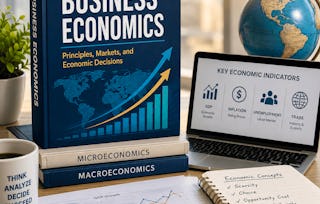 O
OO.P. Jindal Global University
Kurs
Kategorie: VorschauVorschau
Kurs
Status: Kostenloser TestzeitraumKostenloser Testzeitraum I
IInteractive Brokers
Kurs
Status: Kostenloser TestzeitraumKostenloser Testzeitraum
Warum entscheiden sich Menschen für Coursera für ihre Karriere?

Felipe M.
Lernender seit 2018
„Es ist eine großartige Erfahrung, in meinem eigenen Tempo zu lernen. Ich kann lernen, wenn ich Zeit und Nerven dazu habe.“

Jennifer J.
Lernender seit 2020
„Bei einem spannenden neuen Projekt konnte ich die neuen Kenntnisse und Kompetenzen aus den Kursen direkt bei der Arbeit anwenden.“

Larry W.
Lernender seit 2021
„Wenn mir Kurse zu Themen fehlen, die meine Universität nicht anbietet, ist Coursera mit die beste Alternative.“

Chaitanya A.
„Man lernt nicht nur, um bei der Arbeit besser zu werden. Es geht noch um viel mehr. Bei Coursera kann ich ohne Grenzen lernen.“

Nutzen Sie mit unserem Labor-Day-Angebot mehr als 10.000 Programme


Beginnen Sie mit einfachen Einsparungsmöglichkeiten für hart arbeitende Teams

Häufig gestellte Fragen
To access course materials, assignments, and earn a Certificate, you'll need to purchase the Certificate experience when you enroll in a course. Eligible learners may also have the option to start with a Free Trial. Some courses may also offer a Full Course, No Certificate option. This lets you access course materials, submit required assessments, and receive a final grade, but you won't be able to earn or purchase a Certificate.
When you purchase a Certificate you get access to all course materials, including graded assignments. Upon completing the course, your electronic Certificate will be added to your Accomplishments page - from there, you can print your Certificate or add it to your LinkedIn profile.
Yes. In select learning programs, you can apply for financial aid or a scholarship if you can’t afford the enrollment fee. If fin aid or scholarship is available for your learning program selection, you’ll find a link to apply on the description page.
Weitere Fragen
Finanzielle Unterstützung verfügbar,