Indian Institute for Human Settlements

Towards Safe Sanitation for All: Implementing the Full Chain

Ce cours n'est pas disponible en Français (France)

Nous sommes actuellement en train de le traduire dans plus de langues.
Indian Institute for Human Settlements

Towards Safe Sanitation for All: Implementing the Full Chain

Kavita Wankhade

Instructeur : Kavita Wankhade

Obtenez un aperçu d'un sujet et apprenez les principes fondamentaux.
niveau Intermédiaire

Expérience recommandée

8 heures à compléter
Planning flexible
Apprenez à votre propre rythme
Obtenez un aperçu d'un sujet et apprenez les principes fondamentaux.
niveau Intermédiaire

Expérience recommandée

8 heures à compléter
Planning flexible
Apprenez à votre propre rythme

Ce que vous apprendrez

  • Master the Full Chain: Navigate the operational complexities of emptying, transport, and treatment systems.

  • Champion Inclusion: Learn to design services that prioritize the urban poor, advance gender equity, and protect sanitation workers.

  • Build Sustainable Systems: Unpack the financial, regulatory, and institutional frameworks required to sustain large-scale operations.

Compétences que vous acquerrez

  • Catégorie : Diversity Equity and Inclusion Initiatives
  • Catégorie : Civil Engineering
  • Catégorie : Sanitation
  • Catégorie : Policy Analysis
  • Catégorie : Project Implementation

Détails à connaître

Récemment mis à jour !

novembre 2026

Évaluations

1 devoir

Enseigné en Anglais

Découvrez comment les employés des entreprises prestigieuses maîtrisent des compétences recherchées

 logos de Petrobras, TATA, Danone, Capgemini, P&G et L'Oreal

Il y a 8 modules dans ce cours

This introductory module sets the foundation for the course. You will be introduced to the course goals and meet the team who have developed this MOOC. This module also introduces sanitation as a critical public health and urban development priority and examines the role of Fecal Sludge Management (FSM) in meeting cities' sanitation needs. Moving beyond an infrastructure-centric view, it introduces the full sanitation chain and situates it within a wider system.

Inclus

3 vidéos2 lectures1 plugin

Drawing on implementation experiences from Tamil Nadu, this module explores different approaches to strengthening sanitation access. It examines community and public toilet management models, including community-led initiatives and public-private partnerships, as well as efforts to improve individual household toilet provision and last-mile sewer connectivity.

Inclus

4 vidéos2 lectures

This module introduces on-site sanitation systems (OSS), focusing on their design, siting, construction, operation and maintenance. Drawing on lessons from TNUSSP, it highlights why getting OSS right during initial construction is critical for public health, environmental protection and long-term efficiency.

Inclus

5 vidéos2 lectures

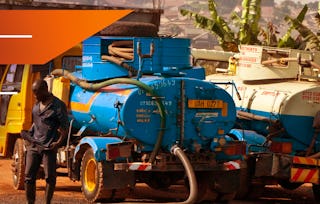
Drawing on Tamil Nadu's experience, the module examines approaches to strengthening and scaling E&T services, particularly by building on an existing private-sector-led service system. It explores choices around service delivery models, regulation, access to treatment facilities, and worker safety and inclusion. Through these experiences, learners will gain insights into the opportunities, challenges and trade-offs involved in strengthening E&T services.

Inclus

5 vidéos4 lectures

This module explores fecal sludge treatment as a critical link in the urban sanitation chain, drawing on lessons from TNUSSP. It covers planning, technology selection, design, operation and maintenance of treatment systems, including dedicated fecal sludge treatment plants (FSTPs) and co-treatment at sewage treatment plants (STPs).

Inclus

4 vidéos3 lectures

This module examines two important dimensions of inclusive sanitation: integrating gender into sanitation programmes and improving the well-being of sanitation workers. Drawing on experiences from Tamil Nadu, it explores how these priorities can be translated into action, from initial assessments and programme design to implementation and institutional strengthening. Note: This module focusses on TNUSSP's work on gender and sanitation workers. Initiatives on access with a focus on urban poor is covered in Module 2 of this MOOC.

Inclus

6 vidéos3 lectures

This concluding module provides an opportunity to reflect on the programme's journey, including the choices made, challenges encountered and lessons learnt. The module also brings together key lessons from across the sanitation chain and examines what it takes to sustain safe sanitation services at scale. It explores how policies, regulations, institutional arrangements and capacities can support the institutionalisation of sanitation initiatives, alongside the costing and financing considerations required for their long-term sustainability.

Inclus

1 vidéo2 lectures

Inclus

1 devoir

Instructeur

Kavita Wankhade
Indian Institute for Human Settlements
1 Cours3 apprenants

En savoir plus sur Public Health

Pour quelles raisons les étudiants sur Coursera nous choisissent-ils pour leur carrière ?

Felipe M.

Étudiant(e) depuis 2018
’Pouvoir suivre des cours à mon rythme à été une expérience extraordinaire. Je peux apprendre chaque fois que mon emploi du temps me le permet et en fonction de mon humeur.’

Jennifer J.

Étudiant(e) depuis 2020
’J'ai directement appliqué les concepts et les compétences que j'ai appris de mes cours à un nouveau projet passionnant au travail.’

Larry W.

Étudiant(e) depuis 2021
’Lorsque j'ai besoin de cours sur des sujets que mon université ne propose pas, Coursera est l'un des meilleurs endroits où se rendre.’

Chaitanya A.

’Apprendre, ce n'est pas seulement s'améliorer dans son travail : c'est bien plus que cela. Coursera me permet d'apprendre sans limites.’

Qu’est-ce qui vous amène sur Coursera aujourd’hui ?

Foire Aux Questions