This course explains how legacy waste can be managed and processed to recover reusable materials from landfills and free up space to manage fresh waste—spanning process and value proposition, to planning and financing.
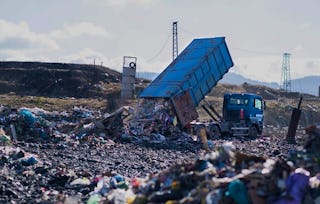
Urban India generates approximately 58 million tonnes of municipal solid waste each year. As lifestyles change and urbanisation accelerates, the use of plastics, metals and paper has risen, altering the nature of waste generated in recent decades. Much of it ends up in municipal landfill sites, many of which are now over capacity, resulting in lakhs of tonnes of waste accumulating over decades. Managing this legacy waste is critical to sustaining India’s urban growth, as it affects soil quality, groundwater purity, and emissions of toxic fumes as well as particulate matter from spontaneous fires. Legacy Waste Management in Indian Cities takes these factors into account to propose bioremediation as a viable solution—yielding compost and refuse-derived fuel, and enabling efficient management of new waste. This course has been developed by the Indian Institute for Human Settlements, and comprises short, expert-led videos explaining core concepts and answering frequently asked questions. You should enrol, if you are: - A municipal officer or engineer working on solid waste management - An urban planner, environmental consultant, or urban policy researcher - A development practitioner or NGO professional working on urban environment issues - A student of environmental science, engineering, planning, or urban studies