O.P. Jindal Global University

Brain and Behaviour

Ce cours n'est pas disponible en Français (France)

Nous sommes actuellement en train de le traduire dans plus de langues.
O.P. Jindal Global University

Brain and Behaviour

Smriti Pathak

Instructeur : Smriti Pathak

Inclus avec Coursera PlusEn savoir plus

Demander à Coursera

Obtenez un aperçu d'un sujet et apprenez les principes fondamentaux.
niveau Débutant

Expérience recommandée

2 semaines à compléter
à 10 heures par semaine
Planning flexible
Apprenez à votre propre rythme
Obtenez un aperçu d'un sujet et apprenez les principes fondamentaux.
niveau Débutant

Expérience recommandée

2 semaines à compléter
à 10 heures par semaine
Planning flexible
Apprenez à votre propre rythme

Ce que vous apprendrez

Détails à connaître

Certificat partageable

Ajouter à votre profil LinkedIn

Récemment mis à jour !

juillet 2026

Évaluations

24 devoirs

Enseigné en Anglais

Découvrez comment les employés des entreprises prestigieuses maîtrisent des compétences recherchées

 logos de Petrobras, TATA, Danone, Capgemini, P&G et L'Oreal

Il y a 12 modules dans ce cours

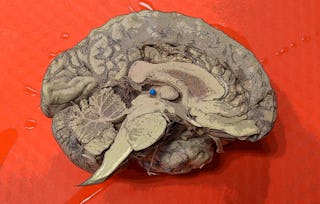
This course introduces students to the biological foundations of Behaviour with a focus on the structure and function of the nervous system. It examines how brain processes influence perception, emotion, learning, memory, motivation, and Behaviour. Students will gain an understanding of neural communication, brain development, and the relationship between brain systems and psychological functions. The course also highlights applications of Behaviour al neuroscience in understanding mental health, neurological disorders, and everyday Behaviour, providing a scientific basis for advanced study in psychology. This module introduces the basic concepts of Behavioural neuroscience, focusing on the relationship between the brain, mind, and Behaviour. It covers the structure of the brain, early historical perspectives, the mind–body problem, and the role of genes and environment in shaping Behaviour. The module provides a foundation for understanding biological influences on psychological processes.

Inclus

7 vidéos4 lectures2 devoirs1 sujet de discussion

This module introduces students to the development, structure, and functional organization of the nervous system. It covers neural development, neurons and nerves, the peripheral and central nervous systems, cerebrospinal fluid and meninges, and the major divisions of the brain including the hindbrain, midbrain, forebrain, and limbic system. The module emphasizes how these structures support behaviour, sensation, movement, emotion, and cognition.

Inclus

5 vidéos1 lecture2 devoirs1 sujet de discussion

This module introduces students to the physiological basis of neural communication. It explains how neurons transmit information through action potentials and how communication occurs at the synapse using chemical neurotransmitters. The module covers the ionic basis of action potentials, factors affecting their speed, chemical transmission at synapses, and the role of excitatory, inhibitory, and modulatory neurotransmitters in neural functioning.

Inclus

6 vidéos1 lecture2 devoirs1 sujet de discussion

This module introduces the major scientific methods used to study the relationship between brain structure, brain activity, genetics, and Behaviour . Students will learn how brain damage, brain stimulation, recording techniques, imaging methods, genetic approaches, and comparative studies help psychologists and neuroscientists understand Behaviour.

Inclus

5 vidéos1 lecture2 devoirs1 sujet de discussion

This module introduces students to the fundamental principles of sensation and perception, with a focused exploration of the visual and auditory sensory systems. It explains how physical stimuli such as light and sound are detected by specialized receptors, converted into neural signals through sensory transduction, and processed by specific neural pathways and cortical areas. Emphasis is placed on the anatomy, physiology, and functional organization of the visual and auditory systems, highlighting their role in perception, communication, and adaptive behaviour.

Inclus

8 vidéos1 lecture2 devoirs1 sujet de discussion

This module focuses on the chemical senses (taste and smell) and mechanical senses (touch, balance, and pain). Students will learn how these sensory systems detect chemical and mechanical stimuli, transmit information through specific neural pathways, and contribute to perception, body awareness, and survival. The module emphasizes sensory integration and the functional significance of these systems in daily life and adaptive behaviour.

Inclus

7 vidéos1 lecture2 devoirs1 sujet de discussion

This module focuses on the neural control of movement and the biological mechanisms that enable voluntary and involuntary actions. It explores the structure and functioning of muscles, neuromuscular junctions, proprioceptors, and reflexes, along with the role of feedback in movement control. The module examines brain mechanisms involved in planning, executing, and inhibiting movement, with special emphasis on the cerebellum, motor cortical areas, and mirror neurons. It also introduces movement disorders, particularly Parkinson’s disease, to illustrate how disruptions in neural circuits affect motor behaviour. Through this module, students gain insight into how the brain coordinates precise, adaptive, and goal-directed movements.

Inclus

6 vidéos1 lecture2 devoirs1 sujet de discussion

This module focus on the biological and behavioural foundations of learning and memory. It examines how experience produces lasting changes in the nervous system and behaviour, beginning with basic forms of learning such as habituation, classical conditioning, and operant conditioning. The unit further explores different types of memory, including short-term, long-term, working, explicit, and implicit memory. Special emphasis is placed on the neural mechanisms of memory, including the role of the hippocampus, synaptic plasticity, Hebbian learning, and long-term potentiation. Clinical conditions such as amnesia, Korsakoff’s syndrome, Alzheimer’s disease, and infant amnesia are discussed to illustrate memory dysfunction. Experimental evidence from human case studies and animal research (Aplysia) is integrated to provide a comprehensive understanding of learning and memory processes.

Inclus

6 vidéos1 lecture2 devoirs1 sujet de discussion

This module introduces students to the biological mechanisms and Behaviour al functions of sleep and waking. It examines why sleep is essential, how sleep is regulated, and how brain activity changes across different sleep stages. The module covers circadian rhythms, sleep architecture, REM and non-REM sleep, and the neural structures involved in sleep–wake regulation, including the hypothalamus, brainstem, and reticular formation. Common sleep disorders such as insomnia, narcolepsy, sleep apnea, and parasomnias are discussed to illustrate disruptions in normal sleep processes. The unit emphasizes the role of sleep in cognitive functioning, memory consolidation, emotional regulation, and overall health.

Inclus

5 vidéos1 lecture2 devoirs1 sujet de discussion

This module explores the neural and biological basis of emotion, focusing on how emotions are generated, processed, expressed, and regulated by the brain. It introduces major theories of emotion and examines the role of key brain structures such as the amygdala, hypothalamus, hippocampus, prefrontal cortex, and the limbic system. The module highlights the interaction between emotion, cognition, and behaviour, and discusses emotional learning, regulation, and dysfunction. Emphasis is placed on understanding emotion from a Behaviour al neuroscience perspective, with relevance to mental health and everyday functioning.

Inclus

4 vidéos1 lecture2 devoirs2 sujets de discussion

This module examines the neural and biological mechanisms of stress and their impact on physical and mental health. It introduces the concept of stress and stressors and explains the body’s physiological response to stress. The module focuses on the role of the hypothalamic–pituitary–adrenal (HPA) axis, stress hormones such as cortisol, and key brain structures involved in stress regulation, including the amygdala, hippocampus, and prefrontal cortex. It further explores the effects of acute and chronic stress on brain functioning, behaviour, immunity, and health, and discusses stress-related mental health disorders.

Inclus

4 vidéos1 lecture2 devoirs1 sujet de discussion

This module examines the biological basis of sexual behaviour, focusing on the interaction between genes, hormones, brain structures, and behaviour. It covers the development of the reproductive system, the role of sex chromosomes and prenatal hormones, and the effects of sex hormones on brain organization and activation. The module also explores sex differences in brain structure and function, variations in sexual behaviour, gender identity, and sexual orientation. Clinical conditions such as Congenital Adrenal Hyperplasia (CAH) are included to illustrate the influence of hormones on sexual development.

Inclus

5 vidéos2 lectures2 devoirs1 sujet de discussion

Instructeur

Smriti Pathak
O.P. Jindal Global University
1 Cours3 apprenants

Offert par

Pour quelles raisons les étudiants sur Coursera nous choisissent-ils pour leur carrière ?

Felipe M.

Étudiant(e) depuis 2018
’Pouvoir suivre des cours à mon rythme à été une expérience extraordinaire. Je peux apprendre chaque fois que mon emploi du temps me le permet et en fonction de mon humeur.’

Jennifer J.

Étudiant(e) depuis 2020
’J'ai directement appliqué les concepts et les compétences que j'ai appris de mes cours à un nouveau projet passionnant au travail.’

Larry W.

Étudiant(e) depuis 2021
’Lorsque j'ai besoin de cours sur des sujets que mon université ne propose pas, Coursera est l'un des meilleurs endroits où se rendre.’

Chaitanya A.

’Apprendre, ce n'est pas seulement s'améliorer dans son travail : c'est bien plus que cela. Coursera me permet d'apprendre sans limites.’

Foire Aux Questions