SA
4.0Reviewed May 25, 2025
It was a great and very useful course. However, for those who are just beginning to learn Bioinformatics, it might be a bit challenging. I'm very glad I took this course

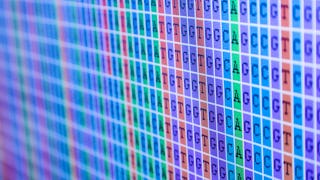
Large-scale biology projects such as the sequencing of the human genome and gene expression surveys using RNA-seq, microarrays and other technologies have created a wealth of data for biologists. However, the challenge facing scientists is analyzing and even accessing these data to extract useful information pertaining to the system being studied. This course focuses on employing existing bioinformatic resources – mainly web-based programs and databases – to access the wealth of data to answer questions relevant to the average biologist, and is highly hands-on. Topics covered include multiple sequence alignments, phylogenetics, gene expression data analysis, and protein interaction networks, in two separate parts. The first part, Bioinformatic Methods I (this one), deals with databases, Blast, multiple sequence alignments, phylogenetics, selection analysis and metagenomics. The second part, Bioinformatic Methods II, covers motif searching, protein-protein interactions, structural bioinformatics, gene expression data analysis, and cis-element predictions. This pair of courses is useful to any student considering graduate school in the biological sciences, as well as students considering molecular medicine. Both provide an overview of the many different bioinformatic tools that are out there. These courses are based on one taught at the University of Toronto to upper-level undergraduates who have some understanding of basic molecular biology. If you're not familiar with this, something like BIO101 from Saylor Academy (https://learn.saylor.org/course/view.php?id=889) might be helpful. No programming is required for this course. Bioinformatic Methods I is regularly updated, and was completely updated for January 2026.
SA
It was a great and very useful course. However, for those who are just beginning to learn Bioinformatics, it might be a bit challenging. I'm very glad I took this course
NS
A thorough course for beginners with very interesting labs! I was pleasantly surprised with how much and how easily I learned bioinformatics skills with this course. Well done!
RG
I enjoyed doing the course. It is exciting to see how much one can learn from a few gene or protein sequences. Thank you for making the course understandable to a beginner in bioinformatics!
PG
This course is so accurate and useful to the bioinformatic students and the science students who needs help with the computational biology. I would recommend this course to everyone.
AA
Highly recommended for anyone who wants to get into research in Biology. This course gives walkthroughs of complex analysis by the use of important bioinformatics tools.
ED
Great course. All lectures provide a biological context for the tools you learn in the labs. The labs themselves provide a great introduction to the many tools available for bioinformatic analysis.
JM
Great course. The lectures were very clear and informative. The labs were a very nice, easy way to get a hands on understanding of the tools being learned. Thank you!
SA
This course is very well organized, easy to understand, and explained everything steps by step which will help to grasp the concept easily. If you are a beginner like me, you should take this course.
WR
Great tour through the main areas of bioinformatics. I learned to use a lot of powerful tools for bioinformatic analyses as well as important topics like phylogenetics and metagenomics.
RQ
Great Course. I love the way it is designed, delivered. I learned a lot. The most important part is that I enjoy every bit of the session and completed everything for less than a week. :)
SB
The course content was very good and the arrangement of the course structure was very systematic. The delivery of the lecture and the videos were quite nice & understandable.
SR
Explanation was on point. As a beginner didn't have to face much problem to understand terminologies and concepts and PDF of the study materials played an important role to understand.
Showing: 20 of 388
Very light on details. For many of the assignments, the target web site tools had changed, or produced different results than expected for the answers. I would have liked a lot more written material over the lecture material.
I have two opinions about this course. POSITIVE OPINION: It is helpful because one can know about the online gene bank and solving problem using web access. NEGATIVE OPINION: The assignments or the quizzes of this course are not helpful. The questions are not that much clear and all the answers are not easy to find and the referred websites gives different results , so one can't understand whether he is right or wrong and one must apply trial and error sometimes. And the FINAL QUIZ is just a disaster, question is very unclear and lack of information and four out of that five question can't be answered without applying trial and error. In conclusion, I am grateful about the POSITIVE side, but I am very much dissatisfied of the NEGATIVE sides. Thank you.
Need better explanation of basics and terms.
Painful to watch and boring as hell!
The course lecture is not updated for more than 5 years, but the tools the lecture use is updated because of outer software or internet site.
I couldn't manipulate the tools as the course indicated because of above reason some times.
Wow. It was a great course. I would not classify this as a beginner course though: this would probably be a 300/400 level upperclassman course. At a bare minimum, one should have introductory biology knowledge. At least one biochemistry and cell biology course each is recommended as a prerequisite IMO.
I probably have more experience than most people taking this course, as I have a Ph.D. in molecular genetics but wanted to understand bioinformatics better. I have experience with BLAST and Clustal as part of my thesis project. Even so, I have learned inordinate amounts of knowledge from this course. I would say it was the right mix of lectures and hands-on lab material.
As someone who has teaching experience, I know how hard it is to design a course. There definitely has been an unimaginable amount of hard work and careful thought that went behind this coursework. Kudos to the professor!
It is worth taking as it has a lot of valuable information suited for beginners in bioinformatics who seek entry level but still knowledgeable content. The labs were quite fun, and the quizzes were easy. The further readings were spectacular, especially the paper listed in the last lab authored by El-Metwally S, Hamza T, Zakiria M, Helmy M. 2013. Next-Generation Sequence Assembly: Four Stages of Data Processing and Computational Challenges. PLoS Computational Biology.
If you are a noob in (Bio)informatics, such as myself, and you need a quick and easy to follow introduction to Blast search, Multiple sequence alignments, phylogenetic assemblies and other basic bioinformatics tools required in modern biology take this course! Labs are really nice because they give you a step by step guide on how to do the tasks, how and why to fiddle with the settings. Probably gonna do Bioinformatics II as well.
This course is very well organized, easy to understand, and explained everything steps by step which will help to grasp the concept easily. If you are a beginner like me, you should take this course.
I enjoyed doing the course. It is exciting to see how much one can learn from a few gene or protein sequences. Thank you for making the course understandable to a beginner in bioinformatics!
The videos were very clear on how to use various bioinformatic tools. I found no difficulty in understanding them. Really enjoyed the course. Looking forward to the next part of this course!
A good, interesting and attractive introduction to Bioinformatic methods. Professor Provart is able to make thing easy, whilst showing you how to exploit data and tools freely - well ... usually, they are for free - available on the Internet.
I suggest this course to everyone approaching the topic. Personally, I will also take Bioinformatic Method II to be initiated to elements of structural Bioinformatic methods.
The 5th star is missing because I would like to have some more insights about some underlying "reasons why". But, I reckon this as my own peculiarity.
Good job, Professor Provart! And thank you very much for this!
Good course but I didn't liked the videos. He spoke too slowly. I guess, it would be better if the course offers besides to the video script a written script (such as in week 1).
Course depends too much on multiple third-party sites to be as enlightening as I had hoped. I learned about some great resources, but that's about it.
This was the course I've been searching for — I needed a fast primer on bioinformatic methods and how to complete phylogenetic analysis using software and databases with no prior knowledge to complete my Masters thesis, and this course covered everything I needed to know in a way that was clear and concise. Learning methods were informative through step-by-step labs that allowed you work at your own pace, examine real data, and understand the methodology. This class, unlike others, lets you leave with a real set of skills rather than exclusively "textbook" knowledge. I'd highly recommend for anyone needing a primer on computational biology.
I've been on and off Bioinformatics beginner courses, without successfully completing any, until I took this course. Prof Provart gives the course in a way that is both challenging and inspiring, I was always looking forward to what I would study in the following course, so much so that sometimes I'd take two or three week's worth of courses in one! Thank you for making me believe I can traverse the intricacies of Bioinformatics with my purely biological training. I highly encourage absolute beginners to bioinformatics with no coding skills (like myself) to take this course. Many thanks Sir
I really like the lecturer. What I love the most is that his laboratory experience. And although sometimes it is hard to understand, I finally can make it anyway. He makes me understand the concept of bioinformatic from the basic, that helps me to understand a lot of methods that I used to have no idea before. I wish he were my lecturer when I was in uni. His students must be luck to have him. There are a lot of things I want to write about him but I am not sure if he will read. So I wish he will keep the warmness of his teaching style. I will go back again to this course. Thank you
The course is thought by an amazing instructor who was obviously giving his best to explain the basic concepts in bioinformatics to his audience! I would especially emphasize how useful labs were, as well as the quality of weekly quizzes and the final course assignment. I am recommending this course to beginners in bioinformatics with prior background in genetics, molecular biology, or at least in biology in general, as well as to everyone who would like to refresh their memory and develop bioinformatics-friendly way of thinking.
The online lectures were very informative and I learned and came to know several new tools and their applications. The efforts made by Prof Nicholas to make the lectures simple and informative is very much appreciable.
Great course. All lectures provide a biological context for the tools you learn in the labs. The labs themselves provide a great introduction to the many tools available for bioinformatic analysis.