At first glance the fields of religion and ecology may seem and unlikely pairing, but a deeper consideration reveals the two have a great deal to contribute to one another and are indeed inextricably linked. Religions recognize the unity and interdependence of humans with nature. Ecological sciences affirm this deep interconnection with the natural world. This partnership can inspire work for the wellbeing of the Earth community

Western Religions & Ecology

Details to know

Shareable certificate
Add to your LinkedIn profile
Assessments
7 assignments
Taught in English
See how employees at top companies are mastering in-demand skills

There are 9 modules in this course
What's included
6 videos9 readings1 discussion prompt1 plugin
6 videos•Total 37 minutes
- Video: Land Acknowledgement - John Grim and Mary Evelyn Tucker •2 minutes
- Course Introduction: Western Religions and Ecology - John Grim and Mary Evelyn Tucker•4 minutes
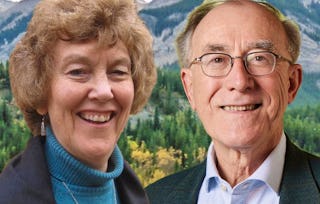
- Personal Introduction - Mary Evelyn Tucker•6 minutes
- Personal Introduction - John Grim•3 minutes
- Lecture - What is Religion? - Mary Evelyn Tucker •5 minutes
- Lecture - Introduction to the Study of Religion and Ecology - John Grim and Mary Evelyn Tucker•18 minutes
9 readings•Total 21 minutes
- Welcome letter from Mary Evelyn Tucker and John Grim•2 minutes
- How this course is organized•1 minute
- Disclaimers•10 minutes
- Learn more about your Instructors•5 minutes
- (Optional) Religion and Ecology Conferences and Book Series, 1996-1998•0 minutes
- Pre-video introduction: The Promise of Planetary Health•1 minute
- (Optional) Ways to Learn More•0 minutes
- Pre-lecture introduction: “Introduction to the Study of Religion and Ecology”•1 minute
- (Optional) Ways to Learn More•1 minute
1 discussion prompt•Total 5 minutes
- Module 1: Course Introduction•5 minutes
1 plugin•Total 10 minutes
- The Promise of Planetary Health•10 minutes
Have you ever wondered how the Jewish scriptures, or Torah, oriented Judaism towards an inherent and deep connection to land? In this module, the first section focuses on the early formation of what would become Judaism. The second section focuses on the specific beliefs and practices in Judaism and their environmental implications.
What's included
3 videos8 readings1 assignment1 discussion prompt1 plugin
3 videos•Total 37 minutes
- Lecture - Judaism: Formation and Figures - John Grim•9 minutes
- Lecture - Introduction and Overview to Judaism: Scriptures and Commentaries - John Grim•13 minutes
- Lecture - Introduction and Overview to Judaism: Beliefs and Practices - John Grim•15 minutes
8 readings•Total 66 minutes
- Judaism Sacred Texts•40 minutes
- Judaism in “Faith for Earth: A Call for Action”•20 minutes
- (Optional) Judaism and Ecology: Ambiguities and Possibilities•0 minutes
- (Optional) Scripture, Culture and Agriculture: An Agrarian Reading of the Bible•0 minutes
- (Optional) Ways to Learn More•0 minutes
- Resources on Judaism and Ecology•5 minutes
- Pre-video Introduction: “Rabbi David Rosen on Faiths for Forests”•1 minute
- (Optional) Ways to Learn More•0 minutes
1 assignment•Total 10 minutes
- Module 2: Introduction and Overview – Judaism•10 minutes
1 discussion prompt•Total 5 minutes
- Module 2: Introduction and Overview - Judaism•5 minutes
1 plugin•Total 9 minutes
- Rabbi David Rosen on Faiths for Forests•9 minutes
This week we focus on multiple religious implications in Judaism of orienting, grounding, nurturing, and transforming. Three modules explore: first, broad environmental activism in Judaism; second, the ways in which rituals and liturgies in Judaism expand environmental empathy and practice; and, third, ways in which Judaism relates to food and animals as part of an environmental ethic.
What's included
3 videos14 readings1 assignment1 discussion prompt5 plugins
3 videos•Total 65 minutes
- Lecture - Judaism and Ecology into the Present: Orienting and Grounding - John Grim•23 minutes
- Lecture - Judaism and Ecology into the Present: Nurturing and Transforming - John Grim•27 minutes
- (Optional) Joshua Ratner, “Jewish Rituals and Engaged Environmentalism.” Interview by Mary Evelyn Tucker•16 minutes
14 readings•Total 52 minutes
- Jewish Women in Environmental Activism•16 minutes
- Pre-video introduction: “Green Torah Wisdom: Becoming a Jewish Environmentalist” •1 minute
- (Optional) Pre-video introduction: “Jewish Rituals and Engaged Environmentalism”•0 minutes
- Earth Bible and Commentary•5 minutes
- (Optional) Ways to Learn More•0 minutes
- Pre-video introduction: “Tu B’Sh’vat Matters: Celebrating Trees and Nature” •1 minute
- Rabbi Ellen Bernstein, founder of Shomrei Adomah •5 minutes
- Rabbi Arthur Waskow, founder of The Shalom Center •18 minutes
- (Optional) Ways to Learn More•0 minutes
- Pre-video introduction: “A Jewish Perspective on Food & Faith”•1 minute
- Protecting Biodiversity: A Covenant with Every Living Thing•4 minutes
- Pre-video introduction: “A Sacred Duty: Applying Jewish Values to Help Heal the World”•1 minute
- (Optional) “Jewish Veganism and Vegetarianism: Studies and New Directions”•0 minutes
- (Optional) Ways to Learn More•0 minutes
1 assignment•Total 10 minutes
- Module 3: Judaism and Ecology into the Present•10 minutes
1 discussion prompt•Total 5 minutes
- Module 3: Judaism and Ecology into the Present•5 minutes
5 plugins•Total 50 minutes
- Rabbi Larry Troster, “Green Torah Wisdom: Becoming a Jewish Environmentalist”•16 minutes
- Tu B’Sh’vat Matters: Celebrating Trees and Nature •9 minutes
- Judaism and Animals•7 minutes
- Adrienne Krone, “A Jewish Perspective on Food & Faith”•9 minutes
- A Sacred Duty: Applying Jewish Values To Help Heal The World•9 minutes
Have you ever wondered how Christianity might play a role in environmental awareness and restoration? This week explores in three sections ways in which Christianity opens doorways into environmental thought and action. In the first section the focus is on the formation and early figures in Christianity. The second section explores the contributions to environmental insight in the Orthodox Christian tradition. The third section examines the remarkable teachings in the Catholic encyclical, Laudato Si’, and its emphasis on “integral ecology.”
What's included
2 videos17 readings1 assignment1 discussion prompt3 plugins
2 videos•Total 52 minutes
- Lecture - Overview of Christianity: Formation and Figures - John Grim and Mary Evelyn Tucker•27 minutes
- Lecture - Introduction to Christianity: Scripture and Commentary - John Grim and Mary Evelyn Tucker•25 minutes
17 readings•Total 90 minutes
- Christianity Sacred Texts•5 minutes
- (Optional) Ecological Biblical Hermeneutics•0 minutes
- Christianity in “Faith for Earth: A Call for Action” •27 minutes
- Pre-video introduction: “Interview on Christianity and Ecology”•1 minute
- (Optional) Christianity and Ecology•0 minutes
- Resources on Christianity and Ecology •5 minutes
- (Optional) Ways to Learn More•0 minutes
- Christianity as Orienting to the Cosmos•34 minutes
- Pre-video introduction: “The Adriatic: A Sea at Risk”•1 minute
- (Optional) Common Declaration of John Paul II and the Ecumenical Patriarch His Holiness Bartholomew I (2002)•0 minutes
- (Optional) Ways to Learn More•0 minutes
- Pope Francis and the Environment: Why His Climate Encyclical Matters•3 minutes
- Laudato Si’: On Care for our Common Home•8 minutes
- Resources on Laudato Si’, Yale Forum on Religion and Ecology•5 minutes
- Pre-video introduction: “Thomas Berry, Cultural Historian and Geologian”•1 minute
- (Optional) Resources on Thomas Berry•0 minutes
- (Optional) Ways to Learn More•0 minutes
1 assignment•Total 10 minutes
- Module 4: Introduction and Overview – Christianity•10 minutes
1 discussion prompt•Total 5 minutes
- Module 4: Introduction and Overview - Christianity•5 minutes
3 plugins•Total 44 minutes
- Heather Eaton, “Interview on Christianity and Ecology.” Interview by Mary Evelyn Tucker•15 minutes
- The Adriatic: A Sea at Risk•25 minutes
- Thomas Berry, Cultural Historian and Geologian•4 minutes
We focus on multiple religious implications in Christianity of orienting, grounding, nurturing, and transforming. We explore: first, forms of Christian environmental activism; second, the ways in which rituals and liturgies in Christianity expand upon ideas and practices in the traditions to ecological empathy and affection; and, third, ways in which Christianity relates to food and animals as part of an environmental ethic.
What's included
4 videos17 readings1 assignment1 discussion prompt3 plugins
4 videos•Total 75 minutes
- Lecture - Christianity and Ecology Into the Present - John Grim•31 minutes
- A Crime Against Creation•11 minutes
- Willie Jennings, “Environmental Justice and the Christian Doctrine of Creation.” Interview by John Grim and Mary Evelyn Tucker•20 minutes
- Melanie Harris, “Eco-Womanism, Ecological Memory, and Womanist Theology.” Interview by Mary Evelyn Tucker•13 minutes
17 readings•Total 42 minutes
- (Optional) New House Rules: Christianity, Economics, and Planetary Living•0 minutes
- Pre-video introduction: “A Crime Against Creation”•1 minute
- Evangelical Environmental Network •5 minutes
- Pre-video introduction: “Environmental Justice and the Christian Doctrine of Creation”•1 minute
- Pre-video introduction: “Eco-Womanism, Ecological Memory, and Womanist Theology” •1 minute
- (Optional) African Diaspora: African American environmental religious ethics and ecowomanism•0 minutes
- (Optional) Ways to Learn More•0 minutes
- Season of Creation•5 minutes
- God’s Good Earth: Praise and Prayer for Creation•14 minutes
- (Optional) Resources on Earth Mass•0 minutes
- (Optional) Ways to Learn More•0 minutes
- Pre-video introduction: “Looking at Food Theologically”•1 minute
- Pre-video introduction: “Food, Farming, and Faith” •1 minute
- (Optional) Pre-video introduction: “Living Earth Community: Multiple Ways of Being and Knowing”•1 minute
- Animals: Who Cares? •12 minutes
- (Optional) CreatureKind•0 minutes
- (Optional) Ways to Learn More•0 minutes
1 assignment•Total 10 minutes
- Module 5: Christianity and Ecology into the Present•10 minutes
1 discussion prompt•Total 5 minutes
- Module 5: Christianity and Ecology into the Present•5 minutes
3 plugins•Total 23 minutes
- Looking at Food Theologically•11 minutes
- Food, Farming, and Faith•11 minutes
- (Optional) Paul Waldau, “Living Earth Community: Multiple Ways of Being and Knowing”•1 minute
Have you ever wondered how Islam has fostered environmental awareness historically and in the present? This module includes three sections that respond to this question. In the first section, the focus is on the early formation of Islam and how tawhid, or “unity,” can inspire broad environmental thinking. The second section examines specific beliefs and practices in Islam and their ecological implications. The third section highlights Islamic religious environmentalism in Indonesia.
What's included
3 videos14 readings1 assignment1 discussion prompt3 plugins
3 videos•Total 60 minutes
- Lecture - Overview of Islam: Formation and Figures - John Grim and Mary Evelyn Tucker•26 minutes
- Lecture - Introduction to Islam: Scripture and Commentary - John Grim•17 minutes
- Lecture - Overview of Islam: Beliefs and Practices - John Grim and Mary Evelyn Tucker•18 minutes
14 readings•Total 44 minutes
- Islam Sacred Texts •7 minutes
- Islam in “Faith for Earth: A Call for Action”•18 minutes
- (Optional) Islam: Norms and Practices•0 minutes
- Pre-video introduction: “Quran Inspires Environmental Stewardship”•1 minute
- (Optional) Pre-video introduction: “Religion and the Environment: Sarah Jawaid Extended Interview”•0 minutes
- (Optional) Ways to Learn More•0 minutes
- Pre-video introduction: “Changing the Present, Dreaming the Future” •1 minute
- Resources on Islam and Ecology•5 minutes
- (Optional) Ways to Learn More•0 minutes
- “Eco-pesantren” movement takes Islamic perspective on nature conservation•10 minutes
- Indonesian Muslim Council Issues a Fatwa to Protect Endangered Species•2 minutes
- (Optional) Protecting Tigers with a Fatwa•0 minutes
- (Optional) Fatwas on Boosting Environmental Conservation in Indonesia•0 minutes
- (Optional) Ways to Learn More•0 minutes
1 assignment•Total 10 minutes
- Module 6: Introduction and Overview – Islam•10 minutes
1 discussion prompt•Total 5 minutes
- Module 6: Introduction and Overview – Islam•5 minutes
3 plugins•Total 19 minutes
- Quran Inspires Environmental Stewardship •12 minutes
- (Optional) Religion and the Environment: Sarah Jawaid Extended Interview•1 minute
- Seyyed Hossein Nasr, “Changing the Present, Dreaming the Future”•6 minutes
This module focuses on multiple religious implications in Islam of the concepts of orienting, grounding, nurturing, and transforming. We consider: first, forms of Islamic environmental activism embedded in the doctrine of “trusteeship”; and second, the ways in which Islam relates to food and animals as part of religious ecological ethics.
What's included
1 video12 readings1 assignment1 discussion prompt3 plugins
1 video•Total 23 minutes
- Lecture - Islam and Ecology into the Present: Orienting: Grounding, Nurturing, and Transforming - John Grim and Mary Evelyn Tucker•23 minutes
12 readings•Total 18 minutes
- How Islam can represent a model for environmental stewardship•6 minutes
- (Optional) Guardianship of the Environment•0 minutes
- Pre-video introduction: “Iran ‘serious’ about fighting climate change”•1 minute
- (Optional) Muslims and climate change•0 minutes
- (Optional) Pre-video introduction: “Make or Break”•0 minutes
- Pre-video introduction: “The Sacred Island - Saving the Ocean”•1 minute
- Young Muslim women are leading environmental movements grounded in their beliefs •9 minutes
- (Optional) Al-Mizan: A Covenant for the Earth•0 minutes
- (Optional) Ways to Learn More•0 minutes
- Pre-video introduction: “A Muslim Perspective on Food - Theological, Spiritual, and Ethical Grounding”•1 minute
- (Optional) Food, Faith, and Farming•0 minutes
- (Optional) Ways to Learn More•0 minutes
1 assignment•Total 10 minutes
- Module 7: Islam and Ecology into the Present•10 minutes
1 discussion prompt•Total 5 minutes
- Module 7: Islam and Ecology into the Present•5 minutes
3 plugins•Total 7 minutes
- Iran “serious” about fighting climate change•5 minutes
- (Optional) Fazlun Khalid, "Make or Break"•1 minute
- Hisham Moharram, “A Muslim Perspective on Food - Theological, Spiritual, and Ethical Grounding”•1 minute
What would interreligious dialogue on environmental issues look like? This module provides examples of engaged religious environmentalism in Judaism, Christianity, and Islam. The first section explores efforts to restore the Jordan River and to encourage interreligious environmental dialogue. The second section stresses Abrahamic religious efforts to respond to climate emergencies; and the third section provides case studies from each of the Abrahamic religions.
What's included
1 video24 readings1 assignment1 discussion prompt6 plugins
1 video•Total 7 minutes
- Everett Gendler, “Judaism, Social Justice, and Religious Environmentalism.” Interview by Mary Evelyn Tucker•7 minutes
24 readings•Total 52 minutes
- Pre-video introduction: “EcoPeace Middle East: Peace is Possible”•1 minute
- EcoPeace Middle East•5 minutes
- Representatives of 3 Religions Sign on a Jordan River Covenant•7 minutes
- Pre-video introduction: “Abrahamic Workshop Interview with Gidon Bromberg & Yana Abu Taleb”•1 minute
- Optional) Abrahamic Traditions & Environmental Change Workshop•0 minutes
- (Optional) Ways to Learn More•0 minutes
- Pre-video introduction: “Speak Torah to Power: Tikkun Olam - Repairing our World in the Climate Crisis”•1 minute
- Dayenu: A Jewish Call to Climate Action•5 minutes
- (Optional) “One synagogue divests from a Carbon Pharaoh Bank”•0 minutes
- Pre-video introduction: “Judaism, Social Justice, and Religious Environmentalism”•1 minute
- (Optional) Ways to Learn More•0 minutes
- Pre-video introduction: “Climate Change: Faith and Fact”•1 minute
- How green theology is energizing the black community to fight the climate crisis•9 minutes
- (Optional) Epiphany Declaration: 20 Christian Organisations Divest from Fossil Fuels•0 minutes
- (Optional) Christianity and Environmental Justice•0 minutes
- (Optional) Interfaith Power & Light - A Religious Response to Global Warming•0 minutes
- (Optional) Ways to Learn More•0 minutes
- Muslims Stand Up for Environmental Justice•5 minutes
- Pre-video introduction: “Faith and the fight against climate change, Part 3”•1 minute
- (Optional) Muslim group divests from fossil fuels•0 minutes
- (Optional) Ways to Learn More•0 minutes
- Engaged Projects in Religion and Ecology •10 minutes
- Faith Action on the UN Sustainable Development Goals•5 minutes
- (Optional) Ways to Learn More•0 minutes
1 assignment•Total 10 minutes
- Module 8: Integral Ecology: Water, Climate, and Ecojustice•10 minutes
1 discussion prompt•Total 5 minutes
- Module 8: Integral Ecology: Water, Climate, and Ecojustice•5 minutes
6 plugins•Total 68 minutes
- Gidon Bromberg, “EcoPeace Middle East: Peace is Possible”•5 minutes
- Abrahamic Workshop Interview with Gidon Bromberg & Yana Abu Taleb•19 minutes
- Abrahamic Traditions & Environmental Change Workshop in Rhodes, Greece, June 2019•14 minutes
- Speak Torah to Power: Tikkun Olam - Repairing our World in the Climate Crisis•9 minutes
- Climate Change: Faith and Fact•12 minutes
- Faith and the fight against climate change, Part 3•9 minutes
What's included
1 video1 reading
1 video•Total 2 minutes
- Lecture - Course Conclusion: Western Religions and Ecology - Mary Evelyn Tucker and John Grim•2 minutes
1 reading•Total 5 minutes
- Concluding Thoughts•5 minutes
Instructors
Instructor ratings
4.9(8 ratings)

Offered by

Why people choose Coursera for their career

Felipe M.
Learner since 2018
"To be able to take courses at my own pace and rhythm has been an amazing experience. I can learn whenever it fits my schedule and mood."

Jennifer J.
Learner since 2020
"I directly applied the concepts and skills I learned from my courses to an exciting new project at work."

Larry W.
Learner since 2021
"When I need courses on topics that my university doesn't offer, Coursera is one of the best places to go."

Chaitanya A.
"Learning isn't just about being better at your job: it's so much more than that. Coursera allows me to learn without limits."
Learner reviews
4.9
18 reviews
- 5 stars
94.44%
- 4 stars
5.55%
- 3 stars
0%
- 2 stars
0%
- 1 star
0%
Showing 3 of 18
P
PP
5.0
·Reviewed on Mar 23, 2023
I do take from these courses that Ecology is a great integrator for faith traditions Indigenous, South Asian, East Asian, West Asian and Religions.
Explore more from Arts and Humanities
 Y
YYale University
Course
 Y
YYale University
Course
 Y
YYale University
Course
 Y
YYale University
Course