Failure Analysis
Filter by
SubjectRequired
LanguageRequired
Learning ProductRequired
LevelRequired
DurationRequired
SubtitlesRequired
EducatorRequired
Hands-on LearningRequired
ToolsRequired
Results for "Failure Analysis"

University at Buffalo
Skills you'll gain: Anomaly Detection, Production Process, Manufacturing Processes, Data Collection, Systems Analysis, Data Storage, Manufacturing Operations, Systems Engineering, Data Cleansing, Failure Analysis, Digital Transformation, Data Preprocessing, Big Data, Data Analysis Software, Computing Platforms

University of California, Davis
Skills you'll gain: Sensory Systems Analysis, Aesthetics, Decision Making, Food Quality Assurance And Control, Failure Analysis, Oral Expression, Cognitive flexibility, Analysis, Critical Thinking, Verbal Communication Skills, Analytical Skills, Writing, Physiology, Detail Oriented, Microbiology, Dealing With Ambiguity, Chemistry

University of California, Davis
Skills you'll gain: Hazard Analysis, Chemical Engineering, Process Engineering, Safety Assurance, Risk Analysis, Risk Modeling, Risk Management, Engineering Practices, Accident Prevention, Failure Analysis, Risk Control, Process Analysis, Environment Health And Safety, Probability, Reliability
L&T EduTech
Skills you'll gain: Electrical Systems, Electric Power Systems, Electrical Power, Energy and Utilities, Electrical Equipment, Three-Phase, High Voltage, Wiring Diagram, Electrical Engineering, Systems Analysis, Failure Analysis, Engineering Analysis, Mathematical Modeling, Simulation and Simulation Software, Engineering Calculations, Simulations, Network Analysis
Skills you'll gain: Electrical Systems, Electric Power Systems, Electrical Power, Energy and Utilities, Control Systems, Electrical Equipment, Three-Phase, High Voltage, Wiring Diagram, Network Model, Electrical Engineering, Engineering Analysis, Systems Analysis, Failure Analysis, Simulation and Simulation Software, Network Analysis, Numerical Analysis, Engineering Calculations, Mathematical Modeling, Simulations
University of Colorado Boulder
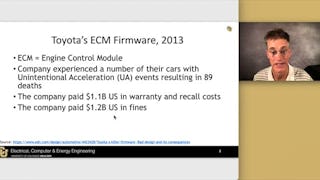
From the course: Modeling and Debugging Embedded Systems·Lesson: Lesson 2 - Learning from Failures

Georgia Institute of Technology
From the course: Mechanics of Materials IV: Deflections, Buckling, Combined Loading & Failure Theories·Lesson: Column Buckling

University of Colorado Boulder
From the course: Resilience & Leadership: Tools, Methods, & Applications·Lesson: Resilience Analysis Grid

Skills you'll gain: Vibrations, Engineering Analysis, Finite Element Methods, Failure Analysis, Mechanical Design, Structural Analysis, Simulation and Simulation Software, Mechanical Engineering, Simulations, Mathematical Modeling, Numerical Analysis, Mechanics, Business Modeling, Technical Analysis, Technical Design

Board Infinity
From the course: AI in Manufacturing: Predictive Maintenance and Alerts·Lesson: Sensors, data & failures

Skills you'll gain: Model Evaluation, Model Training, Image Analysis, Model Optimization, Computer Vision, Model Deployment, Image Quality, MLOps (Machine Learning Operations), Data Analysis, Deep Learning, Exploratory Data Analysis, Failure Analysis, Data Preprocessing, Workflow Management, AI Workflows, Data Transformation, Experimentation, Performance Analysis, Data Manipulation, Performance Metric

Skills you'll gain: Structural Engineering, Structural Analysis, Building Design, Architectural Design, Computer-Aided Design, Failure Analysis, Design Specifications, Engineering Analysis, Engineering Calculations, 3D Modeling, Engineering Design Process, Engineering Software