vSphere DRS & HA
Filter by
SubjectRequired
LanguageRequired
Learning ProductRequired
LevelRequired
DurationRequired
SubtitlesRequired
EducatorRequired
Hands-on LearningRequired
Results for "vSphere DRS & HA"

Skills you'll gain: vSphere Networking and Storage, vSphere DRS & HA, vCenter Server Management, Cloud Infrastructure, VMware vSAN, vCenter Server, Storage vMotion, Virtual Networking, Cloud Computing Architecture, Virtualization, Software-Defined Data Center (SDDC), Virtual Machines, ESXi Installation, iSCSI Configuration, Virtualization and Virtual Machines, Infrastructure Architecture, Cloud Computing, Containerization, Network Monitoring, Memory Management

Board Infinity
Skills you'll gain: ESXi Installation, vSphere Networking and Storage, Virtual Networking, vCenter Server Management, vSphere DRS & HA, Role-Based Access Control (RBAC), Performance Tuning, vSAN ESA, vCenter Server, Virtual Machines, Disaster Recovery, Storage vMotion, VMware ESX Servers, iSCSI Configuration, VMware vSAN, Event Monitoring, Data Centers, Network Switches, Virtualization and Virtual Machines, Virtualization
From the course: Advanced Management, Clustering, and Lifecycle Management·Lesson: vSphere Clusters

Board Infinity
Skills you'll gain: NSX-T Network Virtualization, vSphere Networking and Storage, Virtual Networking, VMware ESX Servers, Software-Defined Data Center (SDDC), VMware vSAN, vSphere DRS & HA, Software-Defined Networking, Hybrid Cloud Computing, Zero Trust Network Access, Virtualization, Storage vMotion, Data Centers, vCenter Server Management, vCenter Server, Role-Based Access Control (RBAC), Virtualization and Virtual Machines, Virtual Machines, Virtual Local Area Network (VLAN), Network Switches
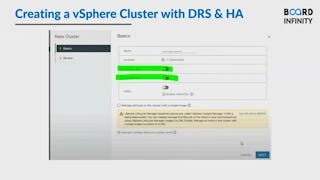
Board Infinity
From the course: Advanced Virtualization: VM Operations and Performance·Lesson: Deploying and Managing vSphere Clusters
From the course: Advanced Management, Clustering, and Lifecycle Management·Lesson: vSphere Clusters

Board Infinity
From the course: Advanced Virtualization: VM Operations and Performance·Lesson: Deploying and Managing vSphere Clusters

Skills you'll gain: vSphere DRS & HA, Storage vMotion, Virtual Machines, VMware ESX Servers, vCenter Server Management, vCenter Server, Virtualization and Virtual Machines, Memory Management, Capacity Management, Patch Management, Configuration Management, System Monitoring

From the course: Advanced Management, Clustering, and Lifecycle Management·Lesson: vSphere Clusters

Board Infinity
From the course: Advanced Virtualization: VM Operations and Performance·Lesson: High Availability and Fault Tolerance

Board Infinity
From the course: Advanced Virtualization Management and Operations·Lesson: vSphere High Availability (HA)

Board Infinity
From the course: Virtualization Foundations: Core Concepts and Architecture·Lesson: Clustering and Resource Management in vSphere 8.x