Pseudocode
Filter by
SubjectRequired
LanguageRequired
Learning ProductRequired
LevelRequired
DurationRequired
SubtitlesRequired
EducatorRequired
Hands-on LearningRequired
ToolsRequired
Results for "Pseudocode"

University of London
Skills you'll gain: Pseudocode, Algorithms, Computer Science, Data Structures, Diagram Design

Skills you'll gain: Pseudocode, Programming Principles, Program Development, Software Visualization, Computational Logic, Process Modeling, Diagram Design, Computer Programming Tools, Code Reusability, Computer Programming, Maintainability, Software Documentation, Software Installation
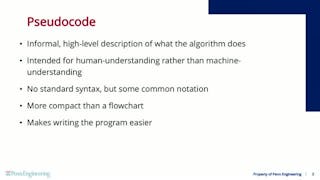
University of Pennsylvania
From the course: Computational Thinking for Problem Solving·Lesson: 3.5 Expressing Algorithms in Pseudocode

Skills you'll gain: Data Structures, Algorithms, Software Visualization, Pseudocode, Programming Principles, Computational Thinking, Theoretical Computer Science, Computer Science, Technical Communication, Computer Programming, Graph Theory, Software Design Patterns, Communication
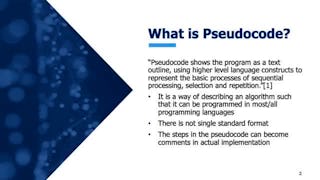
Johns Hopkins University
From the course: CUDA at Scale for the Enterprise·Lesson: Determining Sorting Algorithm Pseudocode
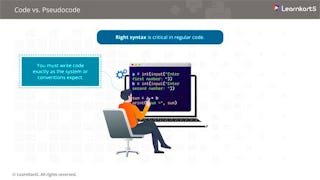
From the course: Python for Data Science with AI·Lesson: Python for Data Science vs Programming: What Really Matters

LearnKartS
From the course: Python for Data Science with AI·Lesson: Python for Data Science vs Programming: What Really Matters

Johns Hopkins University
From the course: CUDA at Scale for the Enterprise·Lesson: CUDA Best Practices in Algorithm and Kernel Design

LearnKartS
From the course: Python for Data Science with AI·Lesson: Implementing Complete Data Logic Using Python Code

From the course: SQL Foundations·Lesson: Lesson 3: Exploring Tables and Their Structures
From the course: SQL Foundations·Lesson: Lesson 3: Exploring Tables and Their Structures

From the course: Python for Data Science with AI·Lesson: Python Functions and Reusable Logic for Data Analysis