Continuous Integration
Filter by
SubjectRequired
LanguageRequired
Learning ProductRequired
LevelRequired
DurationRequired
SubtitlesRequired
EducatorRequired
Hands-on LearningRequired
ToolsRequired
Results for "Continuous Integration"

Duke University
Skills you'll gain: Rust (Programming Language), Containerization, Data Pipelines, CI/CD, Docker (Software), Jenkins, Application Deployment, DevOps, LLM Application, Continuous Integration, Hugging Face, Large Language Modeling, Test Case, Restful API, Serverless Computing, Generative AI, Command-Line Interface, Natural Language Processing, Computer Programming, Cloud Computing

University of Virginia
From the course: Managing an Agile Team·Lesson: Building
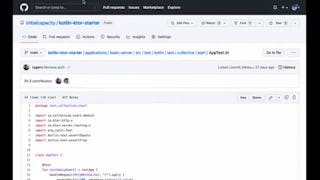
University of Colorado Boulder
From the course: Applications of Software Architecture for Big Data·Lesson: Development Environment

Duke University
From the course: Cloud Computing Foundations·Lesson: Create an AWS Cloud Development Environment
Duke University
From the course: DevOps, DataOps, MLOps·Lesson: Leveling Up from Python to Rust: An Introduction
Duke University
Skills you'll gain: Technical Communication, Cloud Infrastructure, Cloud Services, Cloud Hosting, CI/CD, Cloud Computing, Agile Software Development, DevOps, Technical Documentation, Infrastructure As A Service (IaaS), Cloud Platforms, Continuous Delivery, Infrastructure as Code (IaC), Agile Methodology, Serverless Computing, Software Development, Continuous Integration, Agile Project Management, Amazon Web Services, GitHub

University of Virginia
From the course: Managing an Agile Team·Lesson: Building

University of Minnesota
From the course: Engineering Practices for Building Quality Software·Lesson: Deployment

Duke University
From the course: DevOps, DataOps, MLOps·Lesson: Key Concepts in Microservices

Duke University
From the course: Virtualization, Docker, and Kubernetes for Data Engineering·Lesson: Production Issues for Kubernetes

Duke University
From the course: Rust for Large Language Model Operations (LLMOps)·Lesson: Embracing Automation and Tooling

Duke University
From the course: Web Applications and Command-Line Tools for Data Engineering·Lesson: Reviewing Continuous Integration for Command-Line Tools