JM
Reviewed Jun 11, 2025
This was a comprehensive and useful course. The material was presented logically and was effective at explaining substance use disorders and addictive behaviors.
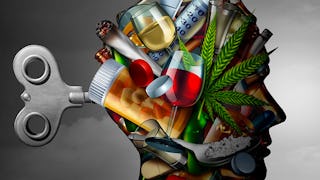
Many people around the world struggle with substance use disorders and addictive behaviors. You might know someone, possibly a family member or close friend, who is currently dealing with one of these problems. This course provides a review of common substance use disorders associated with the use of common depressants, opioids, stimulants, hallucinogens, dissociative drugs, and inhalants. Because they share many of the same characteristics, addictive behaviors, such as gambling and gaming disorders, are covered. In addition, the course discusses the diagnostic criteria, demographics, contributing factors, and treatments for each disorder.
JM
This was a comprehensive and useful course. The material was presented logically and was effective at explaining substance use disorders and addictive behaviors.
SM
Relevant information and quick delivery in a comprehensive manner
Showing: 12 of 12
This course was incredibly engaging and informative for me, because at the university where I study we were taught the psychology of deviant behavior, and it made me interested in going deeper into this topic to explore it further. That’s how I came across this course. It provides a detailed overview of therapeutic methods and examples, as well as numerous research findings and various medical treatments that help in addressing addictions related to the disorders described in the course. Yes, the course may have felt somewhat long, but it was extensive and very interesting for me.
I loved this course! The presentation, level of learning and depth of insight was exactly what I was looking for to enhance my current skill set. The format is manageable and thoughtfully presented making it easy to navigate amidst normal daily responsibilities. It really does make learning fun!! Thank you so much!
This was a comprehensive and useful course. The material was presented logically and was effective at explaining substance use disorders and addictive behaviors.
Relevant information and quick delivery in a comprehensive manner
Good course! A lot of useful and practical information.
Molto molto molto difficile ma molto interessante
learned a lot and changed many beliefs
Great courses and awesome instructors
very well informative course
good class
Excellent
The difficulty I have with this course is that it presents addiction as a complex mental health disorder. The course is based on the premise that addicts are suffering from a mental illness before they become addicted. Yet, in the process of many modules covering biological, psychological, and sociocultural factors, influences, and treatment, addiction is never fully and clearly explained. Nor is how these mental illnesses relate to addiction, or how proposed treatments aid an addict to recover explained. The course mentions that ‘self-help groups’ are free, but everything else discussed is dependent on seeing a professional, and/or taking a drug — in other words, not free. In short, even after listening to all the videos and reading informational pieces, and taking all the quizzes, I am none the wiser. Since 2011, my understanding of addition has been based on the American Society of Addiction Medicine’s definition of addiction: Addiction is a primary, chronic disease of brain reward, motivation, memory and related circuitry. Dysfunction in these circuits leads to characteristic biological, psychological, social and spiritual manifestations. This is reflected in an individual pathologically pursuing reward and/or relief by substance use and other behaviours. Addiction is characterized by inability to consistently abstain, impairment in behavioural control, craving, diminished recognition of significant problems with one’s behaviours and interpersonal relationships, and a dysfunctional emotional response. Like other chronic diseases, addiction often involves cycles of relapse and remission. Without treatment or engagement in recovery activities, addiction is progressive and can result in disability or premature death. The first thing this definition tells me is that it is a physiologically- based, — not mental illness-based — disease/disorder. The second thing is that, in the process of becoming addicted, the addict’s behaviour changes is essentially immature. By the same token, the addict is unaware of his disorder, and typically adolescent, denies that he has a problem. The third is that addiction is a chronic condition, meaning it is always going to get worse. Fourth, to arrest its progress depends on involvement in a recovery regime. The first qualification for addition is ‘the inability to consistently abstain’. Investigations into the neuroscience of addiction indicate that the vicious ‘cycles of relapse and remission’ of addiction are arrested by entire abstinence. This, accompanied by a regular recovery regime — as is customary treatment for other chronic conditions — results in the addict staying clean and sober. He accepts and takes responsibility for his chronic condition. And he recognises that is going to take some time for the reward neurocircuit of his brain to rewire. The ASAM definition is very clear. I did not find this degree of clarity in this course for the following reasons. • The substitution of ‘substance use disorder (SUD) does not change the fact that what is being talked about is addiction. • Use of various diagnostic manuals, which require the addict to honestly answer a series of questions to define his addiction — even though he doesn’t honestly understand his problem —doesn’t make sense. • Use of numerous studies which differentiate race, gender, age, lifestyle, and nationality smack of stigma — never mind questionable reliability of sources. • Labelling and statistics do nothing to further understanding of any addiction. • The same labelling of mental disorders that supposedly preordain the risk of addiction, if not addiction itself, stigmatise and obscure the real problem. • Examples given as evidence of mental illness in fact pathologise immaturity. • As repeatedly suggested, use of genetics, heredity, epidemiology have not been that successfully investigated. • The modules dealing with biological matters appear to be cut-and-paste on the neurological side, otherwise pharmacological. • And there is no recognition that, as the ASAM definition clearly states, addiction engenders psychological disorders. As for treatment and recovery I was amazed to learn that the entire psychological solution is based on • Methods that are primitive and/or dependent on the addict’s capacity of conscious, rational awareness, ability to make rational decisions regarding his thoughts and feelings, which he can relate to a professional. • Considering that addiction is a disease that doesn’t let the addict know he has it, this approach is ignorant and silly. • In the biological module, the suggestion that certain drugs can be used to treat the ‘symptoms of opioid misuse’ (addiction), for example, falls into the same category as suggesting that addicts can go into a ‘harm reduction’ programme if they do not want to practice abstinence — namely harm enhancement — is equally ignorant and silly. • To suggest that relapse is a stage in recovery is to misunderstand the most basic characteristic of addiction as a chronic disorder: relapse is part and parcel of the vicious cycle of addiction. • The module that describes 12-step programmes shows little or no understanding of what they do or how they work. Dr Bob Smith, the co-founder of the original 12-step programme, Alcoholics Anonymous, pioneered hospitalising alcoholics for detoxification and then introduced them to AA. That was 91 years ago. Another doctor, Dr William Silkworth, who trained as a neurologist and a psychiatrist, wrote, in 1939, an introduction to Alcoholics Anonymous describing how addiction works, and how ‘entire abstinence’ arrests its progress. What he wrote back then provides the framework for contemporary neuroscience of addiction. He even invites his fellow psychiatrists to suspend their disbelief that the then-nascent AA programme or recovery works for those willing to follow it. In the age of rampant addiction what would be welcome and useful would be an online course that combines contemporary neuroscience with a clear understanding of when and where psychological methods might assist an addict after he has stabilised his recovery through abstinence and a continuing maintenance regime — the sort that 12-step programmes offer. I would be happy to advise and assist in organising such a course. Mary L Stewart, Ph.D.