JH
5.0Reviewed Jun 1, 2020
Brilliant course, it has been complimentary towards my masters dissertation of studying neurocriminology within the UK. Thank you for providing an informative course.
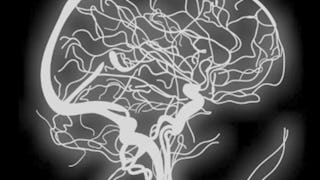
Neuroimaging methods are used with increasing frequency in clinical practice and basic research. Designed for students and professionals, this course will introduce the basic principles of neuroimaging methods as applied to human subjects research and introduce the neuroscience concepts and terminology necessary for a basic understanding of neuroimaging applications. Topics include the history of neuroimaging, an introduction to neuroimaging physics and image formation, as well as an overview of different neuroimaging applications, including functional MRI, diffusion tensor imaging, magnetic resonance spectroscopy, perfusion imaging, and positron emission tomography imaging. Each will be reviewed in the context of their specific methods, source of signal, goals, and limitations. The course will also introduce basic neuroscience concepts necessary to understand the implementation of neuroimaging methods, including structural and functional human neuroanatomy, cognitive domains, and experimental design.
JH
Brilliant course, it has been complimentary towards my masters dissertation of studying neurocriminology within the UK. Thank you for providing an informative course.
JA
I plan to take Radiology Tech in college and I believe this online course is a great way to learn the basics and I also think that it is a good refresher for those who already took Neuroscience.
VM
It was a great course but please provide notes and slides of the videos. It was very difficult to note down and capture slides. Overall, very informative. Than you.
KL
I thoroughly enjoyed the course. The presentetation was amazing. Perhaps, the course could employ the use of animated illustrations to enhance content delivery. Generally, the course was great.
DB
It was a high quality course that cleared a lot of my concepts in the basics of neuroimaging.I felt at certain times the speed was too fast and adequate glossing over important concepts was not done.
YK
As a high school student with no prior knowledge in neuroimaging, this was an enjoyable course. It truly provides great insight on the basics of neuroscience and neuroimaging.
IH
I am an engineering graduate and wanted to learn fundamentals of Neuroscience for Neuroimaging studies. This course helped me a lot, highly recommended as an introductory course.
KK
An Amazing Opprtunity to learn new things while studying medicine. Though could have been a bit more interacting, but the information provided was sought and thorough. A big thanks.
ZM
Well-structured, all the necessary information, easy to understand for non-native English speakers, tasks and quizzes help to improve the understanding of the course.
S
Very educational and informative. It greatly prepares you to think very critically using specialized intended meaning which prepares you for advanced reserach experience.
SH
Dr Arnold has explained basics of neuroimaging in a very lively and easy way which helped me to grasp the ideas behind the physics and use of MRI, fMRI, MRS, DTI etc
EE
The course was good. I had a great time during the lessons. Some of the topics were really tough but they were explained in a way that can a non specialist to understand it.
Showing: 20 of 494
The topics are interesting but presented in a not too engaging way.
A beautiful course that explains to us the fundamentals of neuroimaging methods with an introduction to brain structure and cognitive function. A special thanks to the professor for putting this course together for neuroimaging and neuroscience beginners.
I was expecting a bit more of how to interpret neuroimaging; and even as I did not find exactly what I was looking for, the course showed me some very interesting stuff. A few stars less for those personal expectatives raised, but recovered mostly for all the deep and interesting info in other neuro and tecnical topics. I will recomend the course.
The most boring prof. Stick with Yale for online courses! He read of a PowerPoint.
It is a good Course l learned more than enough in this course. However l hope to give me the certificate because, I'm Yemni senior medical student at Cairo University. Due to the unfortunate condition in Yemen, I'm not able to afford the course fee, neither my family can support my studies. Currently, I am struggling to to have a work in order to be able to sponsor my last year of medical school which was previously supported by the Yemeni government. This support is no longer available due to the ongoing war in Yemen . War effect for the financial level of the population in Yemen , The low standard of living and the lack of individual income in Yemen, which led to the deterioration of economic conditions and these are the results of the war .
Which reflected on every Yemeni individual, especially the distinguished students who were studying at the expense of the Yemeni government. When the government collapsed due to the war, it led to numerous problems and disasters.
I hope that this course certificate will be approved because of it is importance on my academic and scientific level .
As education researcher who is interested in functional neuroimaging, this course has been extremely helpful. The material is offered in a logical order and in a format that is easy to understand. Prof Arnold Bakker is a skilled presenter who speaks calmly and clearly and moves along at a reasonable pace - especially for a beginner in the field, such as myself. I highly recommend this course to anyone who would like to gain a good foundation in understanding the basics of neuroscience and neuroimaging.
This course was a great introduction to neuroscience and neuroimaging. I have studied some neuroscience before but I did not know much about neuroimaging. I now feel like I have a good grasp of the fundamentals thanks to this course.
I really enjoyed the course. However, I think that the physics part of MRI should be better explain for students who do not have a background in physics. Overall, It has been an excellent course. Thank you very much
Dear Professor Bakker, Thank you very much for the course. I enjoyed every minute of your lecture as well as your marvelous sense of humor. And please give my best regards. Azar Hosseininezhad
An Amazing Opprtunity to learn new things while studying medicine. Though could have been a bit more interacting, but the information provided was sought and thorough. A big thanks.
I am very happy to join your course and I am a Ph.D. student in Naples/Italy. Always been very curious about neuroscience and my first project was about Amyotrophic Lateral Sclerosis since that time day by day trying to attend the courses as long as I can. I must say your course helped me to understand the fundamental base of neuroscience and also gave many new perspectives to methods especially the importance of MRI studies.
Thank you so very much for giving us this option to learn science.
With kind regards,
Hilal
The course was needlessly basic. Most people who come to take this course have a minimal background in neuroscience, therefore the first module is probably very basic information that really has no applications for the later modules. Also, the presentation animation was... well, it would have been better if there had been none. I was hoping for a little more depth in the topic, and certainly more audiovisual tools help understand the physical fundamentals of neuroimaging.
Very interesting, but very dry. I'm glad I took it. It would have been more stimulating with animations instead of simple powerpoint slides. The powerpoints were sometimes hard to read (labels on images, etc.). Arnold is clearly knowledgeable, but unfortunately doesn't do much to draw you in.
This course demands way too much for a coursera course. Minimum 15 hours a week, if you have a solid foundation in Anatomy. I have a MA and work in biotech. I'm not a stupid person, but I couldn't keep up. I gave up. This is the first thing I've given up on in a long time. I've already paid. I feel cheated.
It is not comparable to other coursera courses. Be forewarned. Taking this ONE coursera course is like having a 20-25 hour a week part-time job. Don't plan on having a life or doing anything except this course. If you work full-time, I would strongly recommend against attempting it.
I've always been fascinated by human brain and how it works. As a topic for my Master's degree project is on Alzheimer's Disease, I thought of taking extra courses to learn about neuroimaging. The course provided fundamentals of the brain in terms of biology and imaging techniques in a comprehensive way; just as I wanted. I didn't like the intro sounds of heart thumping (it was killing my eardrums) but I learned a lot from the course contents.
This an excellent course design for the beginners of Neuroscience and Neuroimaging studies. Now I am feeling so much confident to start advanced neuro studies on my coming higher education research. Heartful thanks to Mr. Arnold Bakker from John Hopkins. Thanks, Coursera to make my COVID-19 lockdown time valuable. Thank you very much.
This course is a very good option for fundamental knowledge understanding and learning in neuroscience and neuroimaging. The topics are highly interesting and effective for orientation in several competent topics in these disciplines. Is highly recommended for a technical/academical, biological and methodology approach.
This is an excellent fundamental course design for the entry of neuroscience study. As a biomedical student, now I feel so confident for my future neuroimaging study. Strongly recommend the course for cognitive neuroscience lovers. Thanks to Coursera and Johns Hopkins University.
Course was easy to understand, but at the same moment it covered the main principles of neuroimaging. I also enjoyed the course was only 4 weeks long, as it was motivating me to complete it :)
I feel more prepared now to read scientific papers about neuroscience experiments.
I plan to take Radiology Tech in college and I believe this online course is a great way to learn the basics and I also think that it is a good refresher for those who already took Neuroscience.