At first glance the fields of religion and ecology may seem and unlikely pairing, but a deeper consideration reveals the two have a great deal to contribute to one another and are indeed inextricably linked. Religions recognize the unity and interdependence of humans with nature. Ecological sciences affirm this deep interconnection with the natural world. This partnership can inspire work for the wellbeing of the Earth community

Introduction to Religions & Ecology

Introduction to Religions & Ecology


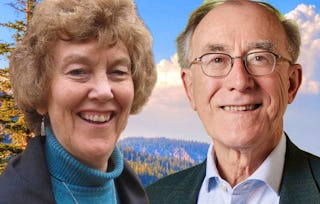
Instructors: Mary Evelyn Tucker
Instructors
Instructor ratings
We asked all learners to give feedback on our instructors based on the quality of their teaching style.
4.7 (31 ratings)
Access provided by ITC-Infotech
6,890 already enrolled
Gain insight into a topic and learn the fundamentals.
4.8
65 reviews
Beginner level
Recommended experience
Recommended experience
Beginner level
No Prerequisite Knowledge Required
Flexible schedule
2 weeks at 10 hours a week
Learn at your own pace
99%
Most learners liked this course
Gain insight into a topic and learn the fundamentals.
4.8
65 reviews
Beginner level
Recommended experience
Recommended experience
Beginner level
No Prerequisite Knowledge Required
Flexible schedule
2 weeks at 10 hours a week
Learn at your own pace
99%
Most learners liked this course
Details to know

Shareable certificate
Add to your LinkedIn profile
Assessments
6 assignments
Taught in English
See how employees at top companies are mastering in-demand skills

There are 8 modules in this course
What's included
4 videos6 readings1 discussion prompt1 plugin
4 videos•Total 13 minutes
- Land Acknowledgement - John Grim and Mary Evelyn Tucker•2 minutes
- Course Introduction - John Grim and Mary Evelyn Tucker•3 minutes
- Personal Introduction - Mary Evelyn Tucker•6 minutes
- Personal Introduction - John Grim•3 minutes
6 readings•Total 19 minutes
- Welcome letter from Mary Evelyn Tucker and John Grim•2 minutes
- How this course is organized•1 minute
- Disclaimer•10 minutes
- Learn more about your Instructors •5 minutes
- (Optional) Religion and Ecology Conferences and Book Series, 1996-1998•0 minutes
- Pre-video introduction: "The Promise of Planetary Health"•1 minute
1 discussion prompt•Total 5 minutes
- Introduction•5 minutes
1 plugin•Total 10 minutes
- The Promise of Planetary Health•10 minutes
We explore the origins of the field of Religion and Ecology and the contemporary context of the Anthropocene, the geological era in which humans exert a dominant influence on climate and the environment. We also discuss the problems and promises of religions in addressing the ecological challenges of our time.
What's included
4 videos7 readings1 assignment1 discussion prompt3 plugins
4 videos•Total 16 minutes
- Tu Weiming, “Imagining a New Mindset”•6 minutes
- Lecture - Religion and Spirituality - Mary Evelyn Tucker•3 minutes
- Lecture - What is Religion? - Mary Evelyn Tucker•5 minutes
- Lecture - Problems and Promise of Religion - John Grim•2 minutes
7 readings•Total 64 minutes
- Pre-video introduction: "Religion and a New Environmental Ethic"•1 minute
- Our Journey into Religion and Ecology•32 minutes
- Culminating Conferences at American Museum of Natural History and United Nations•2 minutes
- Pre-video introduction: "Welcome to the Anthropocene"•1 minute
- (Optional) Ways to Learn More•0 minutes
- Characteristics, Persistence, and Diversity of Religions•28 minutes
- (Optional) Ways to Learn More•0 minutes
1 assignment•Total 10 minutes
- Module 2: The Emergence of the Field of Religion and Ecology•10 minutes
1 discussion prompt•Total 5 minutes
- Module 2: The Emergence of the Field of Religion and Ecology•5 minutes
3 plugins•Total 20 minutes
- Religion and a New Environmental Ethic - Mary Evelyn Tucker and John Grim•10 minutes
- Welcome to the Anthropocene•4 minutes
- Culture, Spirituality, and Conservation•6 minutes
We first explore the nature of religions as symbolic systems. We then consider religious ecology and religious cosmology as ways in which humans envision their place within the Earth and the Cosmos. To conclude, we explore how religions can orient, ground, nurture, and transform humans in relationship with the planet.
What's included
5 videos8 readings1 assignment1 discussion prompt
5 videos•Total 31 minutes
- Lecture - Defining Religion - Mary Evelyn Tucker•8 minutes
- Lecture - Defining Religious Ecology - Mary Evelyn Tucker•3 minutes
- Lecture - Symbolic Structures - John Grim•5 minutes
- Lecture - Orienting and Grounding - Mary Evelyn Tucker•7 minutes
- Lecture - Nurturing and Transforming - John Grim•8 minutes
8 readings•Total 51 minutes
- The Nature of Religion: Symbolic Systems and Symbolic Knowing•19 minutes
- Dimensions of Religions•5 minutes
- Glossary of Terms•5 minutes
- (Optional) Ways to Learn More•0 minutes
- Defining Religious Ecology•9 minutes
- (Optional) Ways to Learn More•0 minutes
- Orienting, Grounding, Nurturing, Transforming•13 minutes
- (Optional) Ways to Learn More•0 minutes
1 assignment•Total 10 minutes
- Module 3: Religious Ecology - Orienting, Grounding, Nurturing, Transforming•10 minutes
1 discussion prompt•Total 5 minutes
- Module 3: Religious Ecology - Orienting, Grounding, Nurturing, Transforming•5 minutes
We explore views of nature in the West by first examining the transition from the Animism of the early Mediterranean world to the Monotheism of the later Abrahamic traditions. We then consider the legacies of Enlightenment rationalism and the ways in which the Romantic and Transcendentalist movements responded through their emphasis on emotion, intuition, and spirituality in the natural world. We conclude by exploring how modern science offers a new story for understanding nature within an expanding and evolving universe.
What's included
3 videos8 readings1 assignment1 discussion prompt
3 videos•Total 74 minutes
- Lecture - From Animism to Monotheism and From Purpose to Ambivalence - John Grim•12 minutes
- Lecture - From Holism to Rationalism and From Romanticism to Transcendentalism - Mary Evelyn Tucker•6 minutes
- Journey of the Universe•56 minutes
8 readings•Total 66 minutes
- Views of Nature in the West•25 minutes
- (Optional) Ways to Learn More•0 minutes
- From Holism to Rationalism•10 minutes
- (Optional) Ways to Learn More•0 minutes
- From Anthropocentric to Anthropocosmic Thought•16 minutes
- Image tour of the Cat’s Eye Nebula and Whirlpool Galaxy•10 minutes
- Journey of the Universe website and resources•5 minutes
- (Optional) Ways to Learn More•0 minutes
1 assignment•Total 10 minutes
- Module 4: Views of Nature in the West•10 minutes
1 discussion prompt•Total 5 minutes
- Module 4: Views of Nature in the West•5 minutes
We explore the emergence of the scientific field of ecology and the movement from holism to biometrics in understanding natural systems. We also consider the legacies of figures such as John Muir, Aldo Leopold, and Rachel Carson in shaping the American environmental movement.
What's included
8 videos17 readings1 assignment1 discussion prompt2 plugins
8 videos•Total 58 minutes
- Lecture - Emergence of the Field of Ecology - John Grim•8 minutes
- Lecture - From Holism to Biometrics - Mary Evelyn Tucker•7 minutes
- Lecture - Forms of Ecology - Mary Evelyn Tucker •15 minutes
- Lecture - Envisioning Ecology: Perspectives in Ecological Science•3 minutes
- Lecture - Envisioning Ecology: From Climax States to Food Chains•6 minutes
- Lecture - Envisioning Ecology: Ecosystems and New Ecology•6 minutes
- Lecture - Envisioning Ecology: Organic Homeostasis versus Discordant Harmony•6 minutes
- Thomas Lovejoy, “Ethics, Values, and Religious Perspectives on Biological Diversity.” Interviewed by Mary Evelyn Tucker•9 minutes
17 readings•Total 77 minutes
- (Optional) Forms of Ecology•0 minutes
- Glossary of Ecology Terms•5 minutes
- (Optional) Global Environmental Histories•0 minutes
- (Optional) Ways to Learn More•0 minutes
- (Optional) Development of Ecology in the United States•0 minutes
- John Muir (1838-1914)•23 minutes
- Aldo Leopold (1887-1948)•11 minutes
- Leopold’s Land Ethic•15 minutes
- (Optional) Ecology, Conservation, and Ethics in the American Environmental Movement•0 minutes
- Rachel Carson and The Sense of Wonder•6 minutes
- (Optional) Rachel Carson Papers•0 minutes
- (Optional) Ways to Learn More•0 minutes
- Envisioning Ecology•1 minute
- Pre-video introduction: “Introduction to Systems Ecology”•1 minute
- Pre-video introduction: “Ethics, Values, and Religious Perspectives on Biological Diversity”•1 minute
- (Optional) From Climax State to New Ecology•14 minutes
- (Optional) Ways to Learn More•0 minutes
1 assignment•Total 10 minutes
- Module 5: Ecology, Conservation, and Ethics•10 minutes
1 discussion prompt•Total 5 minutes
- Module 5: Ecology, Conservation, and Ethics•5 minutes
2 plugins•Total 20 minutes
- Rachel Carson (1907-1964)•9 minutes
- Eugene Odum, "Introduction to Systems Ecology"•11 minutes
We explore the global emergence of religious ecological engagement in recent decades. We then focus on religiously-inspired efforts to protect forests before hearing from different voices on the climate emergency.
What's included
4 videos16 readings1 assignment1 discussion prompt4 plugins
4 videos•Total 32 minutes
- Jane Goodall introduces the Interfaith Rainforest Initiative•4 minutes
- (Optional) Learn more about Jane Goodall and her work•13 minutes
- Victoria Tauli-Corpuz on the Interfaith Rainforest Initiative•10 minutes
- Guest Lecture - Problematizing Ideas of “Purity” and “Timelessness” in the Conservation Narratives of Sacred Groves - Lily Zeng•5 minutes
16 readings•Total 67 minutes
- Selected Perspectives on Nature in the World Religions; The Force of Religious Environmentalism•15 minutes
- Global Religious Environmental Engagement•10 minutes
- Engaged Projects, Yale Forum on Religion and Ecology•10 minutes
- (Optional) Ways to Learn More•0 minutes
- Interfaith Rainforest Initiative•5 minutes
- (Optional) Learn more about Victoria Tauli-Corpuz•0 minutes
- (Optional) Faiths for Forests Declaration•0 minutes
- Buddhist Ordination of Trees in Southeast Asia•4 minutes
- Indian Chipko Movement of Hugging Trees to Protect Them•9 minutes
- Restoring Sacred Groves in Southwest China•1 minute
- (Optional) Ways to Learn More•0 minutes
- Pre-video introduction: “Youth Leader Martinez speaks at the United Nations”•1 minute
- Pre-video introduction: “Religion and Climate Change”•1 minute
- Climate Action Resources, Yale Forum on Religion and Ecology•10 minutes
- Religious Leadership on the Global Climate Crisis•1 minute
- (Optional) Ways to Learn More•0 minutes
1 assignment•Total 10 minutes
- Module 6: Emergence of the Moral Force of Religion and Ecology•10 minutes
1 discussion prompt•Total 5 minutes
- Module 6: Emergence of the Moral Force of Religion and Ecology •5 minutes
4 plugins•Total 41 minutes
- Working with Indigenous Peoples to Protect Forests in Panama•6 minutes
- Youth Leader Martinez speaks at the United Nations•5 minutes
- Religion and Climate Change•16 minutes
- Pope Francis, "Our moral imperative to act on climate change"•14 minutes
We examine how interreligious dialogue and environmental movements gave rise to the Earth Charter, the first comprehensive global ethic integrating ecology, justice, and peace. We then consider the emergence of the environmental justice movement and its implications for marginalized communities around the world. This includes an exploration of the Ecojustice Hub on the Yale Forum on Religion and Ecology. To conclude, we consider our shared challenges ahead and the prospect of creating ecological cultures.
What's included
3 videos14 readings1 assignment1 discussion prompt5 plugins
3 videos•Total 25 minutes
- Lecture - Interreligious Dialogue - Mary Evelyn Tucker•5 minutes
- Lecture - The Parliament of the World’s Religions - Mary Evelyn Tucker•3 minutes
- Lecture - The Earth Charter - A Discussion with Mary Evelyn Tucker and John Grim•18 minutes
14 readings•Total 65 minutes
- (Optional) Building on Interreligious Dialogue: Toward a Global Ethics•0 minutes
- The Earth Charter•20 minutes
- (Optional) Ways to Learn More•0 minutes
- An Introduction to Environmental Justice•1 minute
- Environmental Justice and the United Church of Christ•6 minutes
- (Optional) What is environmental justice?•0 minutes
- Pre-video introduction: “Pollution is Segregated”•1 minute
- Landmark Statements on Environmental Justice•9 minutes
- Ecojustice Resource Hub, Yale Forum on Religion and Ecology•10 minutes
- (Optional) Ways to Learn More•0 minutes
- Creating Ecological Cultures•16 minutes
- Pre-video introduction: “The Arctic: the Consequences of Human Folly”•1 minute
- Pre-video introduction: “Pay it Forward - Envisioning Next Steps with Our Leaders of Tomorrow”•1 minute
- (Optional) Ways to Learn More•0 minutes
1 assignment•Total 10 minutes
- Module 7: Building on Interreligious Dialogue: Global Ethics and Environmental Justice•10 minutes
1 discussion prompt•Total 5 minutes
- Module 7: Building on Interreligious Dialogue: Global Ethics and Environmental Justice•5 minutes
5 plugins•Total 42 minutes
- Earth Charter: Turning conscience into action for a thriving Earth•2 minutes
- A Brief History of Environmental Justice•4 minutes
- “Pollution is Segregated” Says the Father of Environmental Justice•9 minutes
- The Arctic: The Consequences of Human Folly•18 minutes
- Xiye Bastida, “Pay it Forward - Envisioning Next Steps with Our Leaders of Tomorrow•9 minutes
What's included
1 video1 reading
1 video•Total 2 minutes
- Lecture - Course Conclusion - John Grim and Mary Evelyn Tucker•2 minutes
1 reading•Total 5 minutes
- Concluding Thoughts•5 minutes
Instructors
Instructor ratings
4.7 (31 ratings)Instructor ratings
We asked all learners to give feedback on our instructors based on the quality of their teaching style.
Offered by

Offered by

Yale University
For more than 300 years, Yale University has inspired the minds that inspire the world. Based in New Haven, Connecticut, Yale brings people and ideas together for positive impact around the globe. A research university that focuses on students and encourages learning as an essential way of life, Yale is a place for connection, creativity, and innovation among cultures and across disciplines.
Why people choose Coursera for their career

Felipe M.
Learner since 2018
"To be able to take courses at my own pace and rhythm has been an amazing experience. I can learn whenever it fits my schedule and mood."

Jennifer J.
Learner since 2020
"I directly applied the concepts and skills I learned from my courses to an exciting new project at work."

Larry W.
Learner since 2021
"When I need courses on topics that my university doesn't offer, Coursera is one of the best places to go."

Chaitanya A.
"Learning isn't just about being better at your job: it's so much more than that. Coursera allows me to learn without limits."
Learner reviews
4.8
65 reviews
- 5 stars
84.61%
- 4 stars
12.30%
- 3 stars
3.07%
- 2 stars
0%
- 1 star
0%
Showing 3 of 65
R
RM
5·
Reviewed on Jan 27, 2022
Fantastic. I will certainly complete the Specialization. :-)
B
BS
5·
Reviewed on Feb 1, 2022
A tremendous introduction to Religions and Ecology - A MUST for anyone interested in either!
C
CJ
5·
Reviewed on Jul 27, 2022
I loved this curse. It kept my interest, had great resources, inspiring video and the lectures were easyto follow.
Explore more from Arts and Humanities
 Y
YYale University
Course
 Y
YYale University
Course
 Y
YYale University
Course
 Y
YYale University
Course