DB
5.0Reviewed Jun 11, 2020
This is a great course dealt meticulously. The carefully crafted audiovisual study material and quizzes together with very inspiring video lectures helped understand and learn with great enthusiasm.

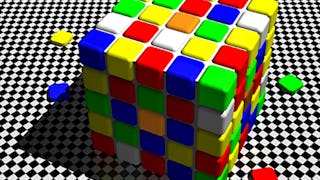
Learners will be introduced to the problems that vision faces, using perception as a guide. The course will consider how what we see is generated by the visual system, what the central problem for vision is, and what visual perception indicates about how the brain works. The evidence will be drawn from neuroscience, psychology, the history of vision science and what philosophy has contributed. Although the discussions will be informed by visual system anatomy and physiology, the focus is on perception. We see the physical world in a strange way, and goal is to understand why.
DB
This is a great course dealt meticulously. The carefully crafted audiovisual study material and quizzes together with very inspiring video lectures helped understand and learn with great enthusiasm.
DG
Very professional and easy to follow lecture side by side with a presentation.
SK
awesome course ..very helpful and full of knowledge
SR
Very well researched and articulate professor, incredibly knowledgeable.
PC
I am currently undertaking a PhD in visual inspection techniques for aircraft maintenance tasks and i found this course excellent. Dale is a wealth of knowledge and delivered an excellent course.
DA
Very interesting course in how brain "sees" the world.
XK
A very insightful course. Super straightforward. A perfect choice as an introductory course.
HA
Although the course material is absolutely fantastic. Some concepts should be elucidated further.
LL
Excellent course. Did a lot to change my views of perception and reality.
JS
Great course for all, easy to understand with bite-sized videos.
EW
An awesome course to get familiar with the mechanism of visual perception.
MV
Great course, very informative and easy to undrestand.
Showing: 20 of 72
This course gave me another view at the problem of visual perception. The course relates more to psychology than to medicine. Essay writing is mandatory for the completion of the course. Thanks to Professor Purves and his team from the Duke Institute for Brain Sciences.
I am currently undertaking a PhD in visual inspection techniques for aircraft maintenance tasks and i found this course excellent. Dale is a wealth of knowledge and delivered an excellent course.
It is such a nice course. The lecturer is so inspiring and 'provocative'. The perception theory was explained in a very novel way.
The course is more about psychophysics rather than neuroscience. It is relatively the combination of psychology and neuroscience (more psychology but it can inspire thoughts about neuronal pathway). Personally I have alternative thoughts against some of the ideas in this course.
The empirical thoughts explain everything using human experience. But the lecturer took it as a fact rather than a hypothesis that needs testing. Obviously there are correlation between those factors but it is really the ‘reason’?
Human experience is a vague word. What part or aspect of experience is related to the perception is not explained or at least mentioned. For example, in the geometry section, my hypothesis would be it was caused by perspective: We artificially put identical figures into picture with perspective (reflection of 3D world). Our brain will analysis the context according to the experience of the real world and then define curving, distortion or depth at different sites of this imagine. By retrospective referring, the analyses about figures at different locations will differ. So it could be, not the perception, but the analyses (information processing in parts of the prefrontal cortex, higher ‘level’ of visual cortex etc. which shares the similar structures in cerebellum) that gives ‘illusions’.
The data from ‘Frequency of Occurrence of Angles’ is too good to be true.
Again, the explanation of the angel perception is not credible enough.
If this ‘illusion’ is based on human experience, it is imaginable to do similar behavioural test on human babies to see the actual window and amount of experience that a human need to gain this psychophysical discrepancy. (Genetical and structural analysis is also applicable)
In the courses of motion, it will be better to have video for demonstration.
After all, it is a very inspiring course and it generates a perspective of view for (potential) neuroscientists.
The course started amazingly, with really interesting discussions, but ended being an introduction to weird perceptual phenomena explained through empirical experience. Important if you want to get a certificate: the final essay is almost impossible to get evaluated!! Too few people
Plain repetition of a single theme. Pen needs to be used appropriately. Grading is extremely slow - took a month.
This is one of the best, if not the very best courses I have ever done. Truly amazing. I will never again just look!!! Thank you prof Purves. More than ever I've realized that we should be so very careful with "eye witness" accounts! When I took my dogs for a walk, I often wonder what it is that I "really" see!!! Wonderful. One course that I just had to finish! Wonderful.
It's really useful to learn this as someone who is starting to learn 3D Animation as it really evokes my thinking as see everyday visual things into more detail and not be fooled by our visual systems.
Ótimo curso! O professor é excelente, explica muito bem, tornando todas as aulas muito interessantes.
A very insightful course. Super straightforward. A perfect choice as an introductory course.
great course: do it again!
Excellent!!
very good
I decided to take this course after completing the Brain and Space Course by Dr. Jennifer M. Groh, Ph.D.
The course is well taught and has a good list of support resources. I come from an AI, Deep Learning background, so this course has helped me learn more about the brain, and perception. It is helping me reshape my understanding of the meaning of AI.
Interesting course, although the peer-review part could use some work
I don't like that the 3 and 4 star reviews are missing!
Coursera seems to sometimes remove reviews with lower numbers of starts.
I thought that this course was going to be mostly on the brain, but it wasn't at all.... just a small section.
If your main interest is in vision then it might be different, but for me being interested only in how vision relates to the brain, there was very little useful information in this course for me.
The Professor explains things in a long and sometimes confusing manner, it takes a while to get used to and understand concepts.
As a filmmaker deeply invested in the art of storytelling through visual media, I cannot recommend this course enough! Visual Perception and the Brain provided me with invaluable insights into the intricacies of how the human brain interprets visual information. Understanding these fundamental principles has elevated my craft, allowing me to create more immersive and emotionally impactful films.
The course delved into various topics, including depth perception, attentional mechanisms, and colour psychology. Learning how the brain processes depth cues has enabled me to design breathtaking scenes that transport the audience into the heart of the narrative. By leveraging attentional factors, I can guide the viewers' gaze precisely where I want, heightening the storytelling experience. The knowledge gained from this course has been pivotal in my foray into virtual reality and augmented reality. As a VR developer, I now comprehend how to design virtual environments that feel natural and comfortable, sparing users from visual discomfort or motion sickness. The course's insights into motion perception have enhanced the realism of my VR projects, making the experience truly immersive.
For gamers and AI enthusiasts, this course offers a wealth of benefits too. Game developers can harness the power of visual cues to create visually captivating and enjoyable gaming experiences. AI algorithms can benefit from understanding human visual processing, leading to more accurate computer vision systems and generating realistic visual content.
I must express my utmost gratitude to Dr Dale Purves, the brilliant instructor of Visual Perception and the Brain. Dr Purves's passion for the subject and his expertise were evident throughout the course, making the learning experience truly exceptional. His engaging teaching style and ability to simplify complex concepts allowed me to grasp the intricacies of visual perception effortlessly.
Learning about the various experiments and studies conducted to understand visual perception and the brain added a practical and tangible dimension to the subject. The course delved into the importance of empirical research in validating theories and hypotheses, and it provided valuable insights into the methodologies used to gather data and draw conclusions. Understanding how researchers use empirical evidence to unravel the mysteries of human vision was both fascinating and enlightening. These empirical points not only enriched my knowledge but also inspired me to explore further the realm of visual perception and its real-world applications in fields like filmmaking, virtual reality, gaming, and artificial intelligence. This course is an absolute game-changer. Embrace it, and you'll gain a new perspective on how visual perception shapes the world of creativity and technology.
The course introduces new information gradually, within a known context, as well as exploring the use of images (of the brain, for example). These procedures facilitate learning. I was not able to keep up with the course at the pace of the class (on the dates stipulated) because I am learning English in parallel. But that is a deficiency of mine and I did not give course. Congratulations to the Coursera, Duke University, the organizers of the Visual Perception and the Brain course, and especially to Professor PhD Dale Purves, for excellent content quality, approach, theme, and the opportunity to democratize knowledge to anyone in the world. Thank you!!
Amazing course by Dr. Dale Purvez! This is my second course from Duke University and i absolutely loved it all! This course was very unique in itself ! i.e It involved much more than just assignments. The final test which involved writing an essay which had to be peer reviewed was a good experience. Also reviewing the work done by fellow students have to be noted for it would be an amazing experience for anyone taking this course! I am very much looking for ward for such courses in future. Thank You Dr.Purves, Coursera and Duke University for this course!