Vision courses can help you learn the fundamentals of visual perception, image processing techniques, and the principles of optical systems. You can build skills in analyzing visual data, understanding color theory, and applying visual design principles to various projects. Many courses introduce tools like Adobe Photoshop for image editing, MATLAB for simulations, and Python libraries for computer vision, demonstrating how these skills can be applied in fields such as graphic design, photography, and artificial intelligence.

University of Colorado Boulder
Skills you'll gain: Computer Vision, Image Analysis, Computer Graphics, Multimodal Prompts, Visualization (Computer Graphics), Applied Machine Learning, Artificial Intelligence, Artificial Intelligence and Machine Learning (AI/ML), Generative Model Architectures, Data Ethics, Generative AI, Deep Learning, Unsupervised Learning, Data Processing, Linear Algebra, Microsoft Excel, Data Transformation, Feature Engineering, Data Manipulation
Build toward a degree
Intermediate · Specialization · 1 - 3 Months

Columbia University
Skills you'll gain: Computer Vision, Image Quality, Image Analysis, Computer Graphics, 3D Modeling, Photography, Virtual Reality, Visualization (Computer Graphics), Medical Imaging, Artificial Neural Networks, Unsupervised Learning, Graph Theory, Dimensionality Reduction, Mathematical Modeling, Estimation, Machine Learning Algorithms, Color Theory, Algorithms, Automation Engineering, Electronic Components

Beginner · Specialization · 3 - 6 Months

Skills you'll gain: Computer Vision, Jupyter, Machine Learning Algorithms, IBM Cloud, Deep Learning, Cloud Development
Intermediate · Course · 1 - 3 Months

Skills you'll gain: Computer Vision, Image Analysis, Deep Learning, Matlab, Applied Machine Learning, Machine Learning, Motion Graphics, Supervised Learning, Predictive Modeling, Artificial Intelligence and Machine Learning (AI/ML), Visualization (Computer Graphics), Geospatial Information and Technology, Data Integration, Medical Imaging, Data Validation, Machine Learning Methods, Geometric Dimensioning And Tolerancing, Performance Tuning, Algorithms
Intermediate · Specialization · 1 - 3 Months

MathWorks
Skills you'll gain: Computer Vision, Image Analysis, Anomaly Detection, Applied Machine Learning, Deep Learning, Image Quality, Artificial Neural Networks, Unsupervised Learning, Matlab, Application Deployment, PyTorch (Machine Learning Library), Machine Learning, Motion Graphics, Supervised Learning, Data Visualization, Automation, Predictive Modeling, Artificial Intelligence and Machine Learning (AI/ML), Machine Learning Methods, Medical Imaging
Beginner · Professional Certificate · 3 - 6 Months

DeepLearning.AI
Skills you'll gain: Computer Vision, Tensorflow, Image Analysis, Keras (Neural Network Library), Deep Learning, Visualization (Computer Graphics), Heat Maps, Network Architecture
Intermediate · Course · 1 - 4 Weeks

MathWorks
Skills you'll gain: Computer Vision, Anomaly Detection, Image Analysis, Matlab, Deep Learning, Artificial Neural Networks, Unsupervised Learning, Application Deployment, PyTorch (Machine Learning Library), Data Visualization, Artificial Intelligence and Machine Learning (AI/ML), Machine Learning Methods, Predictive Modeling, Data Synthesis, Performance Tuning, Data Analysis, Classification And Regression Tree (CART), Data Validation, Data Processing, Medical Imaging
Beginner · Specialization · 1 - 3 Months

Skills you'll gain: Prompt Engineering, Apache Spark, Large Language Modeling, PyTorch (Machine Learning Library), Unsupervised Learning, Generative AI, PySpark, Computer Vision, Keras (Neural Network Library), Supervised Learning, Deep Learning, Reinforcement Learning, Regression Analysis, LLM Application, Scikit Learn (Machine Learning Library), Jupyter, Applied Machine Learning, Machine Learning, Python Programming, Data Science

Build toward a degree
Intermediate · Professional Certificate · 3 - 6 Months

Edge Impulse
Skills you'll gain: Computer Vision, Image Analysis, Artificial Neural Networks, Keras (Neural Network Library), Embedded Systems, Artificial Intelligence and Machine Learning (AI/ML), Applied Machine Learning, Tensorflow, Embedded Software, Deep Learning, Data Ethics, Machine Learning, Data Processing, Computer Programming, Python Programming
Intermediate · Course · 1 - 4 Weeks

University at Buffalo
Skills you'll gain: Computer Vision, Image Analysis, Computer Graphics, Visualization (Computer Graphics), Digital Design, Artificial Intelligence, Applied Machine Learning, Computer Programming, Matlab, Algorithms, Calculus, Probability & Statistics
Intermediate · Course · 1 - 4 Weeks

Skills you'll gain: Computer Vision, Mobile Development, PyTorch (Machine Learning Library), Flask (Web Framework), Application Development, Tensorflow, Deep Learning, Application Deployment, Artificial Intelligence and Machine Learning (AI/ML), Containerization, User Interface (UI), Performance Tuning
Intermediate · Course · 1 - 3 Months

Google Cloud
Skills you'll gain: Tensorflow, Computer Vision, Machine Learning Methods, Development Environment, Image Analysis, Machine Learning, Google Cloud Platform, Deep Learning, Artificial Neural Networks
Beginner · Project · Less Than 2 Hours
Vision refers to the ability to perceive, interpret, and understand the visual information perceived through our eyes. In the context of skills or courses, vision can have different meanings depending on the specific field of study.
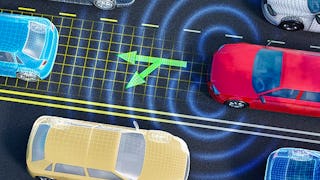
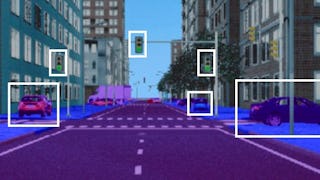
In terms of technology, computer vision is a field that focuses on enabling computers to understand and interpret visual information from digital images or videos. This technology has various applications, including facial recognition, object detection, autonomous vehicles, and medical imaging.
In entrepreneurship or business management, vision refers to a clear and compelling picture of the desired future state that an organization or individual aims to achieve. It involves seeing the bigger picture, setting ambitious goals, and formulating strategies to reach them.
In design and art, vision refers to a person's artistic perspective or unique way of seeing the world. It involves creativity, imagination, and the ability to conceptualize and express ideas visually.
Therefore, the concept of vision varies depending on the context, but it generally relates to visual perception, futuristic goals, technological advancements, and artistic expression.‎
To work in the field of Vision, there are several skills you should focus on learning:
Computer Vision: Mastering computer vision algorithms and techniques is essential. This includes image processing, object recognition, and understanding, image segmentation, and feature extraction.
Deep Learning: Familiarize yourself with deep learning frameworks like TensorFlow or PyTorch. Knowledge of artificial neural networks and training deep learning models is highly valuable in computer vision applications.
Image Processing: Understanding image processing techniques such as filtering, enhancement, noise reduction, and morphological operations will help you preprocess and analyze images effectively.
Programming: Proficiency in programming languages like Python, Java, or C++ is crucial for developing computer vision applications. You'll need to be able to write clean and efficient code.
Mathematics and Statistics: A solid understanding of linear algebra, calculus, probability, and statistics is necessary to comprehend the algorithms and concepts behind computer vision.
OpenCV: OpenCV is a popular open-source computer vision library. Learning to use OpenCV will provide you with tools for image and video analysis, feature detection, and facial recognition.
Machine Learning: Knowledge of machine learning algorithms, including supervised and unsupervised learning techniques, is beneficial for solving complex computer vision tasks.
Mobile Development: If you plan to develop vision-based mobile applications, learning mobile development frameworks such as iOS or Android will be helpful.
Data Annotation: An important aspect of computer vision is annotating data for training models. Familiarize yourself with labeling tools and practices for creating high-quality annotated datasets.
Remember, continuous learning and staying up-to-date with the latest trends and advancements in computer vision are key to succeeding in this field.‎
There are various kinds of jobs that you can get with Vision skills. Some possible job opportunities include:
Computer Vision Engineer: As a computer vision engineer, you will develop algorithms and models to process and analyze visual data, which can be used in fields like robotics, autonomous vehicles, or security systems.
Machine Learning Engineer: With vision skills, you can work as a machine learning engineer focusing on computer vision tasks. You will build and train models that can recognize and process visual data for different applications.
Data Scientist: As a data scientist specializing in computer vision, you can work on projects involving image analysis, object detection, or facial recognition. Your expertise will contribute to extracting insights and patterns from visual data.
Augmented Reality (AR) Developer: With vision skills, you can also work as an AR developer, creating immersive experiences by overlaying virtual elements onto the real world. This can be used in various industries, such as gaming, education, or marketing.
Industrial Automation Specialist: In industrial settings, vision skills are crucial for tasks like quality inspection, object tracking, or process automation. As an industrial automation specialist, you will develop and implement systems that use vision technology to improve efficiency and accuracy.
These are just a few examples, and there are numerous other career opportunities where vision skills can be applied. It ultimately depends on your interests and the specific industries or technologies you wish to work in.‎
People who are best suited for studying Vision are those who have a strong interest in computer science, artificial intelligence, and image processing. They should have a good understanding of mathematics, particularly linear algebra and calculus. Additionally, individuals with a keen eye for detail, problem-solving skills, and a passion for technology would excel in studying Vision.‎
There are several topics related to vision that you can study. Here are a few suggestions:
Computer Vision: This field focuses on teaching computers to understand and interpret visual data, enabling them to analyze images and videos, detect objects, and recognize patterns. You can learn about image processing techniques, machine learning algorithms, and deep learning models commonly used in computer vision applications.
Optics and imaging: Optics is the branch of physics that studies the behavior and properties of light. Studying optics and imaging will provide you with insights into various imaging systems, such as cameras, microscopes, and telescopes. You can learn about concepts like light propagation, lenses, filters, and the mechanisms used in capturing and processing images.
Human Vision and Perception: Understanding how humans perceive and interpret visual information is crucial in fields like psychology, cognitive science, and user experience design. By studying human vision and perception, you can explore topics like visual perception, color vision, depth perception, visual illusions, and eye-tracking techniques.
Augmented and Virtual Reality: These emerging technologies heavily rely on vision to create immersive experiences. by studying augmented and virtual reality, you can learn about the principles behind creating visually realistic virtual environments, tracking objects or body movements, and designing interactive visual interfaces.
Remember, these are just a few examples, and there are many more topics related to vision that you can explore. It's essential to assess your interests, career goals, and the level of expertise you want to achieve when deciding which specific aspects of vision to study.‎
Online Vision courses offer a convenient and flexible way to enhance your knowledge or learn new Vision refers to the ability to perceive, interpret, and understand the visual information perceived through our eyes. In the context of skills or courses, vision can have different meanings depending on the specific field of study.
In terms of technology, computer vision is a field that focuses on enabling computers to understand and interpret visual information from digital images or videos. This technology has various applications, including facial recognition, object detection, autonomous vehicles, and medical imaging.
In entrepreneurship or business management, vision refers to a clear and compelling picture of the desired future state that an organization or individual aims to achieve. It involves seeing the bigger picture, setting ambitious goals, and formulating strategies to reach them.
In design and art, vision refers to a person's artistic perspective or unique way of seeing the world. It involves creativity, imagination, and the ability to conceptualize and express ideas visually.
Therefore, the concept of vision varies depending on the context, but it generally relates to visual perception, futuristic goals, technological advancements, and artistic expression. skills. Choose from a wide range of Vision courses offered by top universities and industry leaders tailored to various skill levels.‎
When looking to enhance your workforce's skills in Vision, it's crucial to select a course that aligns with their current abilities and learning objectives. Our Skills Dashboard is an invaluable tool for identifying skill gaps and choosing the most appropriate course for effective upskilling. For a comprehensive understanding of how our courses can benefit your employees, explore the enterprise solutions we offer. Discover more about our tailored programs at Coursera for Business here.‎