

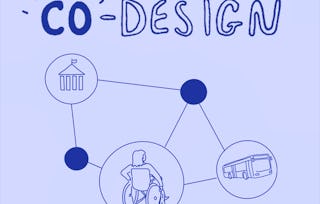
What is design? How is it a deeply human endeavor? How can we design better products, services, and experiences in our communities? If you’re interested in helping create a more equitable and accessible world, this Center for Computational Thinking module on Open Design is for you.

Open Design

Verschaffen Sie sich einen Einblick in ein Thema und lernen Sie die Grundlagen.
15 Bewertungen
Stufe Anfänger
Keine Vorkenntnisse erforderlich
5 Stunden zu vervollständigen
Flexibler Zeitplan
In Ihrem eigenen Lerntempo lernen
Kompetenzen, die Sie erwerben
- Kategorie: Human Centered Design
- Kategorie: Workplace inclusivity
- Kategorie: Design Elements And Principles
- Kategorie: Design
- Kategorie: User Experience Design
- Kategorie: Open Mindset
- Kategorie: Social Justice
- Kategorie: Design Thinking
- Kategorie: Social Impact
- Kategorie: Creativity
- Kategorie: Diversity Equity and Inclusion Initiatives
- Kategorie: Diversity Awareness
- Kategorie: Team Collaboration
Wichtige Details

Zertifikat zur Vorlage
Zu Ihrem LinkedIn-Profil hinzufügen
Bewertungen
2 Aufgaben
Unterrichtet in Englisch
Erfahren Sie, wie Mitarbeiter führender Unternehmen gefragte Kompetenzen erwerben.

In diesem Kurs gibt es 1 Modul


Mehr von Design and Product entdecken

University of California San Diego
Eindhoven University of Technology

Warum entscheiden sich Menschen für Coursera für ihre Karriere?

Felipe M.
Lernender seit 2018
„Es ist eine großartige Erfahrung, in meinem eigenen Tempo zu lernen. Ich kann lernen, wenn ich Zeit und Nerven dazu habe.“

Jennifer J.
Lernender seit 2020
„Bei einem spannenden neuen Projekt konnte ich die neuen Kenntnisse und Kompetenzen aus den Kursen direkt bei der Arbeit anwenden.“

Larry W.
Lernender seit 2021
„Wenn mir Kurse zu Themen fehlen, die meine Universität nicht anbietet, ist Coursera mit die beste Alternative.“

Chaitanya A.
„Man lernt nicht nur, um bei der Arbeit besser zu werden. Es geht noch um viel mehr. Bei Coursera kann ich ohne Grenzen lernen.“
Bewertungen von Lernenden
- 5 stars
66,66 %
- 4 stars
33,33 %
- 3 stars
0 %
- 2 stars
0 %
- 1 star
0 %
Zeigt 3 von 15 an
AL
Geprüft am 3. Apr. 2025
I liked the course as the majority of materials was readings, instead of video lectures.
Bringen Sie Ihre Karriere mit einem Online-Abschluss voran.
Erwerben Sie einen Abschluss von erstklassigen Universitäten – 100 % online




Häufig gestellte Fragen
Weitere Fragen
Finanzielle Unterstützung verfügbar,