In this course, learners will review sonata form and learn how the piano sonata was taken to new heights by Ludwig van Beethoven. We’ll discover together how the generation that followed interpreted Beethoven’s achievements and put them into practice in their own unique ways. From there, we will explore the “War of the Romantics”: the variety of formal structures for Romantic sonatas (both traditional and progressive) and the major repertoire of this era. You’ll hear some of the important pianos of the time, and understand the differences between Viennese and English/French traditions of piano music.

The Piano Sonata: Beethoven and the Romantics

The Piano Sonata: Beethoven and the Romantics
Ce cours fait partie de Spécialisation "Exploring Piano Literature: The Piano Sonata"

Instructeur : Matthew Bengtson
Inclus avec En savoir plus
Demander à Coursera
Obtenez un aperçu d'un sujet et apprenez les principes fondamentaux.
niveau Intermédiaire
Certaines connaissances prérequises
1 semaine à compléter
à 10 heures par semaine
Planning flexible
Apprenez à votre propre rythme
Ce que vous apprendrez
Learn how the piano sonata was taken to new heights by Beethoven.
Explore the "War of the Romantics."
Understand the differences between Viennese and English/French traditions of piano music.
Compétences que vous acquerrez
- Catégorie : Instrumental Music
- Catégorie : Music History
- Catégorie : Music Performance
- Catégorie : Music Theory
- Catégorie : Music
- Catégorie : Musical Composition
- Catégorie : Classical Music
Détails à connaître

Certificat partageable
Ajouter à votre profil LinkedIn
Évaluations
8 devoirs
Enseigné en Anglais
Découvrez comment les employés des entreprises prestigieuses maîtrisent des compétences recherchées

Élaborez votre expertise du sujet
Ce cours fait partie de la Spécialisation "Exploring Piano Literature: The Piano Sonata"
Lorsque vous vous inscrivez à ce cours, vous êtes également inscrit(e) à cette Spécialisation.
- Apprenez de nouveaux concepts auprès d'experts du secteur
- Acquérez une compréhension de base d'un sujet ou d'un outil
- Développez des compétences professionnelles avec des projets pratiques
- Obtenez un certificat professionnel partageable

Il y a 4 modules dans ce cours
Obtenez un certificat professionnel
Ajoutez ce titre à votre profil LinkedIn, à votre curriculum vitae ou à votre CV. Partagez-le sur les médias sociaux et dans votre évaluation des performances.
Instructeur
Offert par

En savoir plus sur Music and Art
 Statut : Essai gratuit
University of Michigan
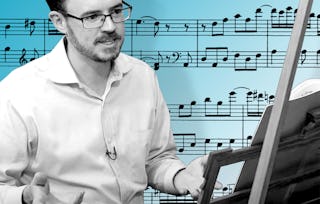 Statut : Essai gratuit
University of Michigan
 Statut : Gratuit
Curtis Institute of Music
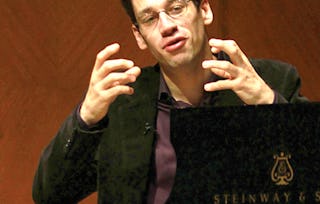 Statut : Gratuit
Curtis Institute of Music
Pour quelles raisons les étudiants sur Coursera nous choisissent-ils pour leur carrière ?

Felipe M.
Étudiant(e) depuis 2018
’Pouvoir suivre des cours à mon rythme à été une expérience extraordinaire. Je peux apprendre chaque fois que mon emploi du temps me le permet et en fonction de mon humeur.’

Jennifer J.
Étudiant(e) depuis 2020
’J'ai directement appliqué les concepts et les compétences que j'ai appris de mes cours à un nouveau projet passionnant au travail.’

Larry W.
Étudiant(e) depuis 2021
’Lorsque j'ai besoin de cours sur des sujets que mon université ne propose pas, Coursera est l'un des meilleurs endroits où se rendre.’

Chaitanya A.
’Apprendre, ce n'est pas seulement s'améliorer dans son travail : c'est bien plus que cela. Coursera me permet d'apprendre sans limites.’
Faites progresser votre carrière avec un diplôme en ligne
Obtenez un diplôme auprès d’universités de renommée mondiale - 100 % en ligne




Foire Aux Questions
Plus de questions
Aide financière disponible,