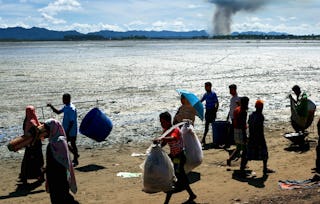
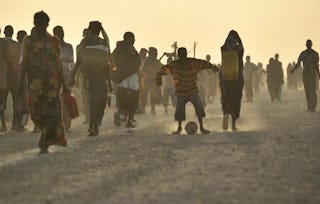
In every era, individuals and families have been forced to flee their homelands due to war, persecution, or grave human rights abuses. This course offers a comprehensive overview of the legal, historical, and humanitarian frameworks that shape refugee protection and asylum in the United States. Drawing on international treaties, U.S. law, and real-world case studies, learners will examine the refugee definition, the processes by which individuals seek protection, and the durable solutions that uphold the right to live in safety and dignity.
Through four modules, participants will explore the full arc of the refugee experience—from forced migration and legal recognition to resettlement, integration, and civic participation. Designed for both advocates and individuals directly affected by displacement, this course empowers learners with practical knowledge and a human rights lens. It affirms that protection is not merely an act of policy—it is a profound expression of global solidarity and shared humanity.
This module introduces learners to the historical and contemporary forces behind human migration, with a focus on forced migration due to persecution, violence, and human rights violations. Through global examples spanning the 19th century to the present day, learners will explore the origins of refugee movements and the evolving international legal frameworks designed to protect displaced individuals. The module provides an in-depth look at the development of the refugee definition under the 1951 UN Convention and the 1967 Protocol, the formation of the UN High Commissioner for Refugees (UNHCR), and how these instruments shaped U.S. refugee law, culminating in the 1980 Refugee Act. Regional expansions of refugee definitions in Africa and Latin America are also examined to highlight diverse approaches to protection.
Inclus
4 vidéos1 devoir3 sujets de discussion
Afficher les informations sur le contenu du module
4 vidéos•Total 29 minutes
Introduction to the Course•7 minutes
Introduction to Forced Migration and Human Rights•5 minutes
Historical Contexts of Forced Migration and Refugee Law•7 minutes
Origins and Evolution of International Refugee Protection•10 minutes
1 devoir•Total 30 minutes
Module 1 Practice Quiz•30 minutes
3 sujets de discussion•Total 90 minutes
Forced Migration Discussion•30 minutes
Legal Barriers - Discussion•30 minutes
U.S. Immigration Policy•30 minutes
Pathways to Protection: Durable Solutions for Refugees
Module 2•2 heures à terminer
Détails du module
This module explores the three internationally recognized durable solutions for refugees: voluntary repatriation, local integration (including asylum), and resettlement to a third country. Learners will examine the legal, political, and personal complexities behind each solution, including how host countries assess asylum claims, the role of the UNHCR in refugee status determinations, and the challenges associated with the resettlement process. Through global case studies and real-world examples, this module provides insight into how refugee protection operates in practice and the human implications of legal frameworks and international cooperation.
Inclus
6 vidéos1 devoir3 sujets de discussion
Afficher les informations sur le contenu du module
6 vidéos•Total 28 minutes
Durable Solutions for Refugees Post-WWII•3 minutes
Voluntary Repatriation: The Ideal Durable Solution•3 minutes
Local Integration and the Complexities of Asylum•6 minutes
Refugee Resettlement in the United States•8 minutes
Refugees and Asylees: Definitions and Legal Status•4 minutes
Refugee Resettlement: Barriers and Exclusions•4 minutes
1 devoir•Total 30 minutes
Module 2 Practice Quiz•30 minutes
3 sujets de discussion•Total 90 minutes
Repatriation Discussion•30 minutes
Integration Discussion•30 minutes
Resettlement Discussion•30 minutes
Seeking Asylum in the U.S.: Process, Protection, and Possibility
Module 3•2 heures à terminer
Détails du module
This module offers a guide to the asylum process in the United States, from filing the initial application to navigating court hearings and appeals. Learners will explore the difference between affirmative and defensive asylum claims, understand how cases are reviewed by asylum officers, immigration judges, and appellate bodies, and examine the essential role of legal documentation and consistent testimony. The module also highlights humanitarian parole and the crucial role of nonprofit organizations and cross-sector collaboration in supporting asylum seekers. Real-world examples bring the challenges and strategies of navigating the system to life, preparing learners to advocate more effectively or understand the journey for themselves or others.
Inclus
5 vidéos1 devoir3 sujets de discussion
Afficher les informations sur le contenu du module
5 vidéos•Total 27 minutes
Affirmative Asylum Application: Procedures and Considerations•8 minutes
Asylum Hearings and Appeals•3 minutes
Defensive Asylum Claims•9 minutes
Humanitarian Parole: An Alternative Pathway to Protection•3 minutes
The Role of Nonprofits in Supporting Refugees and Asylum Seekers•4 minutes
1 devoir•Total 30 minutes
Module 3 Practice Quiz•30 minutes
3 sujets de discussion•Total 90 minutes
Filing Affirmatively - Discussion•30 minutes
Improving the Asylum Process - Discussion•30 minutes
Service Provider Collaboration - Discussion•30 minutes
Starting Over: Life After Asylum or Resettlement
Module 4•3 heures à terminer
Détails du module
In the final module, learners explore the critical steps and support systems that shape the post-asylum or post-resettlement experience in the United States. From applying for lawful permanent residence and eventually citizenship, to accessing work authorization, public benefits, health services, and legal support, this module outlines the rights and responsibilities that come with protected status. The course also addresses the psychological toll of displacement through the concept of “triple trauma” and highlights the importance of community engagement and civic participation. Whether learners are refugees, asylum seekers, or allies, this module provides practical tools for building a new life and strengthening belonging in the U.S.
Inclus
5 vidéos1 devoir3 sujets de discussion
Afficher les informations sur le contenu du module
5 vidéos•Total 31 minutes
From Asylum or Refugee Status to Lawful Permanent Residency•7 minutes
Pathway to Citizenship and Integration for Refugees and Asylees•6 minutes
Accessing Public Benefits and Legal Aid for Refugees and Asylees•4 minutes
Navigating Trauma and Legal Challenges in Refugee Integration•6 minutes
Civic Engagement and the Journey from Refugee to U.S. Citizen•8 minutes
1 devoir•Total 30 minutes
Course Final Assessment•30 minutes
3 sujets de discussion•Total 90 minutes
Barriers to Integration - Discussion•30 minutes
Trauma and Legal Consequences - Discussion•30 minutes
Founding Values of America - Discussion•30 minutes
The University of Pennsylvania (commonly referred to as Penn) is a private university, located in Philadelphia, Pennsylvania, United States. A member of the Ivy League, Penn is the fourth-oldest institution of higher education in the United States, and considers itself to be the first university in the United States with both undergraduate and graduate studies.
Pour quelles raisons les étudiants sur Coursera nous choisissent-ils pour leur carrière ?
Felipe M.
Étudiant(e) depuis 2018
’Pouvoir suivre des cours à mon rythme à été une expérience extraordinaire. Je peux apprendre chaque fois que mon emploi du temps me le permet et en fonction de mon humeur.’
Jennifer J.
Étudiant(e) depuis 2020
’J'ai directement appliqué les concepts et les compétences que j'ai appris de mes cours à un nouveau projet passionnant au travail.’
Larry W.
Étudiant(e) depuis 2021
’Lorsque j'ai besoin de cours sur des sujets que mon université ne propose pas, Coursera est l'un des meilleurs endroits où se rendre.’
Chaitanya A.
’Apprendre, ce n'est pas seulement s'améliorer dans son travail : c'est bien plus que cela. Coursera me permet d'apprendre sans limites.’
Avis des étudiants
4.8
11 avis
5 stars
90,90 %
4 stars
0 %
3 stars
9,09 %
2 stars
0 %
1 star
0 %
Affichage de 3 sur 11
A
AL
5·
Révisé le 4 mars 2026
Covers the process of seeking asylum for persecuted people, from application for asylum, to gaining citizenship.

When will I have access to the lectures and assignments?
To access the course materials, assignments and to earn a Certificate, you will need to purchase the Certificate experience when you enroll in a course. You can try a Free Trial instead, or apply for Financial Aid. The course may offer 'Full Course, No Certificate' instead. This option lets you see all course materials, submit required assessments, and get a final grade. This also means that you will not be able to purchase a Certificate experience.
What will I get if I purchase the Certificate?
When you purchase a Certificate you get access to all course materials, including graded assignments. Upon completing the course, your electronic Certificate will be added to your Accomplishments page - from there, you can print your Certificate or add it to your LinkedIn profile.
Is financial aid available?
Yes. In select learning programs, you can apply for financial aid or a scholarship if you can’t afford the enrollment fee. If fin aid or scholarship is available for your learning program selection, you’ll find a link to apply on the description page.