Lorsque vous vous inscrivez à ce cours, vous êtes également inscrit(e) à cette Spécialisation.
Apprenez de nouveaux concepts auprès d'experts du secteur
Acquérez une compréhension de base d'un sujet ou d'un outil
Développez des compétences professionnelles avec des projets pratiques
Obtenez un certificat professionnel partageable
Il y a 4 modules dans ce cours
Shoulder pain can make simple movements like reaching, lifting, throwing, dressing, or sleeping on one side difficult and frustrating. By the end of this course, learners will understand how rotator cuff dysfunction develops, how to recognize common patterns of pain and restriction, and how targeted assessment, manual therapy, and corrective strategies can support better shoulder function.
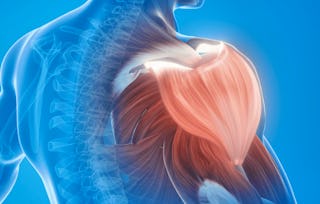
Presented by Dr. Jonathan Kuttner, this course explores the four rotator cuff muscles in depth, including their role in shoulder stability, movement control, trigger point formation, muscle imbalance, and compensation. Learners gain a clearer understanding of why shoulder pain often involves more than one irritated structure.
Through anatomy tutorials, case examples, and practical demonstrations, learners study assessment concepts, manual therapy techniques, stretching strategies, heat and ice protocols, and movement-based recovery principles.
Healthcare, fitness, and bodywork professionals will gain useful tools for improving treatment precision, while non-clinical learners will better understand why rotator cuff problems happen and how recovery can be supported. This course offers a practical framework for restoring comfort, mobility, and pain-free shoulder movement.
In the first module, Dr. Kuttner presents a clear, practical breakdown of the rotator cuff and its unique role in shoulder function. The rotator cuff is introduced not as four isolated muscles but as a synergistic system responsible for stabilising the humeral head and guiding precise shoulder movement. The module explains how the rotator cuff interacts with the larger shoulder muscles, how the scapula forms the functional base for movement, and why shoulder pain often develops from imbalance, posture, or overload.
Inclus
2 vidéos3 lectures1 devoir1 sujet de discussion
Afficher les informations sur le contenu du module
2 vidéos•Total 22 minutes
Rotator Cuff Function and Anatomy - Part 1•12 minutes
RCO 2•10 minutes
3 lectures•Total 30 minutes
Syllabus•10 minutes
Notice and Disclaimer•10 minutes
Course Workbook•10 minutes
1 devoir•Total 15 minutes
Practice Assignment•15 minutes
1 sujet de discussion•Total 10 minutes
Introduction•10 minutes
Advanced Shoulder Anatomy
Module 2•1 heure à terminer
Détails du module
In this Module you will learn the key actions of each muscle (supraspinatus, infraspinatus, teres minor, and subscapularis), how to recognise common mechanical faults, and how these contribute to impingement, painful arcs of movement, or loss of range.
Inclus
4 vidéos1 lecture1 devoir
Afficher les informations sur le contenu du module
4 vidéos•Total 12 minutes
Supraspinatus•1 minute
Infraspinatus•3 minutes
Teres Minor•3 minutes
Subscapularis•5 minutes
1 lecture•Total 10 minutes
Student Notes•10 minutes
1 devoir•Total 15 minutes
Module Reflection Quiz•15 minutes
Rotator Cuff Treatment
Module 3•1 heure à terminer
Détails du module
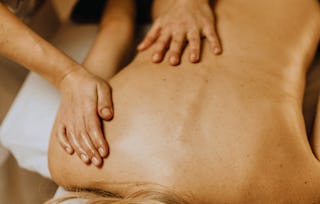
Module 3 translates anatomical knowledge into hands-on application. Dr. Kuttner demonstrates step-by-step trigger point treatment for all four main muscles of the rotator cuff. You will learn how to accurately locate each muscle using surface anatomy landmarks, how to palpate to identify taut bands and trigger points, and how to apply trigger point pressure safely and effectively.Detailed demonstrations show therapist hand positioning, body mechanics, pressure direction, and how to monitor client feedback. You will also see how to integrate stretching or movement after release to restore resting length and function. The module emphasises precision rather than force — working with tissue responsiveness, not against it.By the end of Module 2, therapists will be able to confidently identify, treat, and reduce trigger point activity in the rotator cuff, improving range of motion, decreasing pain, and supporting long-term recovery.
Inclus
4 vidéos1 lecture1 devoir1 sujet de discussion
Afficher les informations sur le contenu du module
4 vidéos•Total 32 minutes
Supraspinatus•9 minutes
Infraspinatus•9 minutes
Teres Minor•5 minutes
Subscapularis•8 minutes
1 lecture•Total 10 minutes
Student Notes•10 minutes
1 devoir•Total 15 minutes
Practice Assignment•15 minutes
1 sujet de discussion•Total 10 minutes
Summary•10 minutes
Course Exam
Module 4•1 heure à terminer
Détails du module
This final exam is designed to assess your understanding of the key concepts presented throughout the course. Please review all video lessons and written materials before beginning. A passing score of 70% or higher is required to successfully complete the course and earn your CE certificate. You may reference your notes during the exam. Once you pass, your certificate will be available for immediate download.
Inclus
1 devoir
Afficher les informations sur le contenu du module
1 devoir•Total 60 minutes
Course Exam•60 minutes
Obtenez un certificat professionnel
Ajoutez ce titre à votre profil LinkedIn, à votre curriculum vitae ou à votre CV. Partagez-le sur les médias sociaux et dans votre évaluation des performances.
Niel Asher Education is a world leader in evidence-based online education for massage therapists, manual therapists, and allied health professionals. Our mission is to empower practitioners worldwide with accessible, high-quality training that bridges traditional bodywork, modern rehabilitation, and integrative health science.
Pour quelles raisons les étudiants sur Coursera nous choisissent-ils pour leur carrière ?
Felipe M.
Étudiant(e) depuis 2018
’Pouvoir suivre des cours à mon rythme à été une expérience extraordinaire. Je peux apprendre chaque fois que mon emploi du temps me le permet et en fonction de mon humeur.’
Jennifer J.
Étudiant(e) depuis 2020
’J'ai directement appliqué les concepts et les compétences que j'ai appris de mes cours à un nouveau projet passionnant au travail.’
Larry W.
Étudiant(e) depuis 2021
’Lorsque j'ai besoin de cours sur des sujets que mon université ne propose pas, Coursera est l'un des meilleurs endroits où se rendre.’
Chaitanya A.
’Apprendre, ce n'est pas seulement s'améliorer dans son travail : c'est bien plus que cela. Coursera me permet d'apprendre sans limites.’

When will I have access to the lectures and assignments?
To access the course materials, assignments and to earn a Certificate, you will need to purchase the Certificate experience when you enroll in a course. You can try a Free Trial instead, or apply for Financial Aid. The course may offer 'Full Course, No Certificate' instead. This option lets you see all course materials, submit required assessments, and get a final grade. This also means that you will not be able to purchase a Certificate experience.
What will I get if I subscribe to this Specialization?
When you enroll in the course, you get access to all of the courses in the Specialization, and you earn a certificate when you complete the work. Your electronic Certificate will be added to your Accomplishments page - from there, you can print your Certificate or add it to your LinkedIn profile.
Is financial aid available?
Yes. In select learning programs, you can apply for financial aid or a scholarship if you can’t afford the enrollment fee. If fin aid or scholarship is available for your learning program selection, you’ll find a link to apply on the description page.