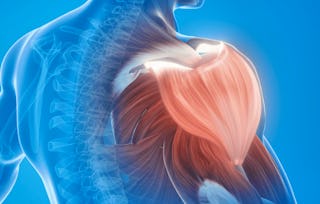
Shoulder pain can make simple movements like reaching, lifting, throwing, dressing, or sleeping on one side difficult and frustrating. By the end of this course, learners will understand how rotator cuff dysfunction develops, how to recognize common patterns of pain and restriction, and how targeted assessment, manual therapy, and corrective strategies can support better shoulder function.

Rotator Cuff Assessment and Treatment Techniques

Rotator Cuff Assessment and Treatment Techniques
Ce cours fait partie de Spécialisation "Comprehensive Shoulder Rehabilitation"

Instructeur : Niel Asher Education
Inclus avec En savoir plus
Obtenez un aperçu d'un sujet et apprenez les principes fondamentaux.
niveau Intermédiaire
Expérience recommandée
4 heures à compléter
Planning flexible
Apprenez à votre propre rythme
Ce que vous apprendrez
How to locate and treat trigger points and dysfunctions in the rotator cuff
How to integrate manual therapy, stretching, and exercise for lasting results
How to assess rotator cuff problems and use targeted manual therapy, stretching, and movement strategies to support pain-free shoulder function.
Compétences que vous acquerrez
- Catégorie : Athletic Training
- Catégorie : Exercise Therapy
- Catégorie : Patient Treatment
- Catégorie : Mental Health Therapies
- Catégorie : Clinical Assessment
- Catégorie : Rehabilitation
- Catégorie : Anatomy
- Catégorie : Pain Management
Détails à connaître

Certificat partageable
Ajouter à votre profil LinkedIn
Évaluations
4 devoirs
Enseigné en Anglais
Découvrez comment les employés des entreprises prestigieuses maîtrisent des compétences recherchées

Élaborez votre expertise du sujet
Ce cours fait partie de la Spécialisation "Comprehensive Shoulder Rehabilitation"
Lorsque vous vous inscrivez à ce cours, vous êtes également inscrit(e) à cette Spécialisation.
- Apprenez de nouveaux concepts auprès d'experts du secteur
- Acquérez une compréhension de base d'un sujet ou d'un outil
- Développez des compétences professionnelles avec des projets pratiques
- Obtenez un certificat professionnel partageable

Il y a 4 modules dans ce cours
Obtenez un certificat professionnel
Ajoutez ce titre à votre profil LinkedIn, à votre curriculum vitae ou à votre CV. Partagez-le sur les médias sociaux et dans votre évaluation des performances.
Instructeur
Offert par

En savoir plus sur Patient Care

Niel Asher Education
Niel Asher Education

Niel Asher Education
Niel Asher Education
Pour quelles raisons les étudiants sur Coursera nous choisissent-ils pour leur carrière ?

Felipe M.
Étudiant(e) depuis 2018
’Pouvoir suivre des cours à mon rythme à été une expérience extraordinaire. Je peux apprendre chaque fois que mon emploi du temps me le permet et en fonction de mon humeur.’

Jennifer J.
Étudiant(e) depuis 2020
’J'ai directement appliqué les concepts et les compétences que j'ai appris de mes cours à un nouveau projet passionnant au travail.’

Larry W.
Étudiant(e) depuis 2021
’Lorsque j'ai besoin de cours sur des sujets que mon université ne propose pas, Coursera est l'un des meilleurs endroits où se rendre.’

Chaitanya A.
’Apprendre, ce n'est pas seulement s'améliorer dans son travail : c'est bien plus que cela. Coursera me permet d'apprendre sans limites.’
Qu’est-ce qui vous amène sur Coursera aujourd’hui ?
Faites progresser votre carrière avec un diplôme en ligne
Obtenez un diplôme auprès d’universités de renommée mondiale - 100 % en ligne




Foire Aux Questions
Plus de questions
Aide financière disponible,