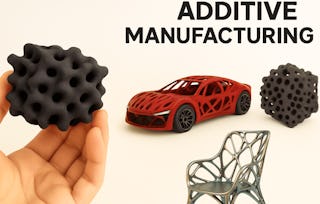
Additive Manufacturing, popularly known as 3D Printing, is one of the digital manufacturing processes and a key enabler of Industry 4.0. This course will introduce the fundamental concepts of different Additive Manufacturing processes. It involves a detailed discussion on the working principles, classifications, process parameters, system architecture, etc.

Essentials of Additive Manufacturing

Essentials of Additive Manufacturing
This course is part of Digital Manufacturing Specialization

Instructor: Sajan Kapil
Access provided by ExxonMobil
Gain insight into a topic and learn the fundamentals.
Intermediate level
Recommended experience
3 weeks to complete
at 10 hours a week
Flexible schedule
Learn at your own pace
Gain insight into a topic and learn the fundamentals.
Intermediate level
Recommended experience
3 weeks to complete
at 10 hours a week
Flexible schedule
Learn at your own pace
Details to know

Shareable certificate
Add to your LinkedIn profile
Assessments
29 assignments
Taught in English
See how employees at top companies are mastering in-demand skills

Build your subject-matter expertise
This course is part of the Digital Manufacturing Specialization
When you enroll in this course, you'll also be enrolled in this Specialization.
- Learn new concepts from industry experts
- Gain a foundational understanding of a subject or tool
- Develop job-relevant skills with hands-on projects
- Earn a shareable career certificate

There are 7 modules in this course
Additive Manufacturing popularly known as 3D Printing is one of the digital manufacturing processes and a key enabler of Industry 4.0. This course will introduce the fundamental concepts of different Additive Manufacturing processes. It involves a detailed discussion on the working principles, classifications, process parameters, system architecture, etc.
What's included
3 readings1 discussion prompt
3 readings•Total 30 minutes
- Meet Your Instructor - Dr. Sajan Kapil•10 minutes
- Course Structure and Planning•10 minutes
- Honor Code•10 minutes
1 discussion prompt•Total 10 minutes
- Introduce Yourself•10 minutes
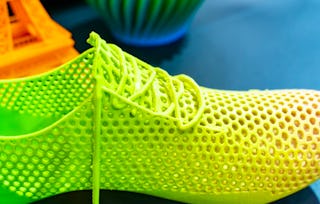
Additive Manufacturing popularly known as 3D Printing is one of the digital manufacturing processes and a key enabler of Industry 4.0. It is a process of layer-by-layer deposition of material and realizing a 3D object. It can be termed several other names also, based on its application to the manufacturing community. Why additive manufacturing is referred to by different terminology has been discussed in this module. What are the unique capabilities possessed by additive manufacturing and how are they useful in real-life applications have been discussed in this module. Freedom of design, mass customization, waste minimization, and the ability to manufacture complex structures, as well as fast prototyping, are the main benefits of additive manufacturing. In particular, there are some revolutionary applications of AM in biomedical, aerospace, buildings, and protective structures that are discussed in this section. Moreover, based on what criteria the ASTM F42 committee had classified, the AM process is also covered in this module.
What's included
16 videos10 readings5 assignments
16 videos•Total 98 minutes
- Different Keywords for Additive Manufacturing•3 minutes
- Additive Manufacturing (AM)•10 minutes
- Digital Manufacturing (DM)•9 minutes
- Rapid Prototyping/Tooling/Manufacturing•13 minutes
- Geometric Capabilities: Direct assembly•6 minutes
- Geometric Capabilities: Conformal Cooling Channels, Mass customization, FGMs•9 minutes
- Material Capabilities•4 minutes
- Material Capabilities : FGMs, Distinct Objects•6 minutes
- Vat Photopolymerization•5 minutes
- Material Jetting•4 minutes
- Binder Jetting•5 minutes
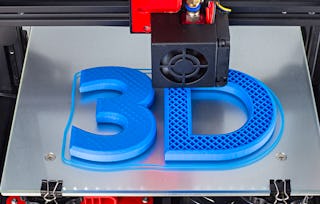
- Material Extrusion•5 minutes
- ASTM Classification: Sheet Lamination•4 minutes
- ASTM Classification: Powder Bed Fusion; Directed Energy Deposition•6 minutes
- Motive of ASTM Classification•3 minutes
- Classification of AM Based on Raw Stock Material•6 minutes
10 readings•Total 100 minutes
- Reference Book: Additive Manufacturing Technologies•10 minutes
- Reference Article: Additive Manufacturing Technologies: An Overview about 3D Printing Methods and Future Prospects•10 minutes
- Reference Article: Digital Manufacturing: History, Perspectives, and Outlook•10 minutes
- Reference Article: Additive Manufacturing: Technology, Applications and Research Needs•10 minutes
- Reference Article: Additive Manufacturing of Multi-material Structures•10 minutes
- Reference Article: Materials for Additive Manufacturing•10 minutes
- The 7 Categories of Additive Manufacturing•10 minutes
- Reference Article: Additive Manufacturing (3D Printing): A Review of Materials, Methods, Applications and Challenges•10 minutes
- The 7 Categories of Additive Manufacturing•10 minutes
- Reference Article: Additive manufacturing (3D Printing): A Review of Materials, Methods, Applications and Challenges•10 minutes
5 assignments•Total 90 minutes
- Why to call additive manufacturing! Quiz•15 minutes
- Capabilities of AM - Quiz•15 minutes
- Types of AM - Quiz•15 minutes
- AM - Quiz•15 minutes
- Basics of AM - Quiz•30 minutes
Most liquid-based additive manufacturing systems build parts in a vat of photo-curable liquid resin, an organic resin that cures or solidifies under the effect of exposure to light, usually in the UV range. The light cures the resin near the surface, forming a thin hardened layer. Once the complete layer of the part is formed, it is lowered by an elevation control system to allow the next layer of resin to be coated and similarly formed over it. This continues until the entire part is completed. The vat can then be drained and the part removed for further processing, if necessary. There are variations to this technique by the various vendors and they are dependent on the type of light or laser, method of scanning or exposure, type of liquid resin, and type of elevation and optical system used. Different technologies have been developed based on liquid AM by changing its sub-systems, those commercially available tech parts are discussed in this module. Moreover, a deep insight has been made in water based rapid freezing technology and its working conditions.
What's included
27 videos14 readings6 assignments
27 videos•Total 161 minutes
- Introduction to Liquid Based AM•3 minutes
- Working Principle of Photo-Polymerization•7 minutes
- Sub-Systems Involved in Photo-Polymerization Based AM(Part-I)•10 minutes
- Sub-Systems of Photo-Polymerization Based AM (part-II)•8 minutes
- Classification of Photo-Polymerization Based AM•4 minutes
- Introduction to Stereo Lithography Apparatus (SLA)•8 minutes
- Working Principle of SLA•7 minutes
- Essential Steps Involved in a SLA•6 minutes
- Laser Curing: Single Bead in SLA•13 minutes
- Laser Curing: Multi Bead and Multi-Layer in SLA•6 minutes
- Introduction to a Galvanometer•7 minutes
- Galvanometer: Beam Correction•8 minutes
- Recoating Cycle Involved in SLA, Part - I•9 minutes
- Recoating Cycle - II and Z- axis Setting in SLA•6 minutes
- Introduction to Perfactory System•5 minutes
- Different Steps Involved in Perfactory•8 minutes
- Essential Sub-System of Perfactory: DMD/DLP•7 minutes
- Essential Sub-System of Perfactory: Voxel•7 minutes
- Essential Sub-System of Perfactory: Recoating•4 minutes
- Objet Polyjet•6 minutes
- Autostrade’s E-Dart•2 minutes
- Solid Ground Curing (SGC)•8 minutes
- Microstereolithography•2 minutes
- Robotic – SLA•2 minutes
- Two Laser Beam System•4 minutes
- Volumetrical Stereolithography•1 minute
- Rapid Freezing Prototyping (RFP)•5 minutes
14 readings•Total 140 minutes
- Reference Book: Rapid Prototyping: Principles and Applications•10 minutes
- Reference Book: Additive Manufacturing Technologies•10 minutes
- Reference Book: Rapid Prototyping - Laser-Based and Other Technologies•10 minutes
- Reference Book: Additive Manufacturing Technologies•10 minutes
- Reference Book: Rapid Prototyping - Laser-based and Other Technologies•10 minutes
- Reference Book: Rapid Prototyping - Laser-Based and Other Technologies•10 minutes
- Reference Article: Recoating Issues in Stereolithography•10 minutes
- The Section Perfactory Acculas •10 minutes
- The Section Essential Sub-system of Perfactory: DMD/DLP •10 minutes
- Reference Book: Rapid Prototyping: Principles and Applications•10 minutes
- Reference Article: Projection Micro Stereolithography Based 3D Printing and its Applications•10 minutes
- Reference Article: Projection Micro-Stereolithography Using Digital Micro-Mirror Dynamic Mask•10 minutes
- Reference Article: A Review of Stereolithography: Processes and Systems•10 minutes
- Reference Book: Rapid Prototyping: Principles and Applications•10 minutes
6 assignments•Total 105 minutes
- Liquid based AM - Quiz•15 minutes
- What is SLA? - Quiz•15 minutes
- SLA - Subsystems Quiz•15 minutes
- Know about Perfactory Acculas- Quiz•15 minutes
- Photo-Polymerization Based AM - Quiz•15 minutes
- Liquid based AM processes - Quiz•30 minutes
Sheet based additive manufacturing is also known as laminated object manufacturing or sheet lamination, shares similar fabrication principles with other AM processes. But instead of using liquid or powder or wire as feedstock, sheet lamination uses foil to make an object. This AM technique was first demonstrated by Helisys Inc. Different materials can be processed using this sheet lamination technique like paper, composite, and selective metal lamination. In the paper-based lamination, papers/foils are glued together layer by layer and precisely cut to the designed geometry to make the final object. Potentially any sheet material that can be precisely cut using cutting tools like laser, mechanical cutter, etc., and the same can be bonded using adhesive, soldering, brazing, welding, etc., for part construction. The paper thicknesses usually range from 0.07 to 0.2 mm. Composite lamination has a similar principle, but some reinforcement can be added to the buck material to improve the strength of the fabricated part. Rather than adding glue to all over the layer, a binder can be selectively applied in certain locations of that layer to fabricate the part. Different sheet lamination processes had demonstrated in past years which would be discussed in details in this module.
What's included
14 videos6 readings5 assignments
14 videos•Total 90 minutes
- Introduction to Sheet Based AM•10 minutes
- Introduction to Cubic Technologies' LOM•8 minutes
- Working Principle of Cubic Technologies' LOM•6 minutes
- Advantages and Limitations of Cubic Technologies' LOM•8 minutes
- Kira's Paper Lamination Technology, Part- I•5 minutes
- Kira's Paper Lamination Technology, Part- II•7 minutes
- Solidimension’s Plastic Sheet Lamination Process•5 minutes
- CAM-LEM's CL•6 minutes
- EnnexCorporation’s Offset Fabbers•5 minutes
- Introduction to Ultrasonic Consolidation (UC)•5 minutes
- Working Principle of UC•6 minutes
- Fundamentals of Solid State Bonding•7 minutes
- Effecting Process Parameters of UC•10 minutes
- Laminated Manufacturing (LM): Fasteners•2 minutes
6 readings•Total 60 minutes
- Reference Book: Rapid Prototyping: Principles and Applications•10 minutes
- Reference Book: Additive Manufacturing Technologies•10 minutes
- Reference Book: Rapid Prototyping: Principles and Applications•10 minutes
- Reference Book: Rapid Prototyping: Principles and Applications•10 minutes
- Reference Book: Additive Manufacturing Technologies•10 minutes
- Reference Article: Friction Stir Additive Manufacturing: Route to High Structural Performance•10 minutes
5 assignments•Total 90 minutes
- Cubic LOM - Quiz•15 minutes
- Paper based Sheet Lamination - Quiz•15 minutes
- Quiz 1•15 minutes
- Sheet lamination - Quiz•15 minutes
- Basics of Sheet Based AM - Quiz•30 minutes
This module deals with different AM processes which uses wire as a feedstock material to construct a 3D object. The classifications have been made based on various sub-systems used in wire based AM technology. There are multiple options available as wire material like plastic, wax, composites, and metals; each of the material incorporated in part fabrication required different set of machine arrangement. All commercially available wire based AM process have been covered in this module. Moreover, the function of essential accessories and influence of design parameters are also discussed under individual systems. The most important factors in metal wire based AM technology are omnidirectionality, geometric processing, single bead, multi-bead disposition strategy. All mentioned factors need to be thoroughly studied and planned according to machine environment before starting the material deposition or part fabrication.
What's included
25 videos13 readings6 assignments
25 videos•Total 164 minutes
- Classification of Wire Based AM and Introduction to FDM•9 minutes
- Architecture of a FDM Machine•7 minutes
- Different Aspects of FDM, Part- I•5 minutes
- Different Aspects of FDM, Part- II•6 minutes
- Bead Deposition & Spreading in FDM•7 minutes
- Bead Ironing and Bonding in FDM•7 minutes
- Issues Related to Start, Stop, and Turn in FDM•7 minutes
- Machine Accuracy and Product Quality in FDM•3 minutes
- Different Wire based AM Processes•8 minutes
- History of Metal wire AM•10 minutes
- Introduction to MIG based Wire Arc AM (WAAM)•8 minutes
- Cold Metal Transfer in WAAM•3 minutes
- Process Cycle and Geometric Modelling of WAAM•8 minutes
- Defects Associated with WAAM•11 minutes
- Machine Kinematics involved in WAAM•8 minutes
- TIG and Plasma based WAAM, Part- I•6 minutes
- TIG and Plasma based WAAM, Part- II•5 minutes
- Introduction to Laser Metal Wire AM•3 minutes
- Wire Feeding Mechanism in Laser Based System, Part- I•6 minutes
- Wire Feeding Mechanism in Laser Based System, Part-II•6 minutes
- Process Parameters involved in Laser Metal Wire AM•8 minutes
- Working Principle of Electron Beam based Wire AM•4 minutes
- Different Electron Beam Gun Used in AM•7 minutes
- Vacuum in Electron Beam AM Systems•6 minutes
- Challenges in Electron Based AM Systems•4 minutes
13 readings•Total 130 minutes
- Reference Book: Rapid Prototyping - Laser-Based and Other Technologies•10 minutes
- Reference Book: Rapid Prototyping: Principles and Applications•10 minutes
- Reference Book: Additive Manufacturing Technologies•10 minutes
- Reference Article: An Overview of Fused Deposition Modelling (FDM): Research, Development and Process Optimisation•10 minutes
- Reference Article: Steps Toward a New Classification of Metal Transfer in gas Metal arc Welding•10 minutes
- Reference Article: A Review of the Wire arc Additive Manufacturing of Metals: Properties, Defects and Quality Improvement•10 minutes
- Reference Article: Wire Arc Additive Manufacturing of Aluminium Alloys: A Review•10 minutes
- Reference Article: Weld Bead Modeling and Process Optimization in Hybrid Layered Manufacturing•10 minutes
- Reference Article: Investigation on Arc Plasma, Droplet, and Molten Pool Behaviours in Compulsively Constricted WAAM•10 minutes
- Reference Article: A Parametric Study of Inconel 625 Wire Laser Deposition•10 minutes
- Reference Article: Review on Electron Beam Based Additive Manufacturing•10 minutes
- Reference Article: Electron beam welding (Vol. 93)•10 minutes
- Reference Article: Electron-Beam-Additive-Manufacturing-Technology•10 minutes
6 assignments•Total 105 minutes
- FDM - Quiz•15 minutes
- Wire Deposition Mechanism - Quiz•15 minutes
- WAAM Quiz•15 minutes
- WAAM part II - Quiz•15 minutes
- Electron Based AM - Quiz•15 minutes
- Basics of Wire based AM - Quiz•30 minutes
This module deals with powder based additive manufacturing systems or direct energy deposition. Like wire based AM processes here metallic or ceramic powders are used as a feed stock material to realize an object. There are two types of material handling mechanism involved, one is powder-feed on contentious or pulse setting mode and another is powder-bed. Both approaches have its own benefits and limitations. Moreover, there are processes like selective laser sintering (SLS) and selective laser melting (SLM) in which powder gets partially or completely melted and fused together and bonding takes place between powder molecules. The binder-jetting is also a suitable approach for powder based AM. However, powder based AM systems have different set of subsystems as compared to other AM process. These sub-systems are powder metering, conveyance, and delivery, mainly involved in powder feed unit. Different commercially available powder based AM systems has been discussed with proper video demonstration.
What's included
22 videos9 readings6 assignments
22 videos•Total 149 minutes
- Classification of Powder based AM•4 minutes
- Introduction to Powder Feed AM•7 minutes
- Working Principle of Powder Feed based AM•6 minutes
- System Level Classifications of Powder Feed based AM•4 minutes
- Powder Metering / Conveying Systems•9 minutes
- Off Axis Nozzles•7 minutes
- Continuous and Discrete Coaxial Nozzles•9 minutes
- Commercially Available Powder Feed based AM Systems•5 minutes
- Process Parameters Involved in Powder Feed based AM Systems •7 minutes
- Applications of Powder Feed based AM Systems•10 minutes
- Working Principle of Laser Beam Powder Bed AM•5 minutes
- Essential Sub-Systems, LB-PBAM Part- I•6 minutes
- Essential Sub-Systems, LB-PBAM Part- II•8 minutes
- Essential Sub-Systems, LB-PBAM Part- III•6 minutes
- Introduction to Electron Beam based Powder Bed AM•5 minutes
- Process Cycles of EB based Powder Bed AM•5 minutes
- Challenges Associated in the EB based Powder Bed AM•6 minutes
- Working Principle of Binder Based Powder Bed AM•6 minutes
- Powder and Ink material Involved in the Process•5 minutes
- Scanning Systems for the Powder Bed AM•11 minutes
- Other Sub-systems Involved in the Powder Bed AM•2 minutes
- Binder Based Powder Bed AM Systems•17 minutes
9 readings•Total 90 minutes
- Reference Article: A Comprehensive Review of the Methods and Mechanisms for Powder Feedstock Handling in Directed Energy deposition•10 minutes
- Reference Article: A Comprehensive Review of the Methods and Mechanisms for Powder Feedstock Handling in Directed Energy Deposition•10 minutes
- Reference Book: Rapid Prototyping: Principles and Applications•10 minutes
- Reference Book: Rapid Prototyping: Principles and Applications•10 minutes
- Reference Book: Rapid Prototyping - Laser-based and Other Technologies•10 minutes
- Reference Book: Rapid Prototyping: Principles and Applications•10 minutes
- Reference Book: Additive Manufacturing Technologies•10 minutes
- Reference Book: Rapid Prototyping: Principles and Applications•10 minutes
- Reference Book: Additive Manufacturing Technologies•10 minutes
6 assignments•Total 105 minutes
- Basics of Powder based AM - Quiz•15 minutes
- Powder Delivery Systems - Quiz•15 minutes
- Laser Beam in AM - Quiz•15 minutes
- EB based Powder Bed AM - Quiz•15 minutes
- Binder based AM - Quiz•15 minutes
- Powder based Additive Manufacturing - Quiz•30 minutes
What's included
1 reading1 assignment
1 reading•Total 10 minutes
- Conclusion•10 minutes
1 assignment•Total 45 minutes
- How can you print a prototype? •45 minutes
Earn a career certificate
Add this credential to your LinkedIn profile, resume, or CV. Share it on social media and in your performance review.
Instructor
Offered by

Why people choose Coursera for their career

Felipe M.
Learner since 2018
"To be able to take courses at my own pace and rhythm has been an amazing experience. I can learn whenever it fits my schedule and mood."

Jennifer J.
Learner since 2020
"I directly applied the concepts and skills I learned from my courses to an exciting new project at work."

Larry W.
Learner since 2021
"When I need courses on topics that my university doesn't offer, Coursera is one of the best places to go."

Chaitanya A.
"Learning isn't just about being better at your job: it's so much more than that. Coursera allows me to learn without limits."
Explore more from Physical Science and Engineering
 U
UUniversity of Miami
Course
 A
AArizona State University
Course
 U
UUniversity of Michigan
Course
Course