5.0
Reviewed Dec 25, 2021The course is able to give an overview, history, and why migration happens around the world. Recommended for those who want to understand the migration issues around the world.

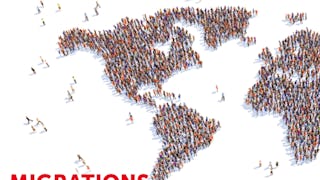
ABOUT THE MOOC : INTERNATIONAL MIGRATIONS: A GLOBAL ISSUE Catherine Wihtol De Wenden - CERI CNRS/SciencesPo ABOUT THE COURSE The world is moving, but not all opinions and governments are willing to accept this poorly understood reality. The issue affects both states and the planet, in a process of globalization and of regionalization of migrations, and raises new questions for international relations, now including the South. This course aims at improving knowledge of the subject, addressing the key issues raised by international migration, and assessing the trends of tomorrow. FORMAT The MOOC lasts 7 weeks and focuses on various themes related to migration. It makes use of various types of document, such as maps, news articles, and scientific papers. The text is in English and the videos are in French with English subtitles TEACHERS Catherine Wihtol de Wenden is Research Director at the CNRS (CERI) and teaches at Sciences-Po. She has been a consultant to many international organizations, notably the Council of Europe and the Office of the High Commissioner for Refugees. From 2002 to 2008, she led the "Migration" research group of the International Sociological Association. Author of some 20 books, and having conducted many field investigations, she also teaches at the Sapienza University of Rome. COURSE OUTLINE Session 1: Globalization of migration Session 2: Refugees and environmentally displaced persons Session 3: Europe Session 4: France and international migration flows Session 5: Citizenship and migration Session 6: Borders Session 7: Right to mobility and global governance
The course is able to give an overview, history, and why migration happens around the world. Recommended for those who want to understand the migration issues around the world.
A very thorough course that not only discusses the current logistics of migration, but the history and explores a possible path forward.
very good course and helping in getting an idea of the migration
Good course for understanding the issues of migrations.
I enjoyed the course but it was a little bit slow and I would want it to have subtitles in Spanish as well.
Overall, the course is interesting and I liked it. But, unfortunately, the lectures are in French with English subtitles, which somewhat reduces the perception of the material.
The course it truly very informative and valuable for learners interested in international migrations.
It is an amazing course to know about the all process and history about migration
The contents are given in a holistic yet specific and strategic.
This was a nice overview on the general migration-related topics. It was short but included many relevant aspects filled with various case studies.
Course is great, with vast academic discussion about immigration. It is just a pity that quiz evaluations are only available for paid options.
it was an incredible course, I am looking forward to taking more classes
Showing: 19 of 132
The course is not up date with current developments on the matter. As it is an international relations course, it should be regularly improved and developed. No information is given on when was it recorded/published.
Some materials are repetitive.
Tests are too easy.
International migrations: a global issue is a time demanded course for the population movement operations front line worker for better approach to reach the beneficiaries.
The course is very interesting but it needs to be updated. There is no mention regarding the Venezuelan migration crisis, the Brexit, the evolvement of the GFMD in the past years, the Global compact on migration and on refugees, etc, the current role of IOM, etc.
Interesting content, though in a field like migration having few references that are more recent than 2015 is slightly disappointing!
Overall, would recommend for a broad understanding of the foundations of this field of study.
I learned a lot from the course however there was a lot of repetition, English translations were not of a good quality, there was not a variety of interactive ways to learn so it at points became quite tedious. I did enjoy the content, I just felt the presentation was severely lacking and wouldn't recommend this as a beginner level course.
The course is able to give an overview, history, and why migration happens around the world. Recommended for those who want to understand the migration issues around the world.
I really enjoyed this course because helped me to understand better the Global Migration Phenomena as a result of Globalization and other factors, but specially how migration and development have a both side relationship. The course give you the global vision of the problem and if you are interested in starting learning about this theme I really recommend it to you.
It was a privilege to follow this course taught by a real expert in the subject. I realize that my knowledge on the subject of global migrations increased considerably.
Very good for anyone interested in the current refugee crisis, especially now that this issue may again become relevant with the return of the Taliban in Afghanistan.
very interesting and with a lot of information about the topic.
Overall, I enjoyed the course and found it informative on the issues up until the period it was created. However, here are a few things I wish I had known before signing up, which are likely mentioned by others as well:
There's a lack of perspectives and differing point of views on the issues.
Tests were quite easy and seemed to only focus on the most basic elements of what was taught that week.
Translations can be poor, or missing, at times.
Repetition: the amount of content to go through could easily be reduced by half, if not more.
And finally - this course is out of date and does not touch on any developments after 2016. It is great for providing information up until 2016, but if you want to learn about more recent events you will not find those details here.
I found that the course hammered away at the same perspective without offering alternative views, or even examining the reasons why governments try to control migration. However, as far as a learning modality, I found it accessible, practical and user-friendly.
as coarsely absolutely no sense. There were no tests or assignments, it was in English but the professor who presented it spoke French! What was the point of this course?
More clarification in the explanation of conventions on migration and their application
There are no updates in this course and no references to the literature. The videos are in French, without English subs. The content is interesting though,
A Foundation Mission of SKUN for the Future: 2024–2034 Vision 1. Globalization and Migration In the modern world, globalization plays a crucial role in shaping migration patterns. The increasing interconnectedness of economies, societies, and cultures has led to higher migration flows. Migration is no longer just a local or national issue but a transnational one, impacting multiple countries simultaneously. Economic Factors: Economic opportunities in wealthier countries often pull migrants from poorer countries seeking better livelihoods. Conversely, political and economic instability in certain regions pushes people to migrate. Labor Mobility: There is a growing demand for labor in developed countries, which often rely on migrant workers to fill jobs, particularly in sectors like healthcare, agriculture, and construction. 2. Types of Migration Migration can be classified into various categories: Voluntary Migration: Often driven by economic opportunities, education, or family reunification. Forced Migration: This occurs when people are forced to leave their homes due to conflict, persecution, environmental disasters, or human rights violations. The number of refugees and internally displaced persons (IDPs) is steadily rising, driven by conflicts and instability. Irregular Migration: Migrants who enter or remain in a country without proper documentation or legal permission. 3. Challenges of Global Migration The global nature of migration brings about several challenges: Border Control and National Security: Migration raises issues related to border security, particularly in countries experiencing high levels of irregular migration. Balancing security concerns with humanitarian obligations is a key challenge for many governments. Integration and Social Cohesion: Many countries struggle with integrating migrants, leading to challenges in terms of social cohesion, discrimination, and cultural tension. Migrants often face challenges related to employment, housing, education, and access to social services. Human Rights Concerns: Migrants, especially those in irregular situations, often face exploitation, trafficking, and abuse. Protecting the rights of migrants, including irregular migrants, is a critical issue in the international community. 4. Global Governance of Migration The governance of international migration involves a variety of actors and institutions, both national and international. Key actors include: The United Nations (UN): Through its various bodies, such as the United Nations High Commissioner for Refugees (UNHCR) and the International Organization for Migration (IOM), the UN plays a significant role in providing humanitarian assistance to migrants and refugees and developing frameworks for international cooperation. Regional Organizations: The European Union (EU) and African Union (AU) have frameworks and policies related to migration, focusing on managing migration flows, promoting economic integration, and addressing migration-related challenges. Bilateral and Multilateral Agreements: Countries often enter into bilateral and multilateral agreements to manage migration flows, such as labor migration agreements, refugee resettlement programs, and border control cooperation. Global Compact for Safe, Orderly, and Regular Migration (GCM): Adopted in 2018, the GCM is a non-legally binding agreement that aims to promote safe, orderly, and regular migration. It outlines 23 objectives for improving migration governance, ranging from addressing drivers of migration to enhancing cooperation between countries. 5. The Role of Migration in Development Migration is not just a challenge; it can also be an opportunity for development. Remittances: Migrants send billions of dollars in remittances to their home countries, which is often a critical source of income for families and communities. Remittances contribute to poverty reduction, education, and healthcare. Knowledge Transfer: Migration facilitates the exchange of skills and knowledge, as migrants often return home with enhanced skills, educational qualifications, and experience, which can contribute to economic development. Cultural Exchange: Migration brings cultural diversity to host societies, fostering creativity, innovation, and international cooperation. 6. The Future of Migration Migration will continue to be a central issue in the coming decades. The climate crisis is likely to become a significant driver of migration, with people fleeing from environmental disasters, rising sea levels, and changing agricultural conditions. Furthermore, migration is expected to continue to be shaped by geopolitical dynamics, economic disparities, and conflicts. With demographic shifts, such as aging populations in developed countries, migration will remain a key factor in sustaining labor forces and supporting economic growth. Conclusion International migration is undeniably a global issue that requires comprehensive, cooperative, and human-centered solutions. Effective global governance, protection of migrant rights, and addressing the root causes of migration (such as poverty, conflict, and climate change) are all essential for managing this issue sustainably. Migration, when managed effectively, can offer benefits to both migrants and host countries, contributing to greater global prosperity and stability. Prof. Dr. Muharrem Shabani Ambassador to the United Nations for the Republic of Kosovo President of the Council for Human Rights Professor of Balkan History and Geopolitics Doctor in Political and Social Sciences Visit SKUN Foundation Website We envision a future where groundbreaking discoveries revolutionize humanity’s understanding of the cosmos, reshaping our place in the universe and fueling global curiosity, collaboration, and progress. Mission To advance scientific discovery and inspire the next generation through forefront research, innovation, and education. By pushing the boundaries of knowledge, fostering interdisciplinary innovation, and cultivating the scientists, thinkers, and explorers of tomorrow, SKUN is committed to a decade of transformative impact. Leadership Prof. Dr. Muharrem Shabani Ambassador to the United Nations for the Republic of Kosovo President of the Council for Human Rights Professor of Balkan History and Geopolitics Doctor in Political and Social Sciences Contact Information Ambassador for Peace - Liaison Office to the United Nations Permanent Representative Observer of the Republic of Kosovo Mission of SKUN Prof. M. Shabani, President & Founder Rue de Lausanne 45, CH-1201 Geneva Mobile: +41 (0)76 562 07 84 USA Contact: +(1) 202 725 34 87 www.skunfoundation.org Email: ambassador-m.shabani-rks.gov@protonmail.com ambassador.m.shabani@skunfoundation.org Twitter: @MShabani4 SKUN’s Strategic Plan: 2024–2034 As SKUN looks towards the next decade, it is committed to pushing the boundaries of scientific exploration, creating transformative change through research, and fostering interdisciplinary innovation. With the leadership of Prof. Dr. Muharrem Shabani, the organization is poised to leave a lasting impact on global scientific discovery, human rights advocacy, and international collaboration. This document serves as a professional foundation for SKUN’s mission and vision, highlighting its commitment to advancing both scientific and social causes while positioning Prof. Dr. Muharrem Shabani’s leadership as integral to the future of international collaboration. For more information on the ongoing initiatives and projects, visit www.skunfoundation.org.
International migration refers to the movement of people across country borders to live, work, or seek refuge. It is a major global phenomenon influenced by factors such as economic opportunities, conflicts, environmental changes, and political instability. Migration impacts both sending and receiving countries—contributing to cultural diversity, economic growth, and labor markets, but also posing challenges like social integration, security concerns, and strain on public services. Managing migration requires international cooperation and policies that protect migrants’ rights while addressing the root causes of migration, such as poverty and conflict. As globalization intensifies, migration remains a critical issue affecting social, economic, and political landscapes worldwide.
This is a great overview of how migration is a huge fact of study and to understand. It is really important to know how the world is changing and with it, every day brings new challenges. The main differences between governance and govern, the need to set up new policies, protocols, to encourage people to empower about human history and how big empires were build when the free of movement was not an impediment and people were free to achieve goals, moving forward according to their needs and motivations. I am more interested in exploring this whole new world of knowledge and understanding, historically attached to human rights but also to civil rights. Thank you for sharing such an important and relevant information.
Thanks to the course, I had an overview of the global migration issue, understood the history of migration, and international, regional and each country's policies on this issue. Migration is a phenomenon that has gradually become an inevitable trend of the process of development, integration and globalization. However, the world and each country seem unable to come up with regulations to control these migration flows properly, safely, ensuring human rights and humanity. The course provides huge amount of knowledge, interdisciplinary and an objective perspective to approach the issue of global migration.