Computational Investing Courses
Computational investing courses can help you learn quantitative analysis, algorithmic trading strategies, financial modeling, and risk management techniques. You can build skills in data analysis, portfolio optimization, and backtesting investment strategies. Many courses introduce tools like Python, R, and various financial libraries, showing how these skills apply to real-time market data and investment decision-making.
Popular Computational Investing Courses and Certifications
 Status: Preview
Northeastern University
Skills you'll gain: Algorithms, Bayesian Statistics, Theoretical Computer Science, Network Model, Computational Thinking, Data Structures, Graph Theory, Network Analysis, Probability, Probability & Statistics
 Status: NewStatus: Free Trial
Skills you'll gain: Retrieval-Augmented Generation, AI Workflows, Fine-tuning, Model Deployment, Applied Machine Learning, Application Deployment, API Testing, Model Optimization
 Status: Free Trial
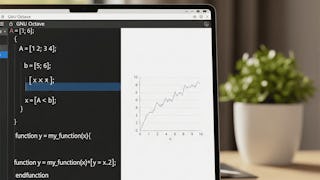
Skills you'll gain: Mathematical Software, Software Installation, Numerical Analysis, Mathematical Modeling, Trigonometry, Programming Principles, Functional Design, Code Reusability, Data Manipulation, Computational Logic, Linear Algebra, Arithmetic
 Status: Free Trial
Skills you'll gain: Unity Engine, Video Game Development, Virtual Environment, Computer Graphics, Performance Tuning, Visualization (Computer Graphics), Software Visualization, Model Optimization, Computer Graphic Techniques, Code Reusability, Maintainability, C# (Programming Language), Computational Logic
 Status: Preview
University of Colorado Boulder
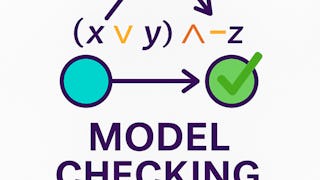
Skills you'll gain: Graph Theory
 Status: Preview
Skills you'll gain: Linux, Linux Commands, C (Programming Language), Memory Management, System Programming, Command-Line Interface, Programming Principles, Computer Programming Tools, Computational Logic, Code Reusability, Software Installation, Program Development
 Status: New
Skills you'll gain: C# (Programming Language), Object Oriented Programming (OOP), Object Oriented Design, Web Scraping, Programming Principles, Microsoft Visual Studio, Computer Programming, Data Structures, Software Design Patterns, File I/O, Application Development, Code Reusability, Integrated Development Environments, Microsoft Development Tools, Software Installation, Computational Logic, Algorithms, Hypertext Markup Language (HTML), Unit Testing
 Status: NewStatus: Free Trial
Skills you'll gain: Model Optimization, PyTorch (Machine Learning Library), Model Evaluation, Model Deployment, MLOps (Machine Learning Operations), Model Training, AI Workflows, Tensorflow, Dataflow, Performance Tuning, Deep Learning, Dashboard, Data Pipelines, Grafana, Artificial Neural Networks, Data Processing, Resource Utilization, Performance Analysis, Performance Metric, Data Manipulation
 Status: NewStatus: Free Trial
Skills you'll gain: Model Optimization, Algorithms, Memory Management, Performance Testing, Resource Utilization, Scalability
 Status: Free Trial
Skills you'll gain: Integrated Development Environments, UI Components, User Interface (UI), Jupyter, Development Environment, Application Development, Program Development, Python Programming, Event-Driven Programming, Test Case, Mathematical Software, Interactive Design, Computational Logic

Skills you'll gain: Unity Engine, Debugging, Agentic systems, Artificial Intelligence, Code Reusability, Performance Tuning, Dependency Analysis, Computational Logic

Skills you'll gain: Code Reusability, Data Management, Program Development, Automation, Computational Logic
In summary, here are 10 of our most popular computational investing courses
- Program Structure and Algorithms Part 2: Northeastern University
- Building and Fine-Tuning LLM Applications: Packt
- GNU Octave: Apply, Implement & Design Functions: EDUCBA
- Unity: Design Voxel Environments with Marching Squares: EDUCBA
- Model Checking with SAT and SMT : University of Colorado Boulder
- C Programming on Linux: Build, Compile & Apply: EDUCBA
- Learn C# by Building Applications: Packt
- Optimizing AI Workflows and Deploying Edge Models: Coursera
- Analyze and Optimize Fusion Algorithms: Coursera
- Python GUI Calculators with Tkinter: Build & Implement: EDUCBA










