Biomedical Imaging Courses
Biomedical imaging courses can help you learn techniques such as MRI, CT scans, and ultrasound imaging, as well as image processing and analysis. You can build skills in interpreting medical images, understanding imaging physics, and applying quantitative analysis to enhance diagnostic accuracy. Many courses introduce tools like MATLAB, Python, and specialized imaging software, that support developing algorithms and visualizing complex data in clinical settings.
Popular Biomedical Imaging Courses and Certifications
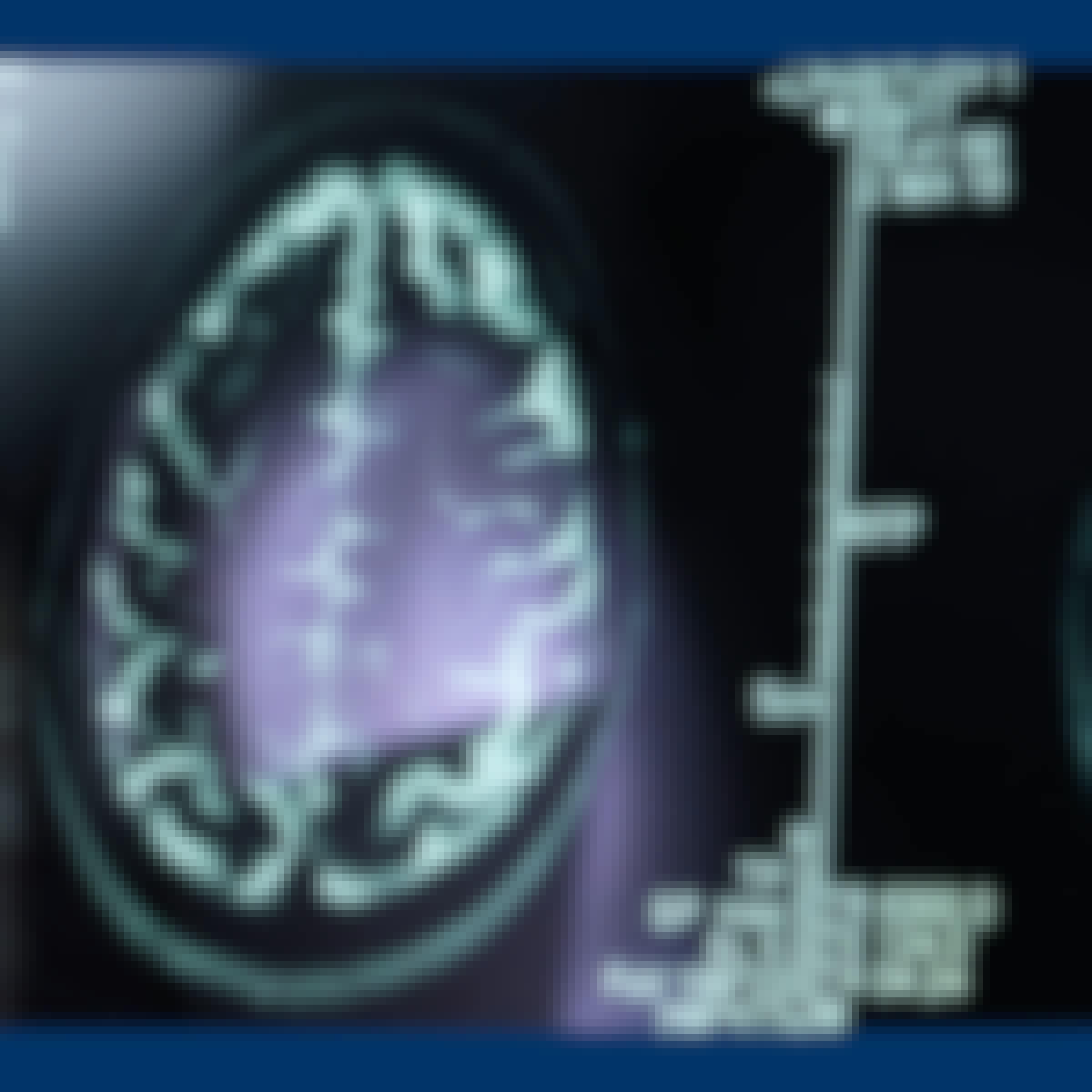
Yale University
Skills you'll gain: Diagnostic Radiology, Medical Imaging, Radiography, X-Ray Computed Tomography, Medical Ultrasonography, Magnetic Resonance Imaging, Diagnostic Tests, Neurology, Image Analysis, Anatomy
 Status: Free Trial
Indian Institute of Science
Skills you'll gain: Engineering Documentation, Biomedical Engineering, Medical Devices, Medical Equipment and Technology, Vital Signs, Technical Documentation, Electronic Systems, Electronic Components, Electronics, Chemistry, Technical Communication, Semiconductors, ISO 13485 Standard, Materials science, Internet Of Things, Embedded Systems, Diagnostic Tests, Electrophysiology, Biology, Chemical Engineering
 Status: NewStatus: Preview
Cleveland Clinic
Skills you'll gain: Convolutional Neural Networks, Transfer Learning, Healthcare 5.0, Predictive Modeling, Applied Machine Learning, Biomedical Engineering, Model Evaluation, Health Informatics, Data Structures
 Status: Preview
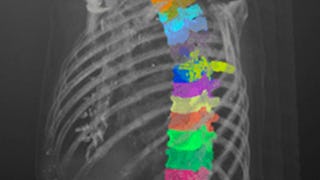
MathWorks
Skills you'll gain: Medical Imaging, Magnetic Resonance Imaging, Image Analysis, X-Ray Computed Tomography, Data Import/Export, Biomedical Engineering, Matlab, Scientific Visualization, Deep Learning
 Status: Free Trial
Skills you'll gain: Image Analysis, Image Quality, Matlab, Computer Vision, Traffic Flow Optimization, Automation, Digital Signal Processing, Anomaly Detection, Spatial Data Analysis, Geospatial Information and Technology, Medical Imaging, Spatial Analysis, Data Preprocessing, Quantitative Research, Algorithms, Data Store
 Status: Preview
University of Glasgow
Skills you'll gain: 3D Modeling, 3D Assets, Scientific Visualization, Biomedical Engineering, Medical Terminology, Augmented and Virtual Reality (AR/VR), Anatomy, Animations, Image Analysis, Physiology, Biology, Medical Imaging
What brings you to Coursera today?
 Status: Preview
Birla Institute of Technology & Science, Pilani
Skills you'll gain: Bioinformatics, Biotechnology, Data Management, Biostatistics, Data Mining, Applied Machine Learning, Unsupervised Learning, R Programming, Scientific Visualization, Data Preprocessing, Correlation Analysis, Chemical and Biomedical Engineering, Dimensionality Reduction, Computational Thinking, Markov Model, Algorithms
 Status: NewStatus: Free Trial
Microsoft
Skills you'll gain: Cloud Security, Data Management, Data Security, Clinical Data Management, Microsoft Azure, Health Technology, IT Security Architecture, AI Enablement, Image Analysis, Data Visualization Software, Personally Identifiable Information, Generative AI, Microsoft Teams, Machine Learning, Clinical Monitoring, General Data Protection Regulation (GDPR), Data Ethics, Information Privacy, Health Informatics, Medical Imaging
 Status: Free Trial
Icahn School of Medicine at Mount Sinai
Skills you'll gain: Matlab, Bioinformatics, Quantitative Research, Unsupervised Learning, Data Synthesis, Research, Mathematical Modeling, Molecular Biology, Pharmacology, Science and Research, Cell Biology, Biotechnology, Biomedical Technology, Scientific Methods, Physiology, Differential Equations, Computational Logic, Biochemistry, Network Analysis, Biology
 Status: Free Trial
University of Michigan
Skills you'll gain: Human Musculoskeletal System, Anatomy, Endocrinology, Pulmonology, Cardiology, Respiration, Gynecology, Hematology, Obstetrics And Gynecology, Orthopedics, Neurology, Urology, Nephrology, Kinesiology, Physiology, Medical Imaging, Sports Medicine, Biology, Medical Terminology, Cell Biology
 Status: Free Trial
University of Cambridge
Skills you'll gain: Human Learning, Child Development, Psychology, Empathy & Emotional Intelligence, Teaching, Decision Making, Learning Theory, Instructional Strategies, Pedagogy, Learning Strategies, Developmental Disabilities, Empathy, Working With Children, Neurology, Magnetic Resonance Imaging, Disabilities, Autism Spectrum Disorders, Medical Imaging, Electrophysiology, Human Development

 Status: Free TrialStatus: AI skills
Skills you'll gain: Adobe Illustrator, Adobe Express, Adobe Photoshop, Responsible AI, Logo Design, Digital Design, Layout Design, Generative AI, Graphic Design, Graphics Software, Adobe Firefly, User Interface and User Experience (UI/UX) Design, Productivity Software, Visual Design, File Management, Process Design, Design Reviews, Prompt Engineering, Branding, Storytelling
What brings you to Coursera today?
In summary, here are 10 of our most popular biomedical imaging courses
- Visualizing the Living Body: Diagnostic Imaging: Yale University
- Sensor Technologies for Biomedical Applications: Indian Institute of Science
- Computer Vision and Sequence Analysis in Machine Learning: Cleveland Clinic
- Medical Image Processing: MathWorks
- Image Processing for Engineering and Science: MathWorks
- Biomedical Visualisation: University of Glasgow
- Introduction to Bioinformatics: Birla Institute of Technology & Science, Pilani
- Microsoft Azure AI in Healthcare: Microsoft
- Systems Biology and Biotechnology: Icahn School of Medicine at Mount Sinai
- Anatomy: University of Michigan










