Medical Courses
Medical courses can help you learn anatomy, pharmacology, patient care techniques, and diagnostic procedures. You can build skills in clinical assessment, effective communication with patients, and understanding treatment protocols. Many courses introduce tools such as electronic health records (EHR) systems, medical imaging software, and telemedicine platforms, showing how these tools support patient management and enhance healthcare delivery.
Popular Medical Courses and Certifications

Rice University
Skills you'll gain: Medical Terminology, Pulmonology, Cardiology, Medical Records, Electronic Medical Record System, Endocrinology, Human Musculoskeletal System, Orthopedics, Obstetrics And Gynecology, Neurology, Gynecology, Urology, Hematology, Anatomy, Immunology, Diagnostic Tests, Patient Treatment, Psychiatry, Communication
Skills you'll gain: Medical Terminology, Anatomy, Pathology, Medical Records, Physiology, Cell Biology, Nutrition and Diet

Skills you'll gain: Phlebotomy, Blood Collection, Sterilization, Urinalysis, Patient Communication, Medical Terminology, Patient-centered Care, Nutrition Education, Infection Control, Asepsis, Nutrition and Diet, Pathology, Patient Education And Counseling, Vital Signs, Geriatrics, Laboratory Testing, Hand Hygiene, Electocardiography, Anatomy, Pediatrics
University of Michigan
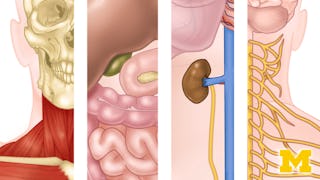
Skills you'll gain: Anatomy, Neurology, Medical Terminology, Cardiology, Mechanics, Pulmonology, Biology

Johns Hopkins University
Skills you'll gain: Medical Billing and Coding, Denial Management, Patient Registration, Care Management, Medical Privacy, Revenue Cycle Management, Practice Management, Organizational Change, Change Management, Health Insurance Portability And Accountability Act (HIPAA) Compliance, Performance Review, Data Management, ICD Coding (ICD-9/ICD-10), Medical Terminology, Human Resource Policies, Medical Billing, Patient Safety, Continuous Quality Improvement (CQI), Healthcare Industry Knowledge, Data Analysis
What brings you to Coursera today?

Duke University
Skills you'll gain: Sensory Systems Analysis, Neurology, Physiology, Anatomy, Cell Biology, Molecular Biology
University of Colorado System
Skills you'll gain: Patient Evaluation, Pharmacology, Airway Management, Cardiology, Medication Administration, Medical Emergency, Respiratory Care, Neurology, Clinical Assessment, Health Assessment, Mental Status Examination, Respiration, Patient Treatment, Endocrinology, Anatomy, Physiology
University of Colorado System
Skills you'll gain: Trauma Care, Patient Evaluation, Triage, Emergency Response, Clinical Assessment, Patient Transport, Health Assessment, Wound Care, Physiology
Skills you'll gain: Medical Terminology, Pulmonology, Endocrinology, Cardiology, Physiology, Neurology, Diagnostic Tests, Human Musculoskeletal System, Pathology, Anatomy, General Medical Tests and Procedures, Medical Records, Cardiac Dysrhythmia, Cell Biology, Immunology, Hematology, Laboratory Testing, Nutrition and Diet, Oncology

Skills you'll gain: Medical Privacy, Medical Records, Medical Office Procedures, Electronic Medical Record System, Health Information Management and Medical Records, Resilience, Health Information Management, Health Insurance Portability And Accountability Act (HIPAA) Compliance, Electronic Medical Record, Emotional Intelligence, Professionalism, Patient Coordination, Diversity Awareness, Patient-centered Care, Patient Registration, Relationship Building, Medical History Documentation, Patient Communication, Record Keeping, Empathy

Best Medical courses from MedCerts
Top-rated Medical courses offered by MedCerts on Coursera.
- Medical Terminology and the Human Body FundamentalsMedCertsBeginner1 - 4 WeeksMedCerts
- Clinical Medical Assistant FundamentalsMedCertsBeginner1 - 3 MonthsMedCerts
- Human Anatomy and Medical Terminology FundamentalsMedCertsBeginner3 - 6 MonthsMedCerts
Best Medical certificate programs
Earn a certificate in Medical from top universities and companies.
- Medical TerminologyRice UniversityBeginner3 - 6 MonthsSpecialization
- AnatomyUniversity of MichiganBeginner3 - 6 MonthsSpecialization
- Johns Hopkins Medical Office ManagerJohns Hopkins UniversityBeginner3 - 6 MonthsProfessional Certificate
Best Medical courses for beginners
Top-rated beginner-friendly Medical courses with no prerequisites.
- AAPC Medical BillerAAPCBeginnerNo prerequisites
- Medical Emergencies: Airway, Breathing, and CirculationUniversity of Colorado SystemBeginner1 - 3 MonthsNo prerequisites
- Trauma Emergencies and CareUniversity of Colorado SystemBeginner1 - 4 WeeksNo prerequisites










