Theoretical Computer Science Courses
Theoretical computer science courses can help you learn algorithms, computational complexity, automata theory, and formal languages. You can build skills in problem-solving, mathematical reasoning, and algorithm analysis, that support tackling complex computational tasks. Many courses introduce tools like Python for algorithm implementation, LaTeX for typesetting mathematical documents, and software for simulating automata, allowing you to apply these concepts in practical scenarios.
Popular Theoretical Computer Science Courses and Certifications
 Status: Free Trial
Tsinghua University
Skills you'll gain: Data Structures, Algorithms, Graph Theory, Computational Thinking, Programming Principles, Theoretical Computer Science, Computer Programming
 Status: Free Trial
Rice University
Skills you'll gain: Graph Theory, Algorithms, Computational Thinking, Data Analysis, Data Structures, Theoretical Computer Science, Network Analysis, Analysis, Programming Principles, Python Programming, Program Development
 Status: Preview
International Institute of Information Technology, Hyderabad
Skills you'll gain: Microarchitecture, Computer Architecture, Hardware Architecture, Systems Architecture, Computer Systems, Computer Hardware, Performance Tuning, Memory Management
 Status: Free Trial
University of Colorado Boulder
Skills you'll gain: Systems Design, Computational Logic, Verification And Validation, Computer Engineering, Communication Systems, Software Systems, Process Modeling, Theoretical Computer Science, Graph Theory
 Status: Free Trial
University of California, Davis
Skills you'll gain: Simulations, Social Sciences, Systems Thinking, Agentic systems, Computational Thinking, Social Impact, Sociology, Socioeconomics, Economics, Programming Principles, Scientific Methods
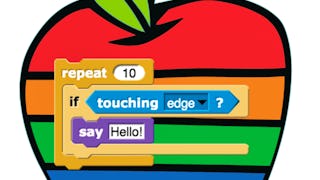 Status: Free Trial
University of California San Diego
Skills you'll gain: Debugging, Computer Programming Tools, Algorithms, Programming Principles, Computational Thinking, Diversity Awareness, Digital pedagogy, Program Development, Technical Communication, Event-Driven Programming, Computer Programming, Computational Logic, Education Software and Technology, Collaborative Software, Animation and Game Design, Cultural Responsiveness, Code Review, Diversity Equity and Inclusion Initiatives, Computer Science, Brainstorming
 Status: NewStatus: Free Trial
Skills you'll gain: Graph Theory, Algorithms, Data Structures, Computational Thinking, Computer Programming
 Status: Free Trial
University of Colorado Boulder
Skills you'll gain: Computational Logic, Verification And Validation, Theoretical Computer Science, Systems Design, Functional Specification, Process Modeling, Communication Systems, Test Tools, Algorithms, Safety and Security
 Status: Free Trial
Rice University
Skills you'll gain: Computational Thinking, Programming Principles, Algorithms, Data Structures, Theoretical Computer Science, Computer Programming, Program Development, Python Programming, Computer Science, Verification And Validation
 Status: Free Trial
Rice University
Skills you'll gain: Combinatorics, Probability, Programming Principles, Computational Thinking, Computer Programming, Object Oriented Programming (OOP), Development Testing, Software Testing, Applied Mathematics, Algorithms, Python Programming, Game Design, General Mathematics
 Status: Free Trial
Skills you'll gain: Data Structures, Algorithms
 Status: Free Trial
University of Colorado Boulder
Skills you'll gain: Computer Vision, Image Analysis, Artificial Neural Networks, Convolutional Neural Networks, Artificial Intelligence and Machine Learning (AI/ML), Machine Learning Methods, Computational Thinking, Psychology, Human Factors
In summary, here are 10 of our most popular theoretical computer science courses
- Data Structures and Algorithms (II): Tsinghua University
- Algorithmic Thinking (Part 1): Rice University
- Fundamentals of Computer Organization: International Institute of Information Technology, Hyderabad
- Introduction to Modeling for Formal Verification: University of Colorado Boulder
- Computer Simulations: University of California, Davis
- Computational Thinking & Block Programming in K-12 Education: University of California San Diego
- Advanced Data Structures and Algorithm Optimization: Packt
- Temporal Logic Model Checking: University of Colorado Boulder
- Principles of Computing (Part 2): Rice University
- Principles of Computing (Part 1): Rice University










