Whether you’re starting fresh or building on what you already know, these biology projects are designed to help you put knowledge into practice. Each project offers a structured way to explore real scenarios, make progress, and strengthen your skills—one step at a time.

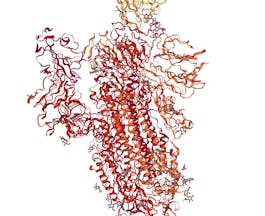
Skills you'll gain: Simulation and Simulation Software, Systems Thinking, Visualization (Computer Graphics), Data Modeling, Mathematical Modeling, Biology, Environment, Storytelling
Beginner · Guided Project · Less Than 2 Hours

Coursera
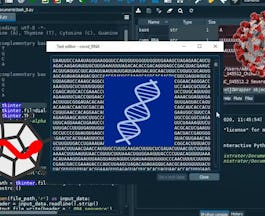
Skills you'll gain: Simulations, Microbiology, Biology, Programming Principles, Mathematical Modeling, Computer Programming
Intermediate · Guided Project · Less Than 2 Hours

Skills you'll gain: Simulation and Simulation Software, Data Sharing, Mathematical Modeling, Agentic systems, Systems Development, Environment, Biology
Beginner · Guided Project · Less Than 2 Hours

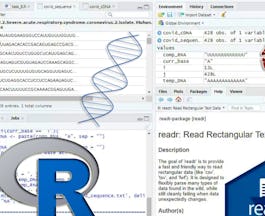
Skills you'll gain: Bioinformatics, R Programming, Molecular Biology, Data Manipulation, Programming Principles, File I/O
Beginner · Guided Project · Less Than 2 Hours
Biology is the scientific study of life and living organisms, encompassing various fields such as ecology, genetics, and microbiology. Understanding biology is crucial because it helps us comprehend the complexities of life, the interdependence of ecosystems, and the biological processes that sustain health and well-being. This knowledge is foundational for addressing global challenges like climate change, disease prevention, and biodiversity conservation.
A degree in biology can open doors to a variety of career paths. Common job roles include research scientist, laboratory technician, environmental consultant, and healthcare professional. Additionally, biology graduates can find opportunities in education, biotechnology, pharmaceuticals, and conservation. The versatility of a biology background allows for careers in both public and private sectors, making it a valuable field of study.
To succeed in biology, you should develop a strong foundation in scientific principles and methodologies. Key skills include analytical thinking, problem-solving, and proficiency in laboratory techniques. Familiarity with data analysis and bioinformatics is increasingly important, as is the ability to communicate complex concepts clearly. Additionally, teamwork and collaboration skills are essential, especially in research settings.
There are many excellent online biology courses available to suit various interests and skill levels. For a comprehensive introduction, consider the Introduction to Biology: Ecology, Evolution, & Biodiversity Specialization. If you're interested in a specific area, such as cancer research, the Cancer Biology Specialization offers in-depth knowledge. For those looking to integrate biology with technology, the Biology Meets Programming: Bioinformatics for Beginners course is a great choice.
Yes. You can start learning biology on Coursera for free in two ways:
If you want to keep learning, earn a certificate in biology, or unlock full course access after the preview or trial, you can upgrade or apply for financial aid."
Learning biology can be approached through various methods. Start by enrolling in online courses or attending lectures to gain foundational knowledge. Supplement your studies with textbooks, scientific journals, and educational videos. Engaging in hands-on laboratory work or field studies can enhance your understanding. Additionally, joining study groups or online forums can provide support and foster discussion.
Typical topics covered in biology courses include cell biology, genetics, evolution, ecology, and physiology. Many courses also explore specialized areas such as microbiology, biotechnology, and environmental science. Practical skills, such as laboratory techniques and data analysis, are often integrated into the curriculum to provide a well-rounded education.
For training and upskilling employees in biology, courses like the Biology Everywhere Specialization can be particularly beneficial. This specialization covers a broad range of biological concepts and their applications in real-world scenarios. Additionally, the Systems Biology and Biotechnology Specialization offers insights into modern biological techniques and their relevance in various industries.