Memory Courses
Memory courses can help you learn techniques for improving recall, understanding the science behind memory formation, and strategies for effective studying. You can build skills in mnemonic devices, spaced repetition, and memory mapping to enhance retention and retrieval. Many courses introduce tools such as flashcards and digital note-taking apps, which support these methods and help you apply your learning in practical contexts.
Popular Memory Courses and Certifications

University of Cambridge
Skills you'll gain: Human Learning, Child Development, Teaching, Instructional Strategies, Pedagogy, Learning Strategies, Autism Spectrum Disorders, Differentiated Instruction, Psychology
University of Cambridge
Skills you'll gain: Human Learning, Child Development, Psychology, Teaching, Decision Making, Instructional Strategies, Pedagogy, Learning Strategies, Empathy, Magnetic Resonance Imaging, Autism Spectrum Disorders, Differentiated Instruction, Research Methodologies, Non-Verbal Communication, Neurology, Learning Theory, Research, Mental Health Diseases and Disorders, Anatomy, Physiology
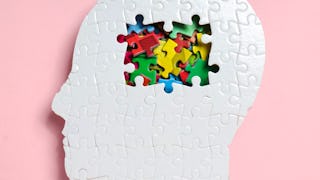
University of Cambridge
Skills you'll gain: Human Learning, Psychology, Magnetic Resonance Imaging, Research Methodologies, Research, Learning Theory
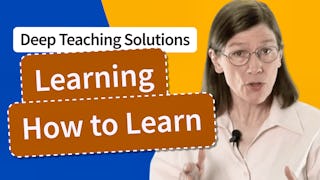
Deep Teaching Solutions
Alfaisal University | KLD
Skills you'll gain: Mental Health, Mental Health Diseases and Disorders
What brings you to Coursera today?

Duke University
Skills you'll gain: File I/O, Memory Management, Maintainability, Program Development, C (Programming Language), Software Development, Simulations, Command-Line Interface

Skills you'll gain: Recurrent Neural Networks (RNNs), Time Series Analysis and Forecasting, Natural Language Processing, Model Training, Artificial Neural Networks, Forecasting, Applied Machine Learning
Yale University
Skills you'll gain: Psychology, Mental Health Diseases and Disorders, Child Development, Human Development, Human Learning, Psychotherapy, Cognitive Behavioral Therapy, Learning Theory, Critical Thinking, Problem Solving

Duke University
Skills you'll gain: Sensory Systems Analysis, Neurology, Physiology, Anatomy, Cell Biology, Molecular Biology
University of Colorado Boulder
Skills you'll gain: Personal Development, Resilience, Habit Formation, Decision Making, Problem Solving, Stress Management, Leadership, Human Learning, Psychology, Anatomy, Business

Courses for Dummies
Skills you'll gain: Habit Formation, Mindfulness, Stress Management, Self-Awareness, Meditation & Breathwork, Resilience, Personal Development, Compassion, Self-Discipline, Patience, Emotional Intelligence, Mental Concentration, Overcoming Obstacles, Self-Motivation, Working With Children

Best free Memory courses
High-quality free Memory courses you can start today.
- Introduction to PsychologyYale UniversityBeginner1 - 3 MonthsFree
- Medical NeuroscienceDuke UniversityAdvanced3 - 6 MonthsFree
Best Memory courses from University of Cambridge
Top-rated Memory courses offered by University of Cambridge on Coursera.
- Learning and memory in the brain: a guide for teachersUniversity of CambridgeBeginner1 - 3 MonthsUniversity of Cambridge
- The science of mind and decision makingUniversity of CambridgeBeginner3 - 6 MonthsUniversity of Cambridge
- Introduction to Cognitive Psychology and NeuropsychologyUniversity of CambridgeMixed1 - 3 MonthsUniversity of Cambridge
Best Memory courses for beginners
Top-rated beginner-friendly Memory courses with no prerequisites.
- Learning How to Learn: Powerful mental tools to help you master tough subjectsDeep Teaching SolutionsBeginnerNo prerequisites
- مهارات تنشيط الذاكرة | Memory Enhancing SkillsAlfaisal University | KLDBeginner1 - 4 WeeksNo prerequisites
- Interacting with the System and Managing MemoryDuke UniversityBeginner1 - 4 WeeksNo prerequisites










