Wenn Sie sich für diesen Kurs anmelden, werden Sie auch für diese Spezialisierung angemeldet.
Lernen Sie neue Konzepte von Branchenexperten
Gewinnen Sie ein Grundverständnis bestimmter Themen oder Tools
Erwerben Sie berufsrelevante Kompetenzen durch praktische Projekte
Erwerben Sie ein Berufszertifikat zur Vorlage
In diesem Kurs gibt es 4 Module
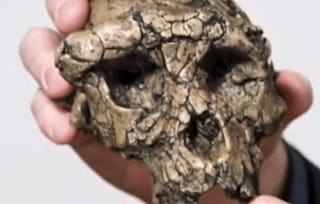
This course will help you learn how fossils give us an insight into how the early members of our lineage walked bipedally. The four million years old bone of Australopithecus anamensis is the oldest undisputed evidence for bipedalism in our lineage. Similarly, Lucy’s, who was Australopithecus afarensis, fossil also helped scientists discover a lot about how bipedalism evolved over time. You will also explore bipedal variations in humans. From its earliest version to its modern form—how humans learned to walk, is an interesting story. Similarly how a human being learns to walk, from a toddler’s first footstep to an adult human being’s walk and its variations would also be discussed in this course. You will also understand that while bipedalism has its advantages, it has its adverse effects on humans too from a musculoskeletal point of view.
Every module of this course has been created with the intention of a “hands-on” learner experience, where you can play around with and learn from 3D renditions of different human and animal fossils. Through these exercises, you will read the shapes found in bones in order to analyze and reconstruct how a species moved.
This module explores bipedal variations in humans and why different forms of bipedal walking may have evolved.
Video: Bipedal Variation - An Introduction•1 Minute
Video: What Shoes Do to Our Feet•3 Minuten
Video: Do Men and Women Walk Differently?•2 Minuten
Video: The Speed at Which We Walk•2 Minuten
16 Lektüren•Insgesamt 118 Minuten
Introductory Reading•10 Minuten
Syllabus•30 Minuten
Book: First Steps: How Upright Walking Made Us Human•10 Minuten
Coursera Code of Conduct•10 Minuten
Coursera Honor Code•10 Minuten
Discussion Tips and Guide•10 Minuten
Learning Journal•10 Minuten
Overview•1 Minute
3D Models: Australopithecus anamensis•5 Minuten
3D Models: Lucy•5 Minuten
3D Model: Laetoli Footprint•2 Minuten
3D Models: Australopithecus africanus•5 Minuten
3D Models: A. sediba - Walking differently•5 Minuten
3D Models: A. sediba - Hyperpronation•2 Minuten
3D Model: What Shoes Do to Our Feet•1 Minute
3D Models: Do Men and Women Walk Differently?•2 Minuten
1 Aufgabe•Insgesamt 30 Minuten
Variations in Bipedalism•30 Minuten
2 Diskussionsthemen•Insgesamt 40 Minuten
Introduce Yourself•30 Minuten
Learning Journal: My Goals•10 Minuten
25 Plug-ins•Insgesamt 125 Minuten
3D Model: Australopithecus anamensis - Chimp Tibia •5 Minuten
3D Model: Australopithecus anamensis - Human Tibia •5 Minuten
3D Model: Australopithecus anamensis - Distal Tibia •5 Minuten
3D Model: Australopithecus anamensis - Proximal Tibia •5 Minuten
3D Model: Lucy Pelvis Reconstruction •5 Minuten
3D Model: Lucy Vertebrae •5 Minuten
3D Model: Lucy Distal Tibia •5 Minuten
3D Model: Lucy A.L. 129-1 •5 Minuten
3D Model: Lucy A.L. 333-6 •5 Minuten
3D Model: Lucy Afarensis Foot•5 Minuten
3D Model: Laetoli Footprint •5 Minuten
3D Model: Australopithecus africanus - Taung •5 Minuten
3D Model: Australopithecus africanus - Sts 34 •5 Minuten
3D Model: Australopithecus africanus - Sts 14 Right •5 Minuten
3D Model: Australopithecus africanus - Sts 14 Left Hip •5 Minuten
3D Model: A. sediba - Walking Differently - Distal Tibia •5 Minuten
3D Model: A. sediba - Walking Differently - Calcaneus •5 Minuten
3D Model: A. sediba - Walking Differently - Mt4 •5 Minuten
3D Model: A. sediba - Walking Differently - Pelvis •5 Minuten
3D Model: A. sediba - Walking differently - Knee •5 Minuten
3D Model: A. sediba - Hyperpronation •5 Minuten
3D Model: What Shoes Do to Our Feet: Human Foot•5 Minuten
3D Models: Do Men and Women Walk Differently? •5 Minuten
Module 2: Benefits of Being Bipedal
Modul 2•4 Stunden abzuschließen
Moduldetails
This module explores the benefits of bipedal locomotion. It also discusses how the early hominin species such as Homo erectus and Homo naledi used to walk.
Video: Introduction - Benefits of Being Bipedal•1 Minute
Video: It Takes a Village•3 Minuten
Video: Stone Tools•2 Minuten
Video: Introduction - Walking Around the World with Homo erectus•2 Minuten
Video: Homo naledi and the Hobbit•3 Minuten
Video: The Mystery Remains•1 Minute
5 Lektüren•Insgesamt 106 Minuten
3D Model: Stone Tool•5 Minuten
3D Models: Walking Around the World with Homo erectus•5 Minuten
3D Models: Homo naledi and the Hobbit•5 Minuten
3D Model: The Mystery Remains•1 Minute
Explore More•90 Minuten
1 Aufgabe•Insgesamt 30 Minuten
Benefits of Being Bipedal•30 Minuten
2 Diskussionsthemen•Insgesamt 40 Minuten
Discussion•10 Minuten
Learning Journal•30 Minuten
12 Plug-ins•Insgesamt 60 Minuten
3D Model: Stone Tool •5 Minuten
3D Model: Walking Around the World with Homo erectus •5 Minuten
3D Model: Homo naledi and the Hobbit •5 Minuten
The Mystery Remains •5 Minuten
Module 3: Walking Variation
Modul 3•4 Stunden abzuschließen
Moduldetails
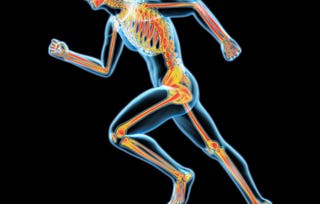
This module provides an introduction to how children learn to walk and how that varies across cultures. This also talks about the difference between running and walking and the adaptations for running.
Founded in 1769, Dartmouth is a member of the Ivy League and consistently ranks among the world’s greatest academic institutions. Dartmouth has forged a singular identity for combining its deep commitment to outstanding undergraduate liberal arts and graduate education with distinguished research and scholarship in the Arts and Sciences and its four leading graduate schools—the Geisel School of Medicine, the Guarini School of Graduate and Advanced Studies, Thayer School of Engineering, and the Tuck School of Business.
When will I have access to the lectures and assignments?
To access the course materials, assignments and to earn a Certificate, you will need to purchase the Certificate experience when you enroll in a course. You can try a Free Trial instead, or apply for Financial Aid. The course may offer 'Full Course, No Certificate' instead. This option lets you see all course materials, submit required assessments, and get a final grade. This also means that you will not be able to purchase a Certificate experience.
What will I get if I subscribe to this Specialization?
When you enroll in the course, you get access to all of the courses in the Specialization, and you earn a certificate when you complete the work. Your electronic Certificate will be added to your Accomplishments page - from there, you can print your Certificate or add it to your LinkedIn profile.
Is financial aid available?
Yes. In select learning programs, you can apply for financial aid or a scholarship if you can’t afford the enrollment fee. If fin aid or scholarship is available for your learning program selection, you’ll find a link to apply on the description page.