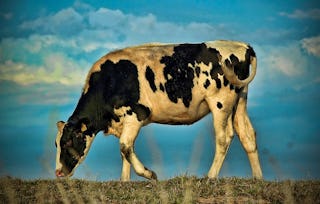
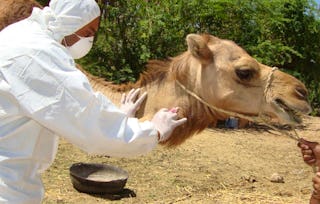
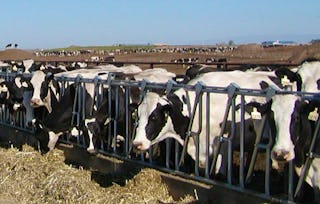
The globalization of trade and human movement, the expansion of political and economic uncertainty, the speed, scale and nature of predicted global growth, and a wide range of public health issues, have raised concerns regarding the sustainability and security of animal-source food production systems around the world. Animal disease in farmed livestock is important with regard to food safety, animal welfare, and in view of the economic importance of animal-source food production in many countries.
Respiratory disease continues to be one of the greatest sources of loss, and hence lack of sustainability, to livestock production systems around the world. In this course, we will explore the factors that contribute to respiratory disease in livestock systems and practical tools to limit its impact on food system sustainability. We will review the basics of respiratory physiology, immunology, and pathology along with how the commensal, symbiotic and pathogenic microorganisms interact in food production ecosystems to prevent or promote respiratory disease.
You will become familiar with the course, your classmates, and our learning environment. The orientation will also help you obtain the technical skills required for the course.
Das ist alles enthalten
1 Video4 Lektüren1 Aufgabe1 Diskussionsthema
Infos zu Modulinhalt anzeigen
1 Video•Insgesamt 2 Minuten
Welcome to the Course•2 Minuten
4 Lektüren•Insgesamt 40 Minuten
Syllabus•10 Minuten
About the Discussion Forums•10 Minuten
Updating Your Profile•10 Minuten
Social Media•10 Minuten
1 Aufgabe•Insgesamt 30 Minuten
Orientation Quiz •30 Minuten
1 Diskussionsthema•Insgesamt 10 Minuten
Getting to Know Your Classmates•10 Minuten
Week 1: It's Not About the Bugs
Modul 2•3 Stunden abzuschließen
Moduldetails
In this first week of the course, we will explore how using a host-centric view of a disease can lead to a greater understanding of respiratory disease in livestock production systems. Lessons this week will provide an overview of all of the key concepts that will be covered in the course to help you understand how each of the aspects of respiratory disease management is interrelated. By the end of the week, you will have a high-level understanding of the knowledge, skills and thought processes needed to successfully manage respiratory disease.
Das ist alles enthalten
9 Videos1 Aufgabe1 Diskussionsthema
Infos zu Modulinhalt anzeigen
9 Videos•Insgesamt 53 Minuten
1.1 | It's Not About the Bugs•2 Minuten
1.2 | Understanding the Impact of Respiratory Disease on Food Production Systems•6 Minuten
1.3 | Applying a Holistic View To Disease Management•9 Minuten
1.4 | Normal Function of the Lung and Alterations with Disease•8 Minuten
1.5 | Assessing Changes in the Host to Measure Disease•7 Minuten
1.6 | Pathogens and Their Interrelationships that Lead to Infectious Respiratory Disease•8 Minuten
1.7 | Intervention Strategies to Address Infectious Respiratory Disease•7 Minuten
1.8 | Understanding Disease at the Herd Level•5 Minuten
Conclusion: It's Not About the Bugs•1 Minute
1 Aufgabe•Insgesamt 30 Minuten
Week 1 Quiz•30 Minuten
1 Diskussionsthema•Insgesamt 120 Minuten
Week 1 Discussion•120 Minuten
Week 2: Wonderful Airways
Modul 3•7 Stunden abzuschließen
Moduldetails
This week we will explore the normal function of the lung in a healthy animal. We will use this understanding of normal as a foundation for all of the pathology and disease that we will talk about in the remainder of the course. Subjects covered this week will include: air movement physics, gas exchange, control of the respiratory system, and host defenses in the respiratory tract. We will review both anatomy, physiology and immunology of each of these key processes.
Das ist alles enthalten
15 Videos1 Aufgabe1 peer review1 Diskussionsthema
Infos zu Modulinhalt anzeigen
15 Videos•Insgesamt 124 Minuten
2.1 | Wonderful Airways•1 Minute
2.2 | Comparative Anatomy and Physiology of the Respiratory Tract•11 Minuten
2.3 | Cells of the Respiratory Tract•4 Minuten
2.4 | Development of the Respiratory System•11 Minuten
2.5 | How Does Air Reach the Lungs? •12 Minuten
2.6 | Anatomy and Physiology of Pulmonary Circulation•10 Minuten
2.7 | Mechanisms of Hypoxemia•7 Minuten
2.8 | How are Gases Transported to the Tissues?•13 Minuten
2.9 | How are Oxygen and Carbon Dioxide Exchanged? •11 Minuten
2.10 | How are Breathing and Respiration Controlled?•7 Minuten
2.11 | How is the Respiratory System Physically Protected from Injurious Agents?•10 Minuten
2.12 | How is the Lung Protected from Pathogen Challenges?•12 Minuten
2.13 | How Particles are Managed by the Respiratory Tract•6 Minuten
2.14 | Implications of Lung Structure and Function for Health Management•9 Minuten
Conclusion: Wonderful Airways•1 Minute
1 Aufgabe•Insgesamt 50 Minuten
Week 2 Quiz•50 Minuten
1 peer review•Insgesamt 120 Minuten
Week 2 Peer Exploration Project•120 Minuten
1 Diskussionsthema•Insgesamt 120 Minuten
Week 2 Discussion•120 Minuten
Week 3: Waging War
Modul 4•7 Stunden abzuschließen
Moduldetails
This week we will explore the pathogens involved in respiratory disease of livestock. By the end of the week you will understand how pathogens interact to create a disease complex, how pathogens cause disease, how cell tropisms affects clinical signs, what pathogens infect the upper and lower airways and what tools we have to understand what pathogens are present. In addition to the main lectures, there are supplemental materials to explore the specifics of important diseases in cattle and swine and resources to help you understand diagnostic assays and sample collection techniques.
Das ist alles enthalten
14 Videos1 Aufgabe1 peer review1 Diskussionsthema
Infos zu Modulinhalt anzeigen
14 Videos•Insgesamt 100 Minuten
3.1 | Waging War•1 Minute
3.2 | It's Not Just One Bug•8 Minuten
3.3 | Mechanisms of Viral Pathogenesis•10 Minuten
3.4 | Mechanisms of Bacterial Pathogenesis•8 Minuten
3.5 | Why Do Certain Pathogens Cause Certain Pathologies at Certain Locations•9 Minuten
3.12 | Pathogens of the Respiratory Tract: Poultry•12 Minuten
3.13 | Pathogens of the Respiratory Tract: Small Ruminants•6 Minuten
Conclusion: Waging War•1 Minute
1 Aufgabe•Insgesamt 60 Minuten
Week 3 Quiz•60 Minuten
1 peer review•Insgesamt 120 Minuten
Week 3 Peer Exploration Project•120 Minuten
1 Diskussionsthema•Insgesamt 120 Minuten
Week 3 Discussion•120 Minuten
Week 4: The Upper Hand
Modul 5•6 Stunden abzuschließen
Moduldetails
In this week of the course, we delve into the therapeutic management of infectious respiratory disease, with a focus on how antimicrobial selection is informed by pharmacokinetic and pharmacodynamic principles. We will examine the critical role of host immune status and tissue pathology in determining treatment outcomes, and consider how management strategies can support host defenses and promote recovery. Through lectures and applied case discussions, you’ll gain practical tools for selecting and using therapeutics effectively in both individual and population-level contexts.
Das ist alles enthalten
11 Videos1 Aufgabe1 peer review1 Diskussionsthema
Infos zu Modulinhalt anzeigen
11 Videos•Insgesamt 64 Minuten
4.1 | Gaining The Upper Hand•1 Minute
4.2 | Principles of Therapeutic Management of Infectious Respiratory Disease•5 Minuten
4.3 | The Necessity of Immunity in Managing Infectious Disease Outbreaks•9 Minuten
4.4 | The History and Development of Antimicrobials for Use in Food Animal Production Medicine•6 Minuten
4.5 | Pharmacological Principles of Antimicrobials•10 Minuten
4.6 | Classification of Antimicrobials•9 Minuten
4.7 | The Application of Case Definitions in Respiratory Disease Therapeutics (Early Detection)•7 Minuten
4.8 | Practical Approaches to Population-Level Therapeutics in Respiratory Disease Outbreaks•4 Minuten
4.9 | Antimicrobials and Sustainable Food Production•5 Minuten
The University of Illinois at Urbana-Champaign is a world leader in research, teaching and public engagement, distinguished by the breadth of its programs, broad academic excellence, and internationally renowned faculty and alumni. Illinois serves the world by creating knowledge, preparing students for lives of impact, and finding solutions to critical societal needs.
When will I have access to the lectures and assignments?
To access the course materials, assignments and to earn a Certificate, you will need to purchase the Certificate experience when you enroll in a course. You can try a Free Trial instead, or apply for Financial Aid. The course may offer 'Full Course, No Certificate' instead. This option lets you see all course materials, submit required assessments, and get a final grade. This also means that you will not be able to purchase a Certificate experience.
What will I get if I purchase the Certificate?
When you purchase a Certificate you get access to all course materials, including graded assignments. Upon completing the course, your electronic Certificate will be added to your Accomplishments page - from there, you can print your Certificate or add it to your LinkedIn profile.
Is financial aid available?
Yes. In select learning programs, you can apply for financial aid or a scholarship if you can’t afford the enrollment fee. If fin aid or scholarship is available for your learning program selection, you’ll find a link to apply on the description page.