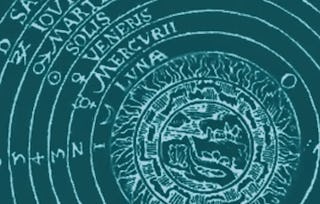
Explore how modern science and technology evolved through contributions from civilizations across the world. This course examines the interrelationship between scientific development and the emergence of modern societies.
Beginning with ancient Greek natural philosophy, you'll trace the evolution of scientific thought through contributions from India, China, and Islamic civilization during the Middle Ages. You'll analyze the European Renaissance, the astronomical revolution, and the groundbreaking work of Copernicus, Galileo, and Newton that challenged classical worldviews.
Discover how the Industrial Revolution transformed Western societies and learn about the mathematisation of science that gave rise to science-based industries. The course critically examines the concept of modernity, exploring enlightenment ideals, the promise of progress, and contemporary perspectives on globalisation.
Through dialogues and assessments, you'll sharpen critical thinking to evaluate perspectives and explore how science and technology shape society. This interdisciplinary course offers a holistic view of global scientific heritage and its influence on modern civilization.
This module aims to provide you with a clearer conception of terms such as ‘Science’, ‘Technology’ and ‘Modernity’. It will help you identify the ethos of science and the challenges such ethos faces in the contemporary period. In this module, you will learn about a brief history of the idea of technology and the nature of its relationship with science.
Recommended Reading: Ethos of Science: CUDOS•10 Minuten
Recommended Reading: Counter Norms and New Norms•9 Minuten
Recommended Reading: What is Technology?•15 Minuten
Recommended Reading: Technology, Technique, and Engineering•15 Minuten
Recommended Reading: Modernity: An Introduction•10 Minuten
9 Aufgaben•Insgesamt 96 Minuten
What is Science?•6 Minuten
Distinguishing Pseudo-Science•6 Minuten
Ethos of Science: CUDOS•6 Minuten
Counter Norms and New Norms•3 Minuten
What is Technology?•6 Minuten
Technology, Technique, and Engineering•3 Minuten
Modernity: An Introduction•6 Minuten
Let's Practice: How to Understand Science, Technology and Modernity•30 Minuten
Test Yourself: How to Understand Science, Technology and Modernity•30 Minuten
Natural Philosophy from Ancient Greek
Modul 2•5 Stunden abzuschließen
Moduldetails
This module will take you through the Natural Philosophy of the ancient Greek era, which is widely held to be furnishing the roots for Modern Science. It will introduce you to some of the key ideas of natural philosophers such as Thales, Plato, Aristotle, Pythagoras, Archimedes etc. In this section, you will find out how the Greek period natural philosophy was truly path-breaking, and one that eventually shaped knowledge of nature, for the next two millennia.
Das ist alles enthalten
8 Videos8 Lektüren10 Aufgaben
Infos zu Modulinhalt anzeigen
8 Videos•Insgesamt 96 Minuten
Origin of Greek Natural Philosophy•10 Minuten
The Milesian School•13 Minuten
The Pythagorean, Atomists and Philosophers of Change•13 Minuten
Plato•13 Minuten
Aristotle•14 Minuten
Museum at Alexandria•12 Minuten
Aristarchus and Ptolemy•13 Minuten
Decline of Greco-Roman Natural Philosophy•8 Minuten
8 Lektüren•Insgesamt 96 Minuten
Recommended Reading: Origin of Greek Natural Philosophy•10 Minuten
Recommended Reading: The Milesian School•10 Minuten
Recommended Reading: The Pythagorean, Atomists, and Philosophers of Change•12 Minuten
Recommended Reading: Plato•12 Minuten
Recommended Reading: Aristotle•15 Minuten
Recommended Reading: Museum at Alexandria •12 Minuten
Recommended Reading: Aristarchus and Ptolemy•15 Minuten
Recommended Reading: Decline of Greco-Roman Natural Philosophy•10 Minuten
10 Aufgaben•Insgesamt 96 Minuten
Origin of Greek Natural Philosophy•3 Minuten
The Milesian School•6 Minuten
The Pythagorean, Atomists and Philosophers of Change•6 Minuten
Plato•6 Minuten
Aristotle•6 Minuten
Museum at Alexandria•3 Minuten
Aristarchus and Ptolemy•3 Minuten
Decline of Greco-Roman Natural Philosophy•3 Minuten
Let's Practice: Natural Philosophy from Ancient Greek•30 Minuten
Test Yourself: Natural Philosophy from Ancient Greek•30 Minuten
Indian Contribution
Modul 3•4 Stunden abzuschließen
Moduldetails
This module will introduce you to some of the major scientific and technological advances that ancient Indians did as part of their contribution to modern science. In this module, there will be discussion on topics such as Vedic ideas, nature of astronomy and mathematics that was pursued and technological advancement in the field of metallurgy, medicine and agriculture.
Das ist alles enthalten
7 Videos7 Lektüren9 Aufgaben
Infos zu Modulinhalt anzeigen
7 Videos•Insgesamt 68 Minuten
Introduction to the Vedas•14 Minuten
Indian Astronomy•12 Minuten
Indian Mathematicians•8 Minuten
Agricultural Innovation •11 Minuten
Metallurgy •6 Minuten
Other Technologies •6 Minuten
Ayurveda and Yoga •10 Minuten
7 Lektüren•Insgesamt 80 Minuten
Recommended Reading: Introduction to the Vedas•15 Minuten
Recommended Reading: Indian Astronomy•10 Minuten
Recommended Reading: Indian Mathematicians•10 Minuten
Recommended Reading: Other Technologies •10 Minuten
Recommended Reading: Ayurveda and Yoga •10 Minuten
9 Aufgaben•Insgesamt 90 Minuten
Introduction to the Vedas•3 Minuten
Indian Astronomy•3 Minuten
Indian Mathematicians•3 Minuten
Agricultural Innovation •6 Minuten
Metallurgy •3 Minuten
Other Technologies •6 Minuten
Ayurveda and Yoga•6 Minuten
Let's Practice: Indian Contribution•30 Minuten
Test Yourself: Indian Contribution•30 Minuten
Arabic Contribution to Science
Modul 4•5 Stunden abzuschließen
Moduldetails
This module will take you through Arabic science during the middle ages, when significant accomplishments were made. It will help you understand how Islamic religion contributed to a scientific renaissance in the Arab and Middle east region that eventually laid the foundation for the emergence of modern science in the west.
Das ist alles enthalten
9 Videos9 Lektüren11 Aufgaben
Infos zu Modulinhalt anzeigen
9 Videos•Insgesamt 84 Minuten
Islam and Rise of Science•11 Minuten
Translation Movement•13 Minuten
Islamic Alchemy •10 Minuten
Astronomy and Mathematics •11 Minuten
Geography and Mathematics •4 Minuten
Islamic Medicine •8 Minuten
Libraries•7 Minuten
Military, Mining and Textile•9 Minuten
Factors of Decline•11 Minuten
9 Lektüren•Insgesamt 105 Minuten
Recommended Reading: Islam and Rise of Science•15 Minuten
Recommended Reading: Astronomy and Mathematics •15 Minuten
Recommended Reading: Geography and Mathematics •10 Minuten
Recommended Reading: Islamic Medicine •10 Minuten
Recommended Reading: Libraries•10 Minuten
Recommended Reading: Military, Mining and Textile•10 Minuten
Recommended Reading: Factors of Decline •10 Minuten
11 Aufgaben•Insgesamt 96 Minuten
Islam and Rise of Science•3 Minuten
Translation Movement•3 Minuten
Islamic Alchemy •3 Minuten
Astronomy and Mathematics •6 Minuten
Geography and Mathematics •3 Minuten
Islamic Medicine •6 Minuten
Libraries•6 Minuten
Military, Mining and Textile•3 Minuten
Factors of Decline•3 Minuten
Let's Practice: Arabic Contribution to Science•30 Minuten
Test Yourself: Arabic Contribution to Science•30 Minuten
Technological Tradition and Applied Science in China
Modul 5•6 Stunden abzuschließen
Moduldetails
This module will help you understand how technology and applied science developed in Chinese from an ancient period. In this section, you will learn how technologies such as printing, hydraulic, maritime, gunpowder etc. developed in China and its kind of sciences that carried a different character as compared to the western tradition.
Das ist alles enthalten
9 Videos9 Lektüren11 Aufgaben
Infos zu Modulinhalt anzeigen
9 Videos•Insgesamt 89 Minuten
Introduction to China•15 Minuten
The Great Wall and the Grand Canal•9 Minuten
Iron, Compass and Gunpowder •11 Minuten
Pottery, Paper and Printing•8 Minuten
Maritime and Shipbuilding•11 Minuten
Worldview and Sciences•11 Minuten
Astronomy and Other Sciences•10 Minuten
Foreign Influence•7 Minuten
Inhibiting Further Growth •9 Minuten
9 Lektüren•Insgesamt 142 Minuten
Recommended Reading: Introduction to China•10 Minuten
Recommended Reading: The Great Wall and the Grand Canal•10 Minuten
Recommended Reading: Iron, Compass and Gunpowder •12 Minuten
Recommended Reading: Pottery, Paper and Printing•10 Minuten
Recommended Reading: Maritime and Ship-Building•15 Minuten
Recommended Reading: Worldview and Sciences •15 Minuten
Recommended Reading: Astronomy and Other Sciences•30 Minuten
Recommended Reading: Foreign Influence•15 Minuten
Recommended Reading: Inhibiting Further Growth •25 Minuten
11 Aufgaben•Insgesamt 102 Minuten
Introduction to China•6 Minuten
The Great Wall and the Grand Canal•6 Minuten
Iron, Compass and Gunpowder •6 Minuten
Pottery, Paper and Printing•6 Minuten
Maritime and Ship-Building•3 Minuten
Worldview and Sciences•3 Minuten
Astronomy and Other Sciences•3 Minuten
Foreign Influence•3 Minuten
Inhibiting Further Growth •6 Minuten
Let's Practice: Technological Tradition and Applied Science in China•30 Minuten
Test Yourself: Technological Tradition and Applied Science in China•30 Minuten
Scientific Revolution I
Modul 6•4 Stunden abzuschließen
Moduldetails
This module will take you through how Europe revived itself in the middle ages, establishing not just universities for higher learning, but also providing a fertile ground for a scientific revolution to take place in subsequent periods. In this module, you will find discussion on the European Renaissance and the astronomical revolution that challenged the classical geocentric worldview.
Das ist alles enthalten
6 Videos6 Lektüren8 Aufgaben
Infos zu Modulinhalt anzeigen
6 Videos•Insgesamt 61 Minuten
European Revival •14 Minuten
European Universities •11 Minuten
European Renaissance •12 Minuten
Copernicus •10 Minuten
Tycho Brahe •7 Minuten
Kepler •6 Minuten
6 Lektüren•Insgesamt 90 Minuten
Recommended Reading: European Revival•15 Minuten
Recommended Reading: European Universities•15 Minuten
Recommended Reading: European Renaissance •15 Minuten
Recommended Reading: Copernicus •15 Minuten
Recommended Reading: Tycho Brahe •15 Minuten
Recommended Reading: Kepler•15 Minuten
8 Aufgaben•Insgesamt 87 Minuten
European Revival •6 Minuten
European Universities •3 Minuten
European Renaissance •6 Minuten
Copernicus •6 Minuten
Tycho Brahe •3 Minuten
Kepler •3 Minuten
Let's Practice: Scientific Revolution I •30 Minuten
Test Yourself: Scientific Revolution I •30 Minuten
Scientific Revolution II
Modul 7•5 Stunden abzuschließen
Moduldetails
This module will take you through the important contributions made by Galileo and Newton in shaping the scientific revolution in the seventeenth century. In this module, you will learn about Galileo’s famous trial and a brief overview of his path-breaking work such as, ‘Two New Sciences’. In addition to Galileo, you will also learn about Newton, his worldview and a brief introduction to his work - Principia. Further in this module, you will be introduced to the contributions of Francis Bacon and Rene Descartes, both of whom are well known for their notable role in the making of modern science.
Das ist alles enthalten
7 Videos7 Lektüren9 Aufgaben
Infos zu Modulinhalt anzeigen
7 Videos•Insgesamt 60 Minuten
Galileo and Telescope•8 Minuten
Two Chief World Systems•11 Minuten
Two New Sciences•9 Minuten
Descartes and Bacon•8 Minuten
Newton’s Principia•9 Minuten
Crucial Experiment •7 Minuten
Newton and Controversies•9 Minuten
7 Lektüren•Insgesamt 87 Minuten
Recommended Reading: Galileo and Telescope•10 Minuten
Recommended Reading: Two Chief World Systems•10 Minuten
Recommended Reading: Two New Sciences•12 Minuten
Recommended Reading: Descartes and Bacon•10 Minuten
Test Yourself: Scientific Revolution II•30 Minuten
Industrial Revolution I
Modul 8•4 Stunden abzuschließen
Moduldetails
This module will help you learn how societies in the West began to transform from an agriculture-based economy to industries in the eighteenth century. In this module, you will have the scope to find out how innovation in textile industries, iron making, and the invention of the steam engine were interrelated in quite unanticipated ways, leading to a social transformation that was not seen since the Neolithic period.
Das ist alles enthalten
7 Videos7 Lektüren9 Aufgaben
Infos zu Modulinhalt anzeigen
7 Videos•Insgesamt 65 Minuten
Social Transformation •11 Minuten
Mechanisation in Textile Industries •6 Minuten
New Iron Age•7 Minuten
Steam Engine•11 Minuten
Factors Driving Industrialisation•12 Minuten
Lack of Applied Science•8 Minuten
Role of Scientific Societies •9 Minuten
7 Lektüren•Insgesamt 100 Minuten
Recommended Reading: Social Transformation •10 Minuten
Recommended Reading: Mechanisation in Textile Industries •15 Minuten
This module will take you through yet another phase of the scientific revolution in which new empirical sciences were mathematised and merged with classical sciences, giving rise to science-based industries. In this module, you will learn how a classical worldview emerged, providing a philosophical anchor to broader changes in science and technology and the way in which the industrialisation process spread rapidly to all parts of the world. Further in this module, you will have the scope to reflect on how industrialisation was tied to ‘colonialism’ and the type of impact it had on countries such as India.
Das ist alles enthalten
7 Videos7 Lektüren9 Aufgaben
Infos zu Modulinhalt anzeigen
7 Videos•Insgesamt 72 Minuten
Science After Bacon and Newton •11 Minuten
Chemical Revolution •9 Minuten
A New Scientific Revolution•10 Minuten
Classical Worldview •9 Minuten
Organisation and Spread •12 Minuten
India as a British Colony •8 Minuten
Applied Science and Science Based Industries•13 Minuten
7 Lektüren•Insgesamt 105 Minuten
Recommended Reading: Science After Bacon and Newton•15 Minuten
Recommended Reading: Chemical Revolution•15 Minuten
Recommended Reading: A New Scientific Revolution•15 Minuten
Recommended Reading: Organisation and Spread •15 Minuten
Recommended Reading: India as a British colony•15 Minuten
Recommended Reading: Applied Science and Science Based Industries•15 Minuten
9 Aufgaben•Insgesamt 90 Minuten
Science After Bacon and Newton •3 Minuten
Chemical Revolution •3 Minuten
A New Scientific Revolution•3 Minuten
Classical Worldview •3 Minuten
Organisation and Spread •6 Minuten
India as a British Colony •3 Minuten
Applied Science and Science Based Industries•9 Minuten
Let's Practice: Industrial Revolution II •30 Minuten
Test Yourself: Industrial Revolution II •30 Minuten
Modernity
Modul 10•5 Stunden abzuschließen
Moduldetails
This module will take you through the idea of enlightenment and its relationship with modernity. In this course, you will learn different ways through which scholars and thinkers have engaged with modernity, including the approach of post-modernity and critical negotiations.
Das ist alles enthalten
8 Videos9 Lektüren10 Aufgaben
Infos zu Modulinhalt anzeigen
8 Videos•Insgesamt 75 Minuten
Enlightenment •10 Minuten
Kant and Locke•8 Minuten
Features of Modernity•13 Minuten
Rejecting Modernity•10 Minuten
Globalisation •9 Minuten
Critical Negotiation I •9 Minuten
Critical Negotiation II•9 Minuten
Concluding Remarks •6 Minuten
9 Lektüren•Insgesamt 130 Minuten
Recommended Reading: Enlightenment •15 Minuten
Recommended Reading: Kant and Locke•15 Minuten
Recommended Reading: Features of Modernity•15 Minuten
Dieses Kurs ist Teil des/der folgenden Studiengangs/Studiengänge, die von Birla Institute of Technology & Science, Pilaniangeboten werden. Wenn Sie zugelassen werden und sich immatrikulieren, können Ihre abgeschlossenen Kurse auf Ihren Studienabschluss angerechnet werden und Ihre Fortschritte können mit Ihnen übertragen werden.¹
Mögliche Abschüsse anzeigen
Auf einen Abschluss hinarbeiten
Dieses Kurs ist Teil des/der folgenden Studiengangs/Studiengänge, die von Birla Institute of Technology & Science, Pilaniangeboten werden. Wenn Sie zugelassen werden und sich immatrikulieren, können Ihre abgeschlossenen Kurse auf Ihren Studienabschluss angerechnet werden und Ihre Fortschritte können mit Ihnen übertragen werden.¹
¹Erfolgreiche Bewerbung und Einschreibung sind erforderlich. Es gelten die Zulassungsbedingungen. Jede Einrichtung legt die Anzahl der Credits fest, die durch die Absolvierung dieser Inhalte anerkannt werden und auf die Abschlussanforderungen angerechnet werden können, wobei bereits vorhandene Credits berücksichtigt werden. Klicken Sie auf einen bestimmten Kurs, um weitere Informationen zu erhalten.
Birla Institute of Technology & Science, Pilani (BITS Pilani) is one of only ten private universities in India to be recognised as an Institute of Eminence by the Ministry of Human Resource Development, Government of India. It has been consistently ranked high by both governmental and private ranking agencies for its innovative processes and capabilities that have enabled it to impart quality education and emerge as the best private science and engineering institute in India.
BITS Pilani has four international campuses in Pilani, Goa, Hyderabad, and Dubai, and has been offering bachelor's, master’s, and certificate programmes for over 58 years, helping to launch the careers for over 1,00,000 professionals.
OK
Mehr von Governance and Society entdecken
P
Pohang University of Science and Technology(POSTECH)
When will I have access to the lectures and assignments?
To access the course materials, assignments and to earn a Certificate, you will need to purchase the Certificate experience when you enroll in a course. You can try a Free Trial instead, or apply for Financial Aid. The course may offer 'Full Course, No Certificate' instead. This option lets you see all course materials, submit required assessments, and get a final grade. This also means that you will not be able to purchase a Certificate experience.
What will I get if I subscribe to this Specialization?
When you enroll in the course, you get access to all of the courses in the Specialization, and you earn a certificate when you complete the work. Your electronic Certificate will be added to your Accomplishments page - from there, you can print your Certificate or add it to your LinkedIn profile.
Is financial aid available?
Yes. In select learning programs, you can apply for financial aid or a scholarship if you can’t afford the enrollment fee. If fin aid or scholarship is available for your learning program selection, you’ll find a link to apply on the description page.
Finanzielle Unterstützung verfügbar, weitere Informationen
¹ Einige Aufgaben in diesem Kurs werden mit AI bewertet. Für diese Aufgaben werden Ihre Daten in Übereinstimmung mit Datenschutzhinweis von Courseraverwendet.