Lorsque vous vous inscrivez à ce cours, vous êtes également inscrit(e) à cette Spécialisation.
Apprenez de nouveaux concepts auprès d'experts du secteur
Acquérez une compréhension de base d'un sujet ou d'un outil
Développez des compétences professionnelles avec des projets pratiques
Obtenez un certificat professionnel partageable
Il y a 4 modules dans ce cours
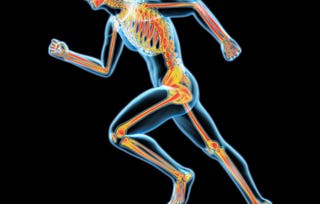
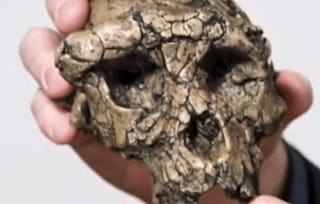
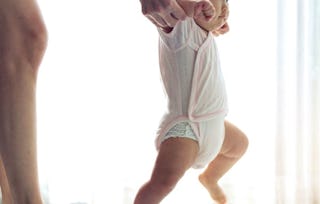
This course will help you learn how fossils give us an insight into how the early members of our lineage walked bipedally. The four million years old bone of Australopithecus anamensis is the oldest undisputed evidence for bipedalism in our lineage. Similarly, Lucy’s, who was Australopithecus afarensis, fossil also helped scientists discover a lot about how bipedalism evolved over time. You will also explore bipedal variations in humans. From its earliest version to its modern form—how humans learned to walk, is an interesting story. Similarly how a human being learns to walk, from a toddler’s first footstep to an adult human being’s walk and its variations would also be discussed in this course. You will also understand that while bipedalism has its advantages, it has its adverse effects on humans too from a musculoskeletal point of view.
Every module of this course has been created with the intention of a “hands-on” learner experience, where you can play around with and learn from 3D renditions of different human and animal fossils. Through these exercises, you will read the shapes found in bones in order to analyze and reconstruct how a species moved.
This module explores bipedal variations in humans and why different forms of bipedal walking may have evolved.
Inclus
13 vidéos16 lectures1 devoir2 sujets de discussion25 plugins
Afficher les informations sur le contenu du module
13 vidéos•Total 26 minutes
Video: Introduction•2 minutes
Video: Lucy, Australopithecus afarensis•2 minutes
Video: Laetoli Footprints•3 minutes
Video: A Surprising New Discovery in Ethiopia•1 minute
Video: Bipedal Variation - An Introduction•1 minute
Video: What Shoes Do to Our Feet•3 minutes
Video: Do Men and Women Walk Differently?•2 minutes
Video: The Speed at Which We Walk•2 minutes
16 lectures•Total 118 minutes
Introductory Reading•10 minutes
Syllabus•30 minutes
Book: First Steps: How Upright Walking Made Us Human•10 minutes
Coursera Code of Conduct•10 minutes
Coursera Honor Code•10 minutes
Discussion Tips and Guide•10 minutes
Learning Journal•10 minutes
Overview•1 minute
3D Models: Australopithecus anamensis•5 minutes
3D Models: Lucy•5 minutes
3D Model: Laetoli Footprint•2 minutes
3D Models: Australopithecus africanus•5 minutes
3D Models: A. sediba - Walking differently•5 minutes
3D Models: A. sediba - Hyperpronation•2 minutes
3D Model: What Shoes Do to Our Feet•1 minute
3D Models: Do Men and Women Walk Differently?•2 minutes
1 devoir•Total 30 minutes
Variations in Bipedalism•30 minutes
2 sujets de discussion•Total 40 minutes
Introduce Yourself•30 minutes
Learning Journal: My Goals•10 minutes
25 plugins•Total 125 minutes
3D Model: Australopithecus anamensis - Chimp Tibia •5 minutes
3D Model: Australopithecus anamensis - Human Tibia •5 minutes
3D Model: Australopithecus anamensis - Distal Tibia •5 minutes
3D Model: Australopithecus anamensis - Proximal Tibia •5 minutes
3D Model: Lucy Pelvis Reconstruction •5 minutes
3D Model: Lucy Vertebrae •5 minutes
3D Model: Lucy Distal Tibia •5 minutes
3D Model: Lucy A.L. 129-1 •5 minutes
3D Model: Lucy A.L. 333-6 •5 minutes
3D Model: Lucy Afarensis Foot•5 minutes
3D Model: Laetoli Footprint •5 minutes
3D Model: Australopithecus africanus - Taung •5 minutes
3D Model: Australopithecus africanus - Sts 34 •5 minutes
3D Model: Australopithecus africanus - Sts 14 Right •5 minutes
3D Model: Australopithecus africanus - Sts 14 Left Hip •5 minutes
3D Model: A. sediba - Walking Differently - Distal Tibia •5 minutes
3D Model: A. sediba - Walking Differently - Calcaneus •5 minutes
3D Model: A. sediba - Walking Differently - Mt4 •5 minutes
3D Model: A. sediba - Walking Differently - Pelvis •5 minutes
3D Model: A. sediba - Walking differently - Knee •5 minutes
3D Model: A. sediba - Hyperpronation •5 minutes
3D Model: What Shoes Do to Our Feet: Human Foot•5 minutes
3D Models: Do Men and Women Walk Differently? •5 minutes
Module 2: Benefits of Being Bipedal
Module 2•4 heures à terminer
Détails du module
This module explores the benefits of bipedal locomotion. It also discusses how the early hominin species such as Homo erectus and Homo naledi used to walk.
Inclus
6 vidéos5 lectures1 devoir2 sujets de discussion12 plugins
Afficher les informations sur le contenu du module
6 vidéos•Total 12 minutes
Video: Introduction - Benefits of Being Bipedal•1 minute
Video: It Takes a Village•3 minutes
Video: Stone Tools•2 minutes
Video: Introduction - Walking Around the World with Homo erectus•2 minutes
Video: Homo naledi and the Hobbit•3 minutes
Video: The Mystery Remains•1 minute
5 lectures•Total 106 minutes
3D Model: Stone Tool•5 minutes
3D Models: Walking Around the World with Homo erectus•5 minutes
3D Models: Homo naledi and the Hobbit•5 minutes
3D Model: The Mystery Remains•1 minute
Explore More•90 minutes
1 devoir•Total 30 minutes
Benefits of Being Bipedal•30 minutes
2 sujets de discussion•Total 40 minutes
Discussion•10 minutes
Learning Journal•30 minutes
12 plugins•Total 60 minutes
3D Model: Stone Tool •5 minutes
3D Model: Walking Around the World with Homo erectus •5 minutes
3D Model: Homo naledi and the Hobbit •5 minutes
The Mystery Remains •5 minutes
Module 3: Walking Variation
Module 3•4 heures à terminer
Détails du module
This module provides an introduction to how children learn to walk and how that varies across cultures. This also talks about the difference between running and walking and the adaptations for running.
Inclus
11 vidéos3 lectures3 devoirs2 sujets de discussion3 plugins
Afficher les informations sur le contenu du module
11 vidéos•Total 20 minutes
Video: Introduction•1 minute
Video: Learning to Walk - An Introduction•1 minute
Video: Do We Have to Crawl Before We Walk?•3 minutes
Video: Why Do Toddlers Toddle?•2 minutes
Video: Skeletal Development•3 minutes
Video: Benefits of Walking - An Introduction•1 minute
Video: Walking and Your Health•2 minutes
Video: Running - An Introduction•1 minute
Video: Running is Not Fast Walking•2 minutes
Video: Running Adaptations•2 minutes
Video: The Evolution of Running•1 minute
3 lectures•Total 96 minutes
Overview•1 minute
3D Models: Skeletal Development•5 minutes
Explore More: Walking Variation•90 minutes
3 devoirs•Total 65 minutes
Knowledge Check: Skeletal Development•30 minutes
Knowledge Check: Running is Not Fast Walking•5 minutes
Walking Variations•30 minutes
2 sujets de discussion•Total 20 minutes
Discussion•10 minutes
Learning Journal•10 minutes
3 plugins•Total 15 minutes
3D Models: Skeletal Development - Human Baby Femur •5 minutes
3D Models: Skeletal Development - Human Femur •5 minutes
3D Models: Skeletal Development - Homo sapiens-calcaneus •5 minutes
Module 4: The Costs of Bipedalism
Module 4•4 heures à terminer
Détails du module
This module explores the downsides of bipedalism and the anatomical trade-offs that result from our evolutionary history of upright walking.
Inclus
11 vidéos7 lectures2 devoirs2 sujets de discussion16 plugins
Afficher les informations sur le contenu du module
11 vidéos•Total 23 minutes
Video: Overview•2 minutes
Video: Evolutionary Trade-offs - The Vitruvian Man•2 minutes
Video: We Were Hunted•2 minutes
Video: Echoes From our Quadrupedal Past•2 minutes
Video: The Great Tinkerer•1 minute
Video: Musculoskeletal Costs of Bipedalism - The Back•2 minutes
Video: Musculoskeletal Costs of Bipedalism - The Pelvis•3 minutes
Video: Musculoskeletal Costs of Bipedalism - The Foot•3 minutes
Video: Foot Maladies: Duct Tape and Paper Clips•3 minutes
Video: Foot Maladies Just Good Enough•2 minutes
Video: Caring for One Another•2 minutes
7 lectures•Total 88 minutes
Overview•1 minute
3D Models: We Were Hunted•5 minutes
3D Models: Musculoskeletal Costs of Bipedalism - The Pelvis•5 minutes
3D Models: Musculoskeletal Costs of Bipedalism - The Foot•2 minutes
3D Models: Foot Maladies - Just Good Enough•10 minutes
3D Models: Caring for One Another•5 minutes
Explore More•60 minutes
2 devoirs•Total 35 minutes
Overview•5 minutes
The Costs of Bipedalism•30 minutes
2 sujets de discussion•Total 20 minutes
Discussion•10 minutes
Learning Journal•10 minutes
16 plugins•Total 85 minutes
3D Models: We Were Hunted - SK •5 minutes
3D Models: We Were Hunted - ZK •5 minutes
3D Models: We Were Hunted - Taung •5 minutes
3D Models: Musculoskeletal Costs of Bipedalism - The Pelvis •5 minutes
3D Models: Musculoskeletal Costs of Bipedalism - Human Foot •5 minutes
3D Models: Musculoskeletal Costs of Bipedalism - Ostrich Foot •5 minutes
3D Models: Foot Maladies - Just Good Enough •5 minutes
3D Models: Foot Maladies - Just Good Enough •10 minutes
3D Models: Foot Maladies - Just Good Enough •5 minutes
3D Models: Caring for One Another •5 minutes
Obtenez un certificat professionnel
Ajoutez ce titre à votre profil LinkedIn, à votre curriculum vitae ou à votre CV. Partagez-le sur les médias sociaux et dans votre évaluation des performances.
Founded in 1769, Dartmouth is a member of the Ivy League and consistently ranks among the world’s greatest academic institutions. Dartmouth has forged a singular identity for combining its deep commitment to outstanding undergraduate liberal arts and graduate education with distinguished research and scholarship in the Arts and Sciences and its four leading graduate schools—the Geisel School of Medicine, the Guarini School of Graduate and Advanced Studies, Thayer School of Engineering, and the Tuck School of Business.
Pour quelles raisons les étudiants sur Coursera nous choisissent-ils pour leur carrière ?
Felipe M.
Étudiant(e) depuis 2018
’Pouvoir suivre des cours à mon rythme à été une expérience extraordinaire. Je peux apprendre chaque fois que mon emploi du temps me le permet et en fonction de mon humeur.’
Jennifer J.
Étudiant(e) depuis 2020
’J'ai directement appliqué les concepts et les compétences que j'ai appris de mes cours à un nouveau projet passionnant au travail.’
Larry W.
Étudiant(e) depuis 2021
’Lorsque j'ai besoin de cours sur des sujets que mon université ne propose pas, Coursera est l'un des meilleurs endroits où se rendre.’
Chaitanya A.
’Apprendre, ce n'est pas seulement s'améliorer dans son travail : c'est bien plus que cela. Coursera me permet d'apprendre sans limites.’
When will I have access to the lectures and assignments?
To access the course materials, assignments and to earn a Certificate, you will need to purchase the Certificate experience when you enroll in a course. You can try a Free Trial instead, or apply for Financial Aid. The course may offer 'Full Course, No Certificate' instead. This option lets you see all course materials, submit required assessments, and get a final grade. This also means that you will not be able to purchase a Certificate experience.
What will I get if I subscribe to this Specialization?
When you enroll in the course, you get access to all of the courses in the Specialization, and you earn a certificate when you complete the work. Your electronic Certificate will be added to your Accomplishments page - from there, you can print your Certificate or add it to your LinkedIn profile.
Is financial aid available?
Yes. In select learning programs, you can apply for financial aid or a scholarship if you can’t afford the enrollment fee. If fin aid or scholarship is available for your learning program selection, you’ll find a link to apply on the description page.