Lorsque vous vous inscrivez à ce cours, vous êtes également inscrit(e) à cette Spécialisation.
Apprenez de nouveaux concepts auprès d'experts du secteur
Acquérez une compréhension de base d'un sujet ou d'un outil
Développez des compétences professionnelles avec des projets pratiques
Obtenez un certificat professionnel partageable
Il y a 4 modules dans ce cours
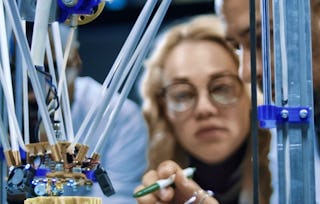
Hello, everyone! Welcome to this course on Rapid Prototyping Materials and Tooling. This is part of the Rapid Prototyping and Tooling specialization. In this course, I’ll cover the characteristics and appropriate uses of a variety of prototyping materials, including cardboard, plastic, wood, and aluminum. I’ll also cover some of the common forms of traditional machining used in making prototypes, as well as more advanced manufacturing tools such as 3D printers, laser cutters, and more!
By the end of this course, you should have a better understanding of the strengths and weaknesses of common prototyping materials and manufacturing processes, as well as the situations in which their use is most appropriate. The hope is that by having a better understanding of these materials and machines, you will be able to better develop high-quality prototypes. I’m excited to teach this course as I am really passionate about the content in it. So without further ado, let’s dive into the world of rapid prototyping!
Hello, everyone! Welcome to this course on Rapid Prototyping Materials and Tooling. This is part of the Rapid Prototyping and Tooling specialization. In this course, I’ll cover the characteristics and appropriate uses of a variety of prototyping materials, including cardboard, plastic, wood, and aluminum. I’ll also cover some of the common forms of traditional machining used in making prototypes, as well as more advanced manufacturing tools such as 3D printers, laser cutters, and more! By the end of this course, you should have a better understanding of the strengths and weaknesses of common prototyping materials and manufacturing processes, as well as the situations in which their use is most appropriate. The hope is that by having a better understanding of these materials and machines, you will be able to better develop high-quality prototypes. There's a lot of really exciting content to cover in this course, so without further ado, let’s dive into the world of rapid prototyping!
Inclus
3 vidéos2 lectures
Afficher les informations sur le contenu du module
3 vidéos•Total 5 minutes
Meet the Instructor: Daniel Frank•2 minutes
Specialization Introduction•2 minutes
Rapid Prototyping Materials and Tooling Course Introduction•1 minute
2 lectures•Total 10 minutes
Instructor Bio•5 minutes
Course Tips•5 minutes
Module 1: Rapid Prototyping Materials
Module 2•1 heure à terminer
Détails du module
In this module, you will learn about basic material properties such as density, toughness, and strength. You will also learn about the different characteristics of common prototyping materials like cardboard, plastics, wood, and aluminum.
Inclus
5 vidéos2 devoirs
Afficher les informations sur le contenu du module
5 vidéos•Total 27 minutes
Material Property Basics•4 minutes
Cardboard•4 minutes
Plastics•8 minutes
Wood•6 minutes
Aluminum•5 minutes
2 devoirs•Total 15 minutes
Rapid Prototyping Materials Practice Quiz•9 minutes
Rapid Prototyping Materials Graded Quiz•6 minutes
Module 2: Traditional Machining
Module 3•23 minutes à terminer
Détails du module
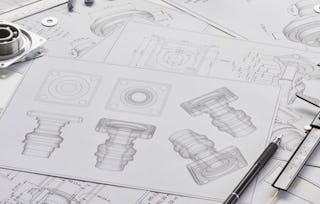
In this module, you will learn about the different types of traditional machining tools that are useful for making prototypes, such as the hack saw, bandsaw, chop saw, hack saw, drill press, lathe, and mill.
Inclus
1 vidéo2 devoirs
Afficher les informations sur le contenu du module
1 vidéo•Total 8 minutes
Traditional Machining•8 minutes
2 devoirs•Total 15 minutes
Traditional Machining Practice Quiz•9 minutes
Traditional Machining Graded Quiz•6 minutes
Module 3: CNC Machining
Module 4•4 heures à terminer
Détails du module
In this module, you will learn about many different CNC machines that can be used to fabricate prototypes. In particular, this module will go into detail about the considerations and choices an engineer needs to make when making a part with a 3D printer or a laser cutter.
Inclus
3 vidéos10 lectures3 devoirs1 évaluation par les pairs
Afficher les informations sur le contenu du module
3 vidéos•Total 27 minutes
3D Printers•11 minutes
Laser Cutters•11 minutes
Other CNC Machines•5 minutes
10 lectures•Total 80 minutes
Assistive Technology Project Overview•5 minutes
AT Project Phase 1: Empathize•10 minutes
Phase 1 Self-Assessment•5 minutes
AT Project Phase 2: Define•10 minutes
Phase 2 Self-Assessment•10 minutes
AT Project Phase 3: Ideate•10 minutes
Phase 3 Self-Assessment•5 minutes
AT Project Phase 4: Prototype•10 minutes
Phase 4 Self-Assessment•5 minutes
AT Project Phase 5: Test•10 minutes
3 devoirs•Total 45 minutes
CNC Machining Practice Quiz•9 minutes
CNC Machining Graded Quiz•6 minutes
Course 3 Quiz•30 minutes
1 évaluation par les pairs•Total 60 minutes
Submission and Peer Evaluation•60 minutes
Obtenez un certificat professionnel
Ajoutez ce titre à votre profil LinkedIn, à votre curriculum vitae ou à votre CV. Partagez-le sur les médias sociaux et dans votre évaluation des performances.
Instructeur
Évaluations de l’enseignant
Nous avons demandé à tous les étudiants de fournir des commentaires sur nos enseignants au sujet de la qualité de leur pédagogie.
Arizona State University has developed a new model for the American Research University, creating an institution that is committed to excellence, access and impact. ASU measures itself by those it includes, not by those it excludes. ASU pursues research that contributes to the public good, and ASU assumes major responsibility for the economic, social and cultural vitality of the communities that surround it.
Pour quelles raisons les étudiants sur Coursera nous choisissent-ils pour leur carrière ?
Felipe M.
Étudiant(e) depuis 2018
’Pouvoir suivre des cours à mon rythme à été une expérience extraordinaire. Je peux apprendre chaque fois que mon emploi du temps me le permet et en fonction de mon humeur.’
Jennifer J.
Étudiant(e) depuis 2020
’J'ai directement appliqué les concepts et les compétences que j'ai appris de mes cours à un nouveau projet passionnant au travail.’
Larry W.
Étudiant(e) depuis 2021
’Lorsque j'ai besoin de cours sur des sujets que mon université ne propose pas, Coursera est l'un des meilleurs endroits où se rendre.’
Chaitanya A.
’Apprendre, ce n'est pas seulement s'améliorer dans son travail : c'est bien plus que cela. Coursera me permet d'apprendre sans limites.’
When will I have access to the lectures and assignments?
To access the course materials, assignments and to earn a Certificate, you will need to purchase the Certificate experience when you enroll in a course. You can try a Free Trial instead, or apply for Financial Aid. The course may offer 'Full Course, No Certificate' instead. This option lets you see all course materials, submit required assessments, and get a final grade. This also means that you will not be able to purchase a Certificate experience.
What will I get if I subscribe to this Specialization?
When you enroll in the course, you get access to all of the courses in the Specialization, and you earn a certificate when you complete the work. Your electronic Certificate will be added to your Accomplishments page - from there, you can print your Certificate or add it to your LinkedIn profile.
Is financial aid available?
Yes. In select learning programs, you can apply for financial aid or a scholarship if you can’t afford the enrollment fee. If fin aid or scholarship is available for your learning program selection, you’ll find a link to apply on the description page.