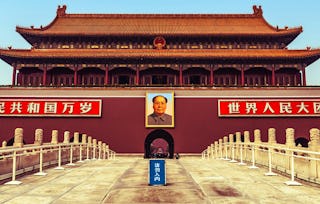
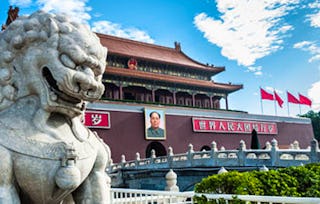
The purpose of this course is to summarize new directions in Chinese history and social science produced by the creation and analysis of big historical datasets based on newly opened Chinese archival holdings, and to organize this knowledge in a framework that encourages learning about China in comparative perspective.
Our course demonstrates how a new scholarship of discovery is redefining what is singular about modern China and modern Chinese history. Current understandings of human history and social theory are based largely on Western experience or on non-Western experience seen through a Western lens. This course offers alternative perspectives derived from Chinese experience over the last three centuries. We present specific case studies of this new scholarship of discovery divided into two stand-alone parts, which means that students can take any part without prior or subsequent attendance of the other part.
Part 1 (this course) focuses on comparative inequality and opportunity and addresses two related questions ‘Who rises to the top?’ and ‘Who gets what?’.
Part 2 (https://www.coursera.org/learn/understanding-china-history-part-2) turns to an arguably even more important question ‘Who are we?’ as seen through the framework of comparative population behavior - mortality, marriage, and reproduction – and their interaction with economic conditions and human values. We do so because mortality and reproduction are fundamental and universal, because they differ historically just as radically between China and the West as patterns of inequality and opportunity, and because these differences demonstrate the mutability of human behavior and values.
Course Overview video: https://youtu.be/dzUPRyJ4ETk
Before you start with the content for Module 1, please watch the Course Overview, review the Assignments and Grading page, and introduce yourself to other learners who will be studying this course with you.
What's included
5 videos2 readings1 assignment1 discussion prompt
Show info about module content
5 videos•Total 56 minutes
Course Overview•2 minutes
1.1: Introduction•15 minutes
1.2: Who Gets What and Why?•4 minutes
1.3: Social Mobility and the Examination System in Late Imperial China•20 minutes
1.4: Cultural Reproduction and Education in Late Imperial and Contemporary China•14 minutes
2 readings•Total 20 minutes
Assignments and Grading•10 minutes
Module 1 Suggested Reading•10 minutes
1 assignment•Total 30 minutes
Quiz 1•30 minutes
1 discussion prompt•Total 10 minutes
Meet and Greet•10 minutes
Module 2: Education and Social Mobility in Contemporary China
Module 2•1 hour to complete
Module details
What's included
3 videos1 reading1 assignment
Show info about module content
3 videos•Total 46 minutes
2.1: Comparing Inequality in Education and Income between China and the West•11 minutes
2.2: Student Diversity at Peking University 1950-1999 and Suzhou University 1950-2003•20 minutes
2.3: China’s Silent Revolution’s Ladder of Success•15 minutes
1 reading•Total 10 minutes
Module 2 Suggested Reading•10 minutes
1 assignment•Total 30 minutes
Quiz 2•30 minutes
Module 3: Social Mobility and Wealth Distribution in Late Imperial and Contemporary China
Module 3•1 hour to complete
Module details
What's included
5 videos1 reading1 assignment
Show info about module content
5 videos•Total 46 minutes
3.1: Wealth Distribution in the UK and US, 1700-2000•8 minutes
3.2: Population Categories and Wealth Entitlements in China•13 minutes
3.3: Land Distribution in Shuangcheng, 1870-1906•6 minutes
3.4: Property Distribution in Contemporary China•12 minutes
3.5: Comparative Wealth Distribution: Past/Present and East/West•7 minutes
1 reading•Total 10 minutes
Module 3 Suggested Reading•10 minutes
1 assignment•Total 30 minutes
Quiz 3•30 minutes
Module 4: Wealth Distribution and Regime Change in Twentieth Century China
Module 4•1 hour to complete
Module details
What's included
5 videos1 reading1 assignment
Show info about module content
5 videos•Total 51 minutes
4.1: Wealth Distribution and Regime Change•9 minutes
4.2: Wealth Distribution in Pre-Revolutionary China•15 minutes
4.3: Political Processes and Institutions of Regime Change in Shuangcheng, 1946-1948•12 minutes
4.4: Revolutionary Victims in Shuangcheng and Elsewhere•10 minutes
4.5: Course Conclusion•5 minutes
1 reading•Total 10 minutes
Module 4 Suggested Reading•10 minutes
1 assignment•Total 10 minutes
Quiz 4•10 minutes
Final Exam and Farewell
Module 5•1 hour to complete
Module details
Now is time to test your understanding on the entire course. Take the final exam and complete the post-course survey. Your valuable feedback will certainly help us improve future iterations of the course.
What's included
2 readings2 assignments
Show info about module content
2 readings•Total 20 minutes
A Farewell Message from Professor James Lee•10 minutes
Rate this course•10 minutes
2 assignments•Total 68 minutes
Final Exam•30 minutes
Post-course Survey•38 minutes
Instructor
Instructor ratings
Instructor ratings
We asked all learners to give feedback on our instructors based on the quality of their teaching style.
HKUST is a world-class research-intensive university that focuses on science, technology, and business as well as humanities and social science. HKUST offers an international campus, and a holistic and interdisciplinary pedagogy to nurture well-rounded graduates with a global vision, a strong entrepreneurial spirit, and innovative thinking.
OK
Explore more from Data Analysis
T
The Hong Kong University of Science and Technology

"To be able to take courses at my own pace and rhythm has been an amazing experience. I can learn whenever it fits my schedule and mood."
Jennifer J.
Learner since 2020
"I directly applied the concepts and skills I learned from my courses to an exciting new project at work."
Larry W.
Learner since 2021
"When I need courses on topics that my university doesn't offer, Coursera is one of the best places to go."
Chaitanya A.
"Learning isn't just about being better at your job: it's so much more than that. Coursera allows me to learn without limits."
Learner reviews
4.7
127 reviews
5 stars
72.44%
4 stars
22.83%
3 stars
3.14%
2 stars
0.78%
1 star
0.78%
Showing 3 of 127
A
AA
5·
Reviewed on May 24, 2017
I loved the course. It gave me a totally different view of pre-revolution China. Even though I am not intoquantitative data, I still learned from the conclusions and interpretations of the data.
R
RH
5·
Reviewed on Nov 11, 2020
This course was very informative and engaging. The questions were a great way to check understanding. I can't wait for Part 2!
S
SM
5·
Reviewed on Jul 13, 2020
This is the best course on Chinese history I've attended..
When will I have access to the lectures and assignments?
To access the course materials, assignments and to earn a Certificate, you will need to purchase the Certificate experience when you enroll in a course. You can try a Free Trial instead, or apply for Financial Aid. The course may offer 'Full Course, No Certificate' instead. This option lets you see all course materials, submit required assessments, and get a final grade. This also means that you will not be able to purchase a Certificate experience.
What will I get if I purchase the Certificate?
When you purchase a Certificate you get access to all course materials, including graded assignments. Upon completing the course, your electronic Certificate will be added to your Accomplishments page - from there, you can print your Certificate or add it to your LinkedIn profile.
Is financial aid available?
Yes. In select learning programs, you can apply for financial aid or a scholarship if you can’t afford the enrollment fee. If fin aid or scholarship is available for your learning program selection, you’ll find a link to apply on the description page.