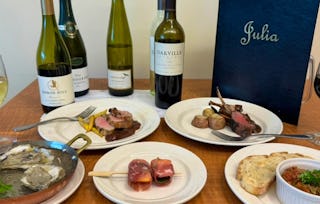
With its roots in ancient cultures as early as 6,000 BC, wine has long been part of the human experience. Today, increasing worldwide interest in wine and its complexities and varieties has created an international market valued at $304 billion annually. For the learner who is just getting started in the study of wine, this course will help you take the first steps toward understanding the physiological process of wine tasting. The first module will explore types of wine and help you set up your own tasting. You’ll also begin to build a sensory vocabulary. In module 2 you will review classic wine types of the world and set up flights of specific wines. Later we’ll examine the various faults and defects that can appear in wine as well as techniques for spotting problems. In week 4 we’ll delve into the complex world of wine and food pairings, and its “seven deadly sins.” The course will culminate in a peer review project in which you will apply the knowledge and sensory techniques you have developed throughout the course to assess a specific wine.
In this first module, we’ll take the first steps on our journey through the various categories of wines, starting with the flavor profiles of classic New World and Old World wines. We’ll also identify and describe flavor groups of wine and discuss sensory physiology including the visual, olfactory, textural, and taste aspects of various wines. We’ll also analyze how climate can affect the grape and wine flavor expression, and we’ll discuss the concept of "terroir". Finally, you will create a set of basic taste standards for practicing blind tasting.
Wine Tasting: Sensory Techniques For Wine Analysis•5 minutes
Wine Styles Introduction•1 minute
Introduction to Wine Sensory•10 minutes
Wine Glasses•13 minutes
Basic Wine Types•4 minutes
Old World Versus New World Wines•5 minutes
Climate and Style•6 minutes
Selecting Wines for this Course•3 minutes
Formal Wine Tasting Set-Up•4 minutes
The Tasting Grid•6 minutes
Wine Clarity•8 minutes
Wine Color•10 minutes
The First Sniff•9 minutes
The First Taste•11 minutes
The Second Taste•7 minutes
Wine Texture•7 minutes
Formal Wine Evaluation (Whites)•9 minutes
Formal Wine Evaluation (Reds)•10 minutes
1 reading•Total 2 minutes
Before You Begin...•2 minutes
1 assignment•Total 24 minutes
Module 1 - Wine Styles•24 minutes
6 discussion prompts•Total 100 minutes
Your Learning Goals•10 minutes
Buying Wine Glasses (Activity)•30 minutes
Selecting Wines For This Module (Activity)•30 minutes
First Taste•10 minutes
Comparison of Tastes•10 minutes
Final Thoughts?•10 minutes
Wine Flavor and Aroma
Module 2•3 hours to complete
Module details
In this module, the journey continues and we will compare and contrast the flavor profiles of eight classic red varietals and eight classic white varietals. We’ll also discuss the growing requirements for each varietal as well as their cultural and historic background and growing locations. At the conclusion of this module, you will write a descriptive analysis of the aroma attributes you identify in a particular wine. Finally, you’ll create flavor standards to help you develop your sensory vocabulary.
The International Riesling Foundation & Trimethyldihydronaphthalene•3 minutes
Gewürztraminer•3 minutes
Pinot Grigio•2 minutes
MLF and Buttery•3 minutes
Cabernet Sauvignon•5 minutes
Merlot•3 minutes
Pinot Noir•3 minutes
Syrah / Shiraz•3 minutes
Grenache•3 minutes
Sangiovese•2 minutes
Descriptive Analysis•4 minutes
Flight of Whites•13 minutes
Flight of Reds•13 minutes
1 reading•Total 10 minutes
Selecting Wines for This Module•10 minutes
1 assignment•Total 30 minutes
Module 2 - Wine Flavor/Aroma Standards•30 minutes
3 discussion prompts•Total 30 minutes
Aroma Wheel Exercise•10 minutes
Your Flight of White Experience•10 minutes
Your Flight of Red Experience•10 minutes
Common Wine Faults
Module 3•3 hours to complete
Module details
Is there something wrong with this wine? This week we’ll examine the philosophy behind what actually constitutes a fault in wine. We’ll identify the most often-encountered faults and explain how to recognize them as well as determine what caused them. We’ll also examine the Old World and New World sensibilities toward some of these faults, and discuss how some so-called faults may really be attributes that contribute to a wine’s complexity. We’ll differentiate between a fault and a defect and examine the range of classic faults and their origins. You’ll learn techniques for spotting problems and create wine defect sniff standards to practice fault recognition.
Can you drink red wine with fish? In this module we’ll discuss the often perplexing question of how to pair wine with food, and the physical, structural, textural, and aromatic aspects of both the "wine side" and the "food side" of the equation. We’ll discuss ways to improve your ability to make flavorful choices and determine the structure and "weight" of a wine. To help you predict a good food match, we’ll talk about the process of flavor profiling and how to decide whether to change a wine or food to make a pair work. Finally, we’ll discuss the "seven deadly sins" of wine and food pairing, and you’ll develop a personal wine and food scoring system.
Food and Wine Pairing Activity Continued•15 minutes
1 reading•Total 15 minutes
Materials For This Module•15 minutes
1 assignment•Total 20 minutes
Module 4 - Wine and Food Pairing•20 minutes
2 discussion prompts•Total 15 minutes
Food and Wine Pairing Prediction•7 minutes
Food and Wine Pairing Reflection•8 minutes
Project: Fully Describe a Wine From an Unusual Region or Varietal
Module 5•2 hours to complete
Module details
In this final module, we’ll conclude our journey into wine tasting with a project that will demonstrate your understanding of the physiological process of wine tasting and the sensory techniques required for accurate wine analysis. You’ll apply the skills you have developed throughout this course to making a critical evaluation and description of a specific wine. Working with fellow learners in this peer review process, you will demonstrate your ability to describe the appellation, climate, winery, varietal and winemaking style as well as describe the visual, and tactile aspects of the wine. You’ll also describe the flavor and aroma of the wine, and make decisions about the best and worst food pairings for the wine.
What's included
1 video1 peer review1 discussion prompt
Show info about module content
1 video•Total 3 minutes
Analytical Wine Tasting Report•3 minutes
1 peer review•Total 120 minutes
Analytical Wine Tasting Report•120 minutes
1 discussion prompt•Total 10 minutes
Reflection•10 minutes
Instructor
Instructor ratings
Instructor ratings
We asked all learners to give feedback on our instructors based on the quality of their teaching style.
UC Davis, one of the nation’s top-ranked research universities, is a global leader in agriculture, veterinary medicine, sustainability, environmental and biological sciences, and technology. With four colleges and six professional schools, UC Davis and its students and alumni are known for their academic excellence, meaningful public service and profound international impact.
"To be able to take courses at my own pace and rhythm has been an amazing experience. I can learn whenever it fits my schedule and mood."
Jennifer J.
Learner since 2020
"I directly applied the concepts and skills I learned from my courses to an exciting new project at work."
Larry W.
Learner since 2021
"When I need courses on topics that my university doesn't offer, Coursera is one of the best places to go."
Chaitanya A.
"Learning isn't just about being better at your job: it's so much more than that. Coursera allows me to learn without limits."
Learner reviews
4.7
544 reviews
5 stars
82.75%
4 stars
11.19%
3 stars
1.83%
2 stars
1.10%
1 star
3.11%
Showing 3 of 544
F
FP
5·
Reviewed on Oct 6, 2020
This course was awesome, you learn a deep understanding on the sensorial appreciation of the wine, the way wine taste won't the same after this course.
M
MT
5·
Reviewed on May 3, 2020
This was one of the best wine educational course. The tutor Mr John Buechsenstein is mammalian speaker with huge knowledge!!! I am so Lucky to be his student <3
D
DD
4·
Reviewed on Apr 10, 2017
Impressive, one learns a great deal about tasting techniques but also the basics of grape and wine variations. I just wish I had a better for detecting the aromas!
What will I actually learn in this wine tasting course?
You'll learn how to taste wine systematically and describe what you find with a stronger sensory vocabulary. It starts with wine styles, tasting setup, and the physiology of smell and taste, then builds into varietal comparison, common faults, and food pairing. Along the way, you'll use tasting grids, compare wine flights, and finish with a peer-reviewed analytical tasting report.
Do I need any wine background before starting this course?
No, you don't need prior wine training. The course starts with basic wine types, tasting setup, and core sensory vocabulary before moving into more detailed comparison work. The main practical requirement is that full participation involves buying wines and simple tasting materials, so it's best if you're ready to do the tasting exercises.
Is this course beginner-friendly for wine tasting?
Yes, it's beginner-friendly if you're new to structured wine tasting and want a clear introduction to sensory analysis. The lessons begin with basics like glassware, tasting notes, and simple wine categories before asking you to compare varietals or evaluate faults. It may feel less useful if you already assess wines systematically and want a more advanced specialist course.
How long does it take to complete this course?
Expect about 14 hours of work in total. At around 10 hours a week, many learners could finish in 1 to 2 weeks, depending on how much time they spend on tasting activities and the final peer review. The course includes lessons, readings, quizzes, discussions, and a wine analysis project.
Are there hands-on exercises or projects in this course?
Yes, but the hands-on work is built around guided tasting activities rather than labs. You'll set up tastings, create basic taste and aroma standards, compare flights of white and red wines, and practice identifying faults and food pairings. The course ends with a peer-reviewed analytical report, so you apply each idea in a structured way as you go.
What skills or topics are covered in this course?
The course focuses on sensory evaluation, wine styles and varietals, common wine faults, and wine and food pairing. You'll learn how to assess a wine visually, aromatically, texturally, and on the palate, then use that approach to compare styles and recognize quality problems. Overall, it helps you describe wine more precisely and make more informed pairing and tasting judgments.
What can I actually do after finishing this course?
You should be able to taste wine more systematically and explain what you're noticing with clearer language. That includes setting up a formal tasting, taking structured notes with a tasting grid, recognizing several common faults, and thinking through likely food pairings. You'll also have practice writing an analytical report on a wine you evaluate.
Is this course more focused on theory or hands-on learning?
It's more concept-first with guided practice. The course spends time explaining sensory physiology, wine styles, and pairing principles, then reinforces that through tasting exercises, comparison flights, and a final peer-reviewed assessment. It's a good fit if you want explanation and application together, not just a series of tastings.
Why would I choose this course over other wine courses?
This course is a strong choice if you want wine tasting taught through sensory analysis rather than broad appreciation alone. It combines tasting setup, vocabulary building, varietal comparison, fault recognition, and food pairing with guided exercises that lead to a peer-reviewed analysis. If you want a beginner course that helps you judge, describe, and compare wines more systematically, this is a strong fit.