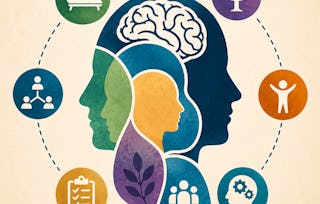
This course offers an engaging introduction to social psychology, the scientific study of how people think, feel, and behave in social situations. It covers a wide range of themes such as social cognition, attitudes, persuasion, conformity, group dynamics, prejudice, aggression, prosocial behavior, attraction, justice, and applied social psychology. Through these topics, learners discover how social and cultural forces shape everyday behavior. The course brings together classic studies and modern perspectives and includes both Western and Indian examples, giving learners a broad and relevant understanding of human social behaviour.

Social Psychology

Recommended experience
Beginner level
1. No prior coursework in psychology is required.
2. Basic interest in human behavior, social sciences, or real-world social issues.
Recommended experience
Beginner level
1. No prior coursework in psychology is required.
2. Basic interest in human behavior, social sciences, or real-world social issues.
What you'll learn
Learn how people grow, think, and relate across life stages and understand key ideas that explain physical, cognitive, social, and emotional changes.
Details to know

Add to your LinkedIn profile
24 assignments
December 2025
See how employees at top companies are mastering in-demand skills

There are 12 modules in this course
This course explores how individuals perceive, influence, and relate to others within a social context. It examines foundational topics in social psychology such as social cognition, attitudes, persuasion, conformity, group processes, prejudice, prosocial behavior, and aggression. Students will learn to apply theoretical models to understand social behavior and critically analyze cultural and contextual factors that influence psychological processes. The course emphasizes both Western and Indian cultural contexts. This module offers a comprehensive introduction to social psychology, the scientific study of how individuals think, feel, and behave in social contexts. It examines the dynamic interplay between the individual and the social environment, highlighting how group membership, cultural norms, social influence, and interpersonal relationships shape human experience. Students will explore the historical development of the discipline, from its emergence at the turn of the 20th century to its current global and interdisciplinary relevance.Drawing on both Western and Indian perspectives, the module situates social psychology within diverse cultural frameworks, emphasizing how socio-cultural contexts influence the formation and expression of attitudes, identities, and behaviors. The course also differentiates social psychology from related fields such as sociology, which focuses on large-scale social structures, and personality psychology, which centers on enduring individual differences.Through engagement with landmark studies—including Norman Triplett’s pioneering work on social facilitation, Stanley Milgram’s obedience experiments, and Philip Zimbardo’s Stanford Prison Study—students will critically assess the theoretical and methodological contributions that have shaped the discipline, as well as the ethical debates they have sparked.The module also introduces the scientific methods employed in social psychological research, including laboratory experiments, field studies, surveys, and cross-cultural approaches. Students will learn to apply these methods to analyze and interpret real-world social phenomena, such as prejudice, conformity, prosocial behavior, group decision-making, and digital-era interactions. By the end of the module, students will have developed a nuanced understanding of the scope and boundaries of social psychology in relation to allied disciplines. They will also gain the ability to critically evaluate both classic and contemporary research within varied cultural contexts. In addition, students will acquire practical skills in applying social psychological theories and methods to everyday interpersonal interactions as well as broader societal challenges.
What's included
8 videos3 readings2 assignments
8 videos• Total 46 minutes
- Meet Your Faculty - Prof. Madhumita R Dhupar• 1 minute
- Introduction to the Course• 3 minutes
- Defining Social Psychology – Scope, Concepts, and Distinctions • 6 minutes
- The Historical Foundations of Social Psychology• 8 minutes
- Research Methods and Ethical Milestones in Social Psychology• 6 minutes
- Key Domains – Thinking, Influence, and Relationships• 6 minutes
- Cultural Contexts and Contemporary Applications • 8 minutes
- Critical Perspectives and Limitations• 9 minutes
3 readings• Total 30 minutes
- Meet Your Faculty - Prof. Madhumita R Dhupar• 10 minutes
- References Reading• 10 minutes
- Readings for Module 1• 10 minutes
2 assignments• Total 40 minutes
- Assessment - 1• 20 minutes
- Quiz - 1• 20 minutes
This module delves into the cognitive processes that shape how we perceive, interpret, and remember information about others. It emphasizes heuristics, schemas, attribution theory, and cultural influences on judgment.
What's included
5 videos1 reading2 assignments1 discussion prompt
5 videos• Total 42 minutes
- The Mechanics of Social Cognition• 8 minutes
- Cognitive Shortcuts and Heuristics• 8 minutes
- Emotional and Counterintuitive Cognition• 8 minutes
- Attribution Theories and Errors• 9 minutes
- Culture, Schema Types, and Attributional Complexity• 8 minutes
1 reading• Total 10 minutes
- Readings for Module 2• 10 minutes
2 assignments• Total 40 minutes
- Assessment - 2• 20 minutes
- Quiz - 2• 20 minutes
1 discussion prompt• Total 15 minutes
- Ungraded Discussion Prompt• 15 minutes
This module examines the structure, formation, and function of attitudes. It explores how attitudes influence behavior, how they are measured, and the psychological mechanisms of attitude change, including cognitive dissonance.
What's included
6 videos1 reading2 assignments
6 videos• Total 49 minutes
- What Are Attitudes and Where Do They Come From?• 8 minutes
- The Structure of Attitudes – ABC Model in Action• 9 minutes
- Do Attitudes Predict Behavior?• 8 minutes
- Cognitive Dissonance – When Beliefs and Actions Clash• 8 minutes
- Culture, Attitudes, and Persuasion• 8 minutes
- Attitudes and Behavior: Foundations, Mechanisms, and Cultural Variations• 8 minutes
1 reading• Total 10 minutes
- Readings for Module 3• 10 minutes
2 assignments• Total 40 minutes
- Assessment - 3• 20 minutes
- Quiz - 3• 20 minutes
This module investigates the development and structure of self-concept, identity, and self-awareness. It explores philosophical, developmental, and sociocultural dimensions of selfhood, drawing on both Western and Indian thought.
What's included
6 videos1 reading2 assignments1 discussion prompt
6 videos• Total 63 minutes
- The Nature and Origins of the Self• 11 minutes
- Building Blocks of Self-Concept• 10 minutes
- Knowing Ourselves – Self-Discovery and Comparison• 10 minutes
- Presenting the Self – Impression Management• 13 minutes
- Culture, Self, and Identity• 10 minutes
- Philosophical Exploration of the Self• 9 minutes
1 reading• Total 10 minutes
- Readings for Module 4• 10 minutes
2 assignments• Total 40 minutes
- Assessment - 4• 20 minutes
- Quiz - 4• 20 minutes
1 discussion prompt• Total 15 minutes
- Ungraded Discussion Prompt• 15 minutes
This module examines how individuals are influenced by others through conformity, compliance, and obedience. Classic studies are revisited alongside culturally relevant examples, highlighting ethical considerations in persuasive influence.
What's included
5 videos1 reading2 assignments
5 videos• Total 51 minutes
- Foundations of Social Influence and the Process of Socialization• 10 minutes
- Conformity – Mechanisms, Cultural Nuances, and Classic Research• 10 minutes
- Compliance – Psychological Triggers and Persuasion Techniques• 9 minutes
- Obedience and Minority Influence – Power, Resistance, and Change• 9 minutes
- Social Influence in Collective Action and Ethical Considerations• 13 minutes
1 reading• Total 10 minutes
- Readings for Module 5• 10 minutes
2 assignments• Total 40 minutes
- Assessment - 5• 20 minutes
- Quiz - 5• 20 minutes
This module explores how individuals behave in group settings, focusing on social roles, conformity, leadership, decision-making, and intergroup conflict. It applies theories such as social identity theory and discusses cultural dimensions of group behavior.
What's included
5 videos1 reading2 assignments1 discussion prompt
5 videos• Total 62 minutes
- What Are Groups and Why Do We Join Them?• 14 minutes
- Inside the Group – Cohesion, Roles, and Behavior• 11 minutes
- Leadership in Groups – Styles, Gender, and Power• 15 minutes
- Group Decision-Making and Performance Pitfalls• 11 minutes
- Intergroup Dynamics, Identity, and Social Change• 12 minutes
1 reading• Total 10 minutes
- Readings for Module 6• 10 minutes
2 assignments• Total 40 minutes
- Assessment - 6• 20 minutes
- Quiz - 6• 20 minutes
1 discussion prompt• Total 15 minutes
- Ungraded Discussion Prompt• 15 minutes
This module investigates the origins and effects of stereotypes, prejudice, and discrimination. It examines psychological theories and real-world consequences, including stereotype threat, microaggressions, and caste-based discrimination.
What's included
5 videos1 reading2 assignments1 discussion prompt
5 videos• Total 55 minutes
- Understanding Bias – Stereotypes, Prejudice, and Discrimination• 12 minutes
- Prejudice in Action – From Attitudes to Inequality• 11 minutes
- The Psychology of Prejudice – Emotion, Cognition, and Contradiction• 12 minutes
- Modern Discrimination – Subtle Bias and Systemic Impact• 9 minutes
- Reducing Prejudice – Interventions and Social Change• 11 minutes
1 reading• Total 10 minutes
- Readings for Module 7• 10 minutes
2 assignments• Total 40 minutes
- Assessment - 7• 20 minutes
- Quiz - 7• 20 minutes
1 discussion prompt• Total 15 minutes
- Ungraded Discussion Prompt• 15 minutes
This module explores the psychological and biological foundations of aggression. It examines types, causes, and consequences of aggressive behavior and evaluates theoretical approaches to its regulation and reduction levels.
What's included
5 videos1 reading2 assignments
5 videos• Total 57 minutes
- Understanding Aggression – Definitions, Traits, and Bullying• 11 minutes
- Theories of Aggression – Biological, Evolutionary, and Psychoanalytic• 12 minutes
- Social Learning and the Environment – How Aggression Is Acquired• 12 minutes
- Group Context and Extreme Aggression• 12 minutes
- Reducing Aggression – Psychological and Social Interventions• 10 minutes
1 reading• Total 10 minutes
- Readings for Module 8• 10 minutes
2 assignments• Total 40 minutes
- Assessment - 8• 20 minutes
- Quiz - 8• 20 minutes
This module investigates helping behavior, distinguishing altruism from prosociality. It covers evolutionary, cognitive, and cultural explanations, emphasizing conditions that promote or inhibit helping in emergencies and everyday life.
What's included
5 videos1 reading2 assignments
5 videos• Total 51 minutes
- Understanding Prosocial Behaviour – Forms, Motives, and Altruism• 11 minutes
- Evolution and Altruism – Kin Selection, Reciprocity, and Inclusive Fitness• 9 minutes
- The Psychology of Helping – Mood, Personality, and Social Norms• 10 minutes
- Barriers to Helping – The Bystander Effect and Urban Influences• 10 minutes
- Promoting Prosocial Action – Overcoming Inaction and Fostering Altruism• 11 minutes
1 reading• Total 10 minutes
- Readings for Module 9• 10 minutes
2 assignments• Total 40 minutes
- Assessment - 9• 20 minutes
- Quiz - 9• 20 minutes
This module explores the psychological foundations of attraction, love, and relationship maintenance, with a focus on both universal principles and Indian cultural contexts such as arranged marriages and family dynamics.
What's included
5 videos1 reading2 assignments
5 videos• Total 58 minutes
- Foundations of Attraction – Proximity, Familiarity, and Similarity• 12 minutes
- Reciprocal Liking, Physical Attractiveness, and Cultural Ideals• 10 minutes
- Attachment Styles, Relationship Economics, and Gender Norms• 11 minutes
- Love Types, Relationship Maintenance, and Indian Family Systems• 12 minutes
- Relationship Breakdown, Dissolution, and Social Scripts in India• 12 minutes
1 reading• Total 10 minutes
- Readings for Module 10• 10 minutes
2 assignments• Total 40 minutes
- Assessment - 10• 20 minutes
- Quiz - 10• 20 minutes
This module explores the dynamic intersection of psychology and the legal system, with a focus on the Indian context. It investigates how cognitive biases, memory distortions, social influence, and mental health impact legal decision-making, eyewitness testimony, and judicial outcomes.
What's included
5 videos1 reading2 assignments
5 videos• Total 54 minutes
- Psychology in the Legal System – Memory, Misinformation, and Eyewitness Testimony• 11 minutes
- Deception Detection, False Confessions, and Interrogation Practices• 11 minutes
- Judicial Bias, Public Opinion, and Sentencing Inequities• 11 minutes
- Mental Illness, Culpability, and Victim Psychology• 11 minutes
- Reforming Indian Justice Through Psychological Science• 11 minutes
1 reading• Total 10 minutes
- Readings for Module 11• 10 minutes
2 assignments• Total 40 minutes
- Assessment - 11• 20 minutes
- Quiz - 11• 20 minutes
This module examines the psychological dimensions of environmental crises and sustainability. It explores how human behaviour contributes to climate change, resource use, and waste, and how social psychology offers strategies to foster sustainable practices. Students will also reflect on the connections between sustainability and well-being, with examples from Indian and global contexts.
What's included
5 videos2 readings2 assignments
5 videos• Total 60 minutes
- Our Environmental Crisis• 14 minutes
- Applied Social Psychology for Real-World Challenges• 12 minutes
- Strategies for Sustainable Behavior• 11 minutes
- The Psychology of Happiness• 12 minutes
- Combining Sustainability and Well-being• 12 minutes
2 readings• Total 20 minutes
- Readings for Module 12• 10 minutes
- Course Wrap-Up• 10 minutes
2 assignments• Total 40 minutes
- Assessment - 12• 20 minutes
- Quiz - 12• 20 minutes
Build toward a degree
This course is part of the following degree program(s) offered by O.P. Jindal Global University. If you are admitted and enroll, your completed coursework may count toward your degree learning and your progress can transfer with you.¹
Build toward a degree
This course is part of the following degree program(s) offered by O.P. Jindal Global University. If you are admitted and enroll, your completed coursework may count toward your degree learning and your progress can transfer with you.¹
O.P. Jindal Global University
Bachelor of Science in Psychology
Degree · 3-6 years
¹Successful application and enrollment are required. Eligibility requirements apply. Each institution determines the number of credits recognized by completing this content that may count towards degree requirements, considering any existing credits you may have. Click on a specific course for more information.
Instructor

Offered by

Offered by

O.P. Jindal Global University is recognised as an Institution of Eminence by the Ministry of Education, Government of India. It is also ranked the No. 1 Private University in India in the QS World University Rankings 2021. The university has 9000+ students across 12 schools that offer 52 degree programs. The university maintains a 1:9 faculty-student ratio. It is a research-intensive university, deeply committed to institutional values of interdisciplinary and innovative learning, pluralism and rigorous scholarship, globalism, and international engagement.
Why people choose Coursera for their career

Felipe M.

Jennifer J.

Larry W.

Chaitanya A.
Explore more from Health
WWesleyan University
Course
LLecturio
Course
AAmerican Psychological Association
Course
OO.P. Jindal Global University
Course