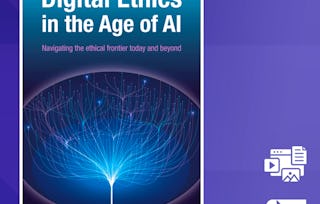
This course reframes AI ethics from a human-first, externality-first perspective rather than the GDP-and-shareholder framing that dominates industry discourse. Across four modules you trace how natural rights emerged from the French Revolution and post-WW2 charters, why those rights need a digital rewrite in the age of AI, how tech propaganda displaces critical thinking, and why the dominant economic models — including Shoshana Zuboff's surveillance capitalism — are broken. You leave with a working vocabulary for digital rights (privacy, consent, biometric data, freedom from algorithmic harm), a critical-thinking toolkit for resisting hype patterns like FOMO and naive utopianism, and concrete externality-first solutions such as taxing addictiveness ratios and crediting employee ownership. The course is opinionated — it does not pretend AI ethics is settled — and grounds every claim in named historical events, named books, and named patterns rather than abstract principle.

Data Ethics

Data Ethics
This course is part of Rust for Data Engineering Specialization

Instructor: Noah Gift
Access provided by Howard University
Recommended experience
What you'll learn
Reframe AI ethics around human externalities — what is best for humans, not what is best for GDP or corporations
Recognize and counter common tech-propaganda patterns: FOMO, naive utopianism, business-model circular logic, and Trojan-horse open-source plays
Apply externality-first market corrections — addictiveness taxes, repairability credits, and humanism over GDP as a course-level KPI
Skills you'll gain
- Economics
- Business
- digital literacy
- Behavioral Economics
- Data Ethics
- Business Ethics
- AI Enablement
- Ethical Standards And Conduct
- Economics, Policy, and Social Studies
- Information Architecture
- Analytical Skills
- Internet Of Things
- AI literacy
- Social Sciences
- Artificial Intelligence
- Information Privacy
- European History
- Medical Privacy
- Social Justice
- Responsible AI
Details to know

Add to your LinkedIn profile
1 assignment
May 2026
See how employees at top companies are mastering in-demand skills

Build your subject-matter expertise
- Learn new concepts from industry experts
- Gain a foundational understanding of a subject or tool
- Develop job-relevant skills with hands-on projects
- Earn a shareable career certificate

There is 1 module in this course
Earn a career certificate
Add this credential to your LinkedIn profile, resume, or CV. Share it on social media and in your performance review.
Instructor
Offered by

Why people choose Coursera for their career

Felipe M.

Jennifer J.

Larry W.

Chaitanya A.
Explore more from Information Technology

The University of Notre Dame
University of Michigan

Johns Hopkins University