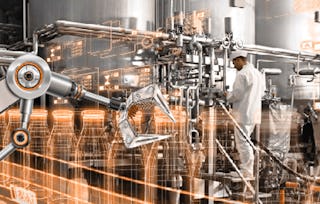
Fluid power has the highest power density of all conventional power-transmission technologies. Learn the benefits and limitations of fluid power, how to analyze fluid power components and circuits, and how to design and simulate fluid power circuits for applications.

Fundamentals of Fluid Power

Fundamentals of Fluid Power


Instructors: James D. Van De Ven, PhD
Access provided by ARS SCINet/AI-COE
60,955 already enrolled
Gain insight into a topic and learn the fundamentals.
1,457 reviews
2 weeks to complete
at 10 hours a week
Flexible schedule
Learn at your own pace
98%
Most learners liked this course
Skills you'll gain
Tools you'll learn
Details to know
Assessments
5 assignments
Taught in English
See how employees at top companies are mastering in-demand skills

There are 6 modules in this course
Instructors
Instructor ratings
(357 ratings)Offered by


Why people choose Coursera for their career

Felipe M.
Learner since 2018
"To be able to take courses at my own pace and rhythm has been an amazing experience. I can learn whenever it fits my schedule and mood."

Jennifer J.
Learner since 2020
"I directly applied the concepts and skills I learned from my courses to an exciting new project at work."

Larry W.
Learner since 2021
"When I need courses on topics that my university doesn't offer, Coursera is one of the best places to go."

Chaitanya A.
"Learning isn't just about being better at your job: it's so much more than that. Coursera allows me to learn without limits."
Learner reviews
- 5 stars
81.28%
- 4 stars
16.31%
- 3 stars
1.50%
- 2 stars
0.41%
- 1 star
0.47%
Showing 3 of 1457
TW
Reviewed on Aug 25, 2020
It very deepest knowledge about fluid and it's relative components. And in this practical components are shown so it was interesting. Thank you for your your work.
HE
Reviewed on Dec 9, 2018
This is the best online course I have participated in. I want to thank University of Minnesota for providing this wonderful platform for learning more about fluid power.
AG
Reviewed on May 30, 2020
This was the Best Course I have done so far. The instructors are totally dedicated to teach. They have given practical examples on field and industry for the Better Understanding.Thank You.
Explore more from Physical Science and Engineering
L&T EduTech
L&T EduTech
L&T EduTech