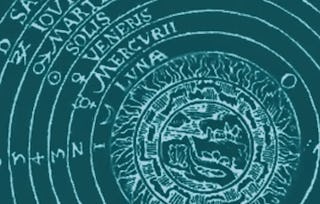
This is an introductory level course about the history and philosophy of astronomy, the oldest science. We'll look at how humans learned to ask questions about the universe, and even before the invention of modern instruments like the telescope, learned some amazing things about their place in nature. We will start with prehistoric cultures who kept accurate calendars and move through the time of the Greek philosophers who laid down the rudiments of logic and mathematics and the modern scientific method. We'll then examine the revolutions of Copernicus, Galileo, and Newton that redefined our place in the universe. We will then learn about the revolutions in physics in the early 20th century that redefined our ideas of space and time, mass and energy. Finally, we will discuss how modern cosmology has shown us that we live in an ancient universe (14 billion years old), in one galaxy in a universe of hundreds of billions of galaxies. At the end, will ask questions that don't necessarily have answers. What came before the Big Bang? Is there anything outside our universe? What is reality? We'll finish by looking at the role of life in the universe and ask whether the earth is the only place with biology on it.

Knowing the Universe: History and Philosophy of Astronomy

Knowing the Universe: History and Philosophy of Astronomy

Instructor: Chris Impey
Access provided by Trybe
6,960 already enrolled
43 reviews
Recommended experience
Details to know

Add to your LinkedIn profile
See how employees at top companies are mastering in-demand skills

There are 8 modules in this course
Instructor
Offered by

Why people choose Coursera for their career

Felipe M.

Jennifer J.

Larry W.

Chaitanya A.
Learner reviews
- 5 stars
79.06%
- 4 stars
13.95%
- 3 stars
2.32%
- 2 stars
2.32%
- 1 star
2.32%
Showing 3 of 43
Reviewed on Sep 9, 2025
Excellent delivery, Professor Impey, you've turned this science into an artform. Thank you for your work.
Reviewed on Jan 13, 2023
Professor Impey is outstanding in teaching this course, as he displays his generosity to share his amazing knowledge of the astronomy field. Thank you so much for such an enriching experience.
Reviewed on Mar 12, 2024
popularized science, made it so easy for everyone to learn, and motivated to learn more...
Explore more from Physical Science and Engineering
Dartmouth College

The University of Edinburgh
University of Rochester
Caltech
¹ Some assignments in this course are AI-graded. For these assignments, your data will be used in accordance with Coursera's Privacy Notice.