Finite Element Courses
Finite Element courses can help you learn numerical methods, structural analysis, and material behavior principles. You can build skills in mesh generation, boundary condition application, and post-processing results. Many courses introduce tools like ANSYS, Abaqus, and COMSOL Multiphysics, that support simulating complex physical phenomena and validating design choices in engineering projects.
Popular Finite Element Courses and Certifications
 Status: Preview
University of Michigan
Skills you'll gain: Finite Element Methods, Engineering Analysis, Mathematical Software, Numerical Analysis, Mathematical Modeling, Advanced Mathematics, C++ (Programming Language), Mechanics, Integral Calculus
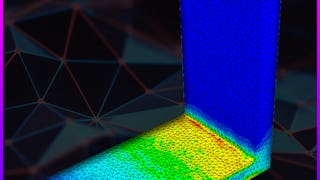 Status: Free
Skills you'll gain: Finite Element Methods, Simulation and Simulation Software, Engineering Analysis, Simulations, Engineering, Verification And Validation
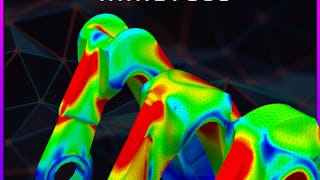 Status: Free
Skills you'll gain: Finite Element Methods, Engineering Analysis, Simulation and Simulation Software, Simulations, Mechanical Design, Mathematical Modeling, Structural Engineering, Structural Analysis, 3D Modeling
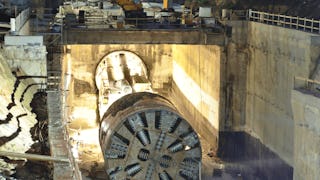 Status: Free Trial
Skills you'll gain: Construction Engineering, Building Codes, Engineering, Scientific, and Technical Instruments, Structural Engineering, Structural Analysis, Engineering Analysis, Construction, Engineering Calculations, Simulation and Simulation Software, Finite Element Methods, Civil Engineering, Construction Management, Mathematical Software, Engineering Practices, Environmental Monitoring, Safety Standards, Civil and Architectural Engineering, Failure Analysis, Engineering Design Process, Laboratory Testing
 Status: Free Trial
University of Minnesota
Skills you'll gain: Semiconductors, Finite Element Methods, Medical Devices, Microarchitecture, Engineering Analysis, Process Flow Diagrams, Materials science, Laboratory Equipment, Electronics Engineering, Electronics, Quality Assurance, Medical Equipment and Technology, Process Control, Biomedical Engineering, Product Testing, Mechanical Design, Manufacturing Processes, Electrical Engineering, Electronic Components, Mechanical Engineering
 Status: Preview
Skills you'll gain: Engineering Design Process, Engineering Analysis, Mechanical Design, Simulation and Simulation Software, Innovation, Structural Analysis, Mechanical Engineering, Finite Element Methods, Simulations, Model Optimization
What brings you to Coursera today?
 Status: Preview
Ludwig-Maximilians-Universität München (LMU)
Skills you'll gain: Finite Element Methods, Numerical Analysis, Engineering Analysis, Jupyter, Differential Equations, Applied Mathematics, Mathematical Modeling, Distributed Computing, Integral Calculus, Simulation and Simulation Software, Python Programming, Mechanics, Simulations, Derivatives
 Status: Free Trial
Rice University
Skills you'll gain: Data Processing, Data Manipulation, Data Dictionary, Data Wrangling, File I/O, Data Structures, Scripting, Data Import/Export, Scripting Languages, Data Analysis, Python Programming, Data Mapping, Data Storage, Data Management
 Status: Free Trial
University of Colorado Boulder
Skills you'll gain: Estimation, Numerical Analysis, Applied Mathematics, Electrical Engineering, Mathematical Modeling, Linear Algebra, Physics
 Status: NewStatus: Preview
Skills you'll gain: Engineering Calculations, Engineering Practices, Simulation and Simulation Software, Engineering, 3D Modeling, Thermal Management, Scientific Visualization, Geometry, Star Schema, Model Evaluation, Environment
 Status: Free Trial
L&T EduTech
Skills you'll gain: Engineering Calculations, Structural Engineering, Structural Analysis, Construction Engineering, Civil Engineering, Construction, Engineering Analysis, Engineering Practices, Building Codes, Construction Inspection, Civil and Architectural Engineering, Conceptual Design, Engineering Design Process, Engineering, Design Specifications, Maintenance, Repair, and Facility Services, Stormwater Management, Facility Repair And Maintenance, Finite Element Methods, Continuous Monitoring
 Status: Free Trial
L&T EduTech
Skills you'll gain: Building Codes, Construction, Laboratory Testing, Structural Engineering, Structural Analysis, Laboratory Experience, Construction Engineering, General Construction and Construction Labor, Civil Engineering, Engineering Analysis, Experimentation, Research Reports, Analytical Testing, Engineering Practices, Failure Analysis, Test Equipment, Finite Element Methods, Engineering Design Process, Engineering Calculations, Design Specifications
In summary, here are 10 of our most popular finite element courses
- The Finite Element Method for Problems in Physics: University of Michigan
- Finite Element Analysis Convergence and Mesh Independence: Coursera
- FEM - Linear, Nonlinear Analysis & Post-Processing: Coursera
- Construction Practices in Deep excavations and Tunnels: L&T EduTech
- Introduction to Semiconductor and MEMS Fabrication: University of Minnesota
- Innovate with ANSYS Simulation Tools: Coursera
- Computers, Waves, Simulations: A Practical Introduction to Numerical Methods using Python: Ludwig-Maximilians-Universität München (LMU)
- Python Data Analysis: Rice University
- Approximation Methods: University of Colorado Boulder
- STAR-CCM+: Fluid Flow & Thermal Simulation: Coursera










