Semiconductor Courses
Semiconductor courses can help you learn about electronic properties, device fabrication, circuit design, and materials science. You can build skills in simulation techniques, testing methodologies, and troubleshooting processes. Many courses introduce tools like SPICE for circuit simulation, MATLAB for data analysis, and CAD software for layout design, that support applying your knowledge in practical settings.
Popular Semiconductor Courses and Certifications

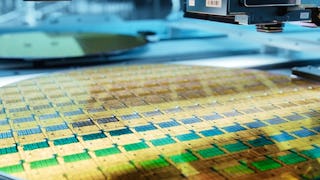
Arizona State University
Skills you'll gain: Semiconductors, Analytical Testing, Electronic Components, Engineering, Scientific, and Technical Instruments, Analytical Chemistry, Image Analysis, Electronics, Application Specific Integrated Circuits, Laboratory Equipment, Production Process, Basic Electrical Systems, Test Equipment, Materials science, Electrical Engineering, Laboratory Testing, Manufacturing Processes, Process Control, Electronics Engineering, Structural Analysis, Laboratory Research
Arizona State University
Skills you'll gain: Semiconductors, Electronic Components, Materials science, Electrical Engineering, Electronics, Electronics Engineering, Estimation, Engineering Calculations
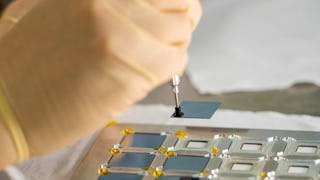
Arizona State University
Skills you'll gain: Statistical Process Controls, Process Control, Semiconductors, Quality Assurance, Process Validation, Production Process, Verification And Validation, Electronics Engineering, Manufacturing Operations, Manufacturing Processes, Manufacturing and Production, Manufacturing Standards, Electronics, Hardware Design, Process Improvement, Reliability, Electronic Components, Electronic Hardware, Hardware Architecture, Thermal Management
Korea Advanced Institute of Science and Technology(KAIST)
Skills you'll gain: Semiconductors, Electronic Systems, Electronic Components, Electronics, Electronics Engineering, Electronic Hardware, Electrical Engineering, Materials science, Physics
Skills you'll gain: Semiconductors, Manufacturing Standards, Production Process, Manufacturing Operations, Manufacturing Processes, Electronics, Manufacturing and Production, Process Control, Process Engineering, Technical Standard, Materials science, Facility Management, Infrastructure Architecture, Infrastructure Security, Security Controls, Network Infrastructure, Analysis
University of Colorado Boulder
Skills you'll gain: Semiconductors, Electrical Engineering, Electronic Systems, Electronic Components, Materials science, Electrical and Computer Engineering, Electronics Engineering, Electronics, Physics, Mathematical Modeling, Applied Mathematics
What brings you to Coursera today?
Korea Advanced Institute of Science and Technology(KAIST)
Skills you'll gain: Semiconductors, Process Engineering, Manufacturing Processes, Production Process, Electronics, Electronics Engineering, Chemical Engineering, Electrical and Computer Engineering, Equipment decontamination
University of Colorado Boulder
Skills you'll gain: Semiconductors, Electrical Engineering, Materials science, Electrical and Computer Engineering, Physics, Electronics Engineering, Electronics

University of Minnesota
Skills you'll gain: Semiconductors, Finite Element Methods, Medical Devices, Microarchitecture, Engineering Analysis, Process Flow Diagrams, Materials science, Laboratory Equipment, Electronics, Quality Assurance, Medical Equipment and Technology, Process Control, Biomedical Engineering, Product Testing, Mechanical Design, Manufacturing Processes, Electrical Engineering, Electronic Components, Computer Architecture, Mechanical Engineering

Arizona State University
Skills you'll gain: Statistical Process Controls, Process Control, Quality Assurance, Semiconductors, Process Validation, Production Process, Verification And Validation, Manufacturing Operations, Manufacturing Processes, Manufacturing and Production, Manufacturing Standards, Process Improvement, Process Analysis, Product Testing, Process Flow Diagrams, Electronics Engineering, Electronics, Reliability, Performance Testing

Arizona State University
Skills you'll gain: Materials science, Failure Analysis, Semiconductors, Manufacturing Processes, Mechanical Engineering, Chemical Engineering, Chemistry, Engineering, Structural Analysis, Production Process, Laboratory Testing, Mechanics, Physical Science, Process Engineering, Engineering Calculations, Reliability, Technical Standard

University at Buffalo
Skills you'll gain: Semiconductors, Electronic Components, Electronics, Virtual Reality, Manufacturing Processes, Laboratory Equipment, Materials science, Electrical Engineering, Laboratory Procedures, Engineering, Mechanical Engineering, Safety Standards, Goal Setting, Emerging Technologies, Problem Solving, Self-Starter, Higher Education, Time Management, Critical Thinking
In summary, here are 10 of our most popular semiconductor courses
- Semiconductor Characterization: Arizona State University
- Fundamentals of Semiconductor Characterization: Arizona State University
- Semiconductor Packaging: Arizona State University
- Introduction to Semiconductor Devices 1: Korea Advanced Institute of Science and Technology(KAIST)
- Semiconductor Manufacturing Fundamentals: Coursera
- Semiconductor Devices: University of Colorado Boulder
- Introduction to Semiconductor Process 1: Korea Advanced Institute of Science and Technology(KAIST)
- Semiconductor Physics: University of Colorado Boulder
- Introduction to Semiconductor and MEMS Fabrication: University of Minnesota
- Semiconductor Packaging Manufacturing : Arizona State University










