Advanced Microsoft Excel Courses
Advanced Microsoft Excel courses can help you learn complex formulas, data analysis techniques, pivot tables, and advanced charting. You can build skills in automating tasks with macros, using conditional formatting for data visualization, and performing statistical analysis. Many courses introduce tools like Power Query for data manipulation and Power Pivot for creating data models, showing how these skills can enhance your ability to manage and interpret large datasets effectively.
Popular Advanced Microsoft Excel Courses and Certifications
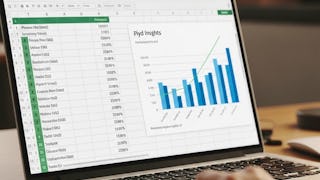
Skills you'll gain: Microsoft Excel, Excel Formulas, Pivot Tables And Charts, Spreadsheet Software, Business Reporting, Management Reporting, Data Analysis, Data Visualization, Interactive Data Visualization, Data Management, Analysis, Information Management, Debugging, File Management, Business, Business Management, Design, File I/O

Skills you'll gain: Excel Formulas, Spreadsheet Software, Financial Modeling, Microsoft Excel, Pivot Tables And Charts, Excel Macros, Data Visualization, Dashboard, Data Management, Data Cleansing, Financial Data, Financial Analysis, Finance, Productivity, Analysis, Data Analysis, Business Analysis, Gap Analysis, LESS, Business
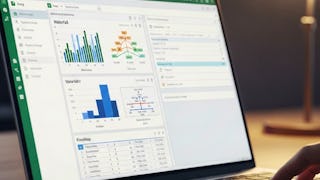
Skills you'll gain: Microsoft Excel, Excel Formulas, Spreadsheet Software, Data Visualization, Interactive Data Visualization, Dashboard, Forecasting, Analytics, Advanced Analytics, Business Analytics, Data Analysis, Data Validation, Analysis, Data Entry, Data Management, Data Integrity, Data Security, Decision Making

Skills you'll gain: Microsoft Excel, Excel Macros, Excel Formulas, Spreadsheet Software, Workflow Management, Business Process Automation, Productivity Software, Data Analysis, Automation, Analysis, Operational Efficiency, Decision Making
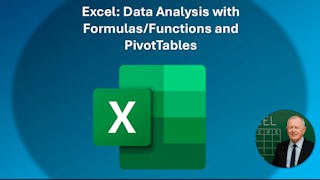
Logical Operations
Skills you'll gain: Excel Formulas, Pivot Tables And Charts, Microsoft Excel, Spreadsheet Software, Data Validation, Data Visualization, Data Analysis, Interactive Data Visualization, Productivity Software, Data Integrity, Microsoft 365

What brings you to Coursera today?

Skills you'll gain: Excel Macros, Dashboard, Spreadsheet Software, Dashboard Creation, Microsoft Excel, Business Reporting, Workflow Management, Business Workflow Analysis, Management Reporting, Business Process Automation, Productivity, Automation, IT Automation, Business Solutions, Operations, Business Operations, Business, Operations Management, Operations Support Systems, File Systems
Logical Operations
Skills you'll gain: Key Performance Indicators (KPIs), Microsoft Excel, Data Presentation, Data Analysis Expressions (DAX), Data Integration, Performance Measurement, Pivot Tables And Charts, Data Visualization Software, Spreadsheet Software, Performance Reporting, Trend Analysis, Cloud-Based Integration, Time Series Analysis and Forecasting, Data Analysis, Data Modeling, Data Manipulation, Microsoft 365, Productivity Software
Logical Operations
Skills you'll gain: Pivot Tables And Charts, Microsoft Excel, Spreadsheet Software, Business Intelligence, Data Analysis, Data Analysis Software, Data Presentation, Microsoft 365, Data-Driven Decision-Making, Data Visualization, Trend Analysis, Productivity Software
Logical Operations
Skills you'll gain: Data Presentation, Data Visualization, Microsoft Excel, Data Storytelling, Data Literacy, Data Visualization Software, Spreadsheet Software, Pivot Tables And Charts, Data Analysis, Data Science, Exploratory Data Analysis, Analysis, Productivity Software, Microsoft 365
Logical Operations
Skills you'll gain: Excel Macros, Business Process Automation, Visual Basic (Programming Language), Microsoft Excel, Automation, Microsoft Development Tools, Business Process, Microsoft 365, Spreadsheet Software, Data Import/Export, Workflow Management, Data Wrangling, Development Environment, Maintainability, Computer Programming, Data Science
Logical Operations
Skills you'll gain: Data Analysis Expressions (DAX), Microsoft Excel, Pivot Tables And Charts, Report Writing, Data Modeling, Spreadsheet Software, Business Reporting, Data Analysis, Data Analysis Software, Data Presentation, Data Visualization Software, Data Visualization, Microsoft 365, Productivity Software
Johns Hopkins University
Skills you'll gain: Operations Research, Resource Allocation, Simulation and Simulation Software, Microsoft Excel, Business Analytics, Data-Driven Decision-Making, Operational Analysis, Transportation Operations, Risk Modeling, Business Operations, Risk Analysis, Spreadsheet Software, Process Optimization, Statistical Methods, Business Modeling, Decision Making, Model Optimization, Logistics, Production Planning
What brings you to Coursera today?
In summary, here are 10 of our most popular advanced microsoft excel courses
- Master Microsoft Excel: Apply, Analyze & Visualize Data: EDUCBA
- Advanced Spreadsheet Skills for Financial Analysis: EDUCBA
- Master Excel Advanced Functions and Analytics: EDUCBA
- Advanced Excel for Data Analysis & Automation: EDUCBA
- Excel: Data Analysis with Formulas/Functions and PivotTables: Logical Operations
- Spreadsheet Automation Projects: EDUCBA
- Microsoft Excel: Data Analysis with Power Pivot: Logical Operations
- Microsoft Excel: Data Analysis with PivotTables: Logical Operations
- Excel: Data Analysis and Visualization Fundamentals: Logical Operations
- Excel VBA Macros: Automating Tasks: Logical Operations










